Could Samsung and Apple have another big competitor

For the past month or so, Samsung and Apple have dominated headlines with their patent trial. Such a case was probably inevitable – how many ways can you design a smartphone? – but any such case would inevitably gather daily headlines. After all, it was Apple and its iconic iPhone vs. Samsung and its status as world’s largest smartphone manufacturer. They’re both kings of the industry in their own ways. Yet they could have a competitor breathing down their necks before they know it.

Lenovo has been around for a while, and in their time they’ve made some waves in the laptop sector. Remember the IBM Thinkpad? In the late 90s and early 00s it seemed as though everyone had one. When IBM exited the consumer electronics business, they sold the brand to Lenovo, who have continued to the line to this day. They’re not quite as ubiquitous these days – the MacBook has taken over the role of the Thinkpad – but it’s still a high-quality Windows offering. In fact, it’s one of the main ways in which Lenovo competes with Apple.

ThinkPads on the International Space Station

ThinkPads being used on the International Space Station.

The present: laptops

Let’s face it: laptops won’t be around forever. They’ve evolved to get smaller and smaller, but the latest round of laptops appears to be their evolutionary end. The only way to make them smaller is to remove the hinge, and when you remove the hinge from a laptop you don’t really have a laptop at all anymore. Still, the latest round of laptops, dubbed Ultrabooks, has made quite an impression on the market.

Apple started this trend years ago with the MacBook Air, but that model went through a few generations before it became a viable product. Once Apple got it down other companies followed. Lenovo got right on the trend, coming out with two lines: the ThinkPad, that business-class continuation of the IBM line, and the IdeaPad, a ligthweight, affordable Ultrabook meant for the consumer market. They are directly comparable to the MacBook Pro and the MacBook Air.

The difference, of course, comes in the price. The 13.3-inch IdeaPad runs more than $450 cheaper than the 13-inch MacBook Air, and more than $250 cheaper than the 11-inch MacBook Air. The ThinkPad compares even better to the MacBook Pro. The Apple faithful might not have much of a need for a different line of laptops, but the average consumer can benefit greatly here. Fact is, most people simply do not need a Mac. PCs can do pretty much the same, and oftentimes more. The saved dollars can go towards products of the future.

The future: tablets

To complete the thought above, when you remove the hinge from a laptop you don’t have a laptop. You have a tablet. While tablets aren’t quite to the level of replacing laptops, they’re certainly travelling that path. Just take a look at the super-thin keyboard cover for the Microsoft Surface. The writing is pretty much on the wall. Soon enough manufacturers will deliver laptops that make us look at laptops like clunky relics of the past.

In this territory, Apple is the undisputed king. People often ask me for advice on buying a tablet. They’ll ask, “is the new iPad worth it? Or should I get an Android tablet?” And I tell them that no, the new iPad isn’t really worth it; the iPad 2 is the second-best tablet on the market, and you can find it at a significant discount. Android tablets just aren’t there yet. But Lenovo has an idea.

First, they’ve put down the idea of competing with Apple on features. Samsung did this with the Galaxy Tab 10.1, pricing it at the same as the iPad. Seeing the two products next to each other, who was going to choose the Galaxy Tab? Lenovo has dipped below the iPad’s $500 base price. They’ve also differentiated, offering four different tablets: three Idea Tablets, ranging from 7 to 10.1 inches, and a ThinkPad tablet, designed for business.

Again, Android has a ways to go when it comes to tablets. But it appears that Lenovo has something going with its segmented offerings and skinned Android interfaces.

Smartphones in the offing?

It would be interesting to see if Lenovo decided to compete on all levels by offering a smartphone. It seems as though everyone’s doing it these days, and with AT&T and Verizon supposedly pushing customers away from the iPhone there might be an opening here. And again there’s a chance for Lenovo to segment its offerings, using Android for consumer and BlackBerry 10 for enterprise.

Yes, BlackBerry is something of an afterthought these days, but they do appear to have a strong offering with their BlackBerry 10 operating system. Problem is, they might need some licensing help to get it off the ground. Lenovo, which already has inroad to enterprise customers, could combine with RIM, which is – or at least was – the enterprise leader. On the other side, creating Android smartphones shouldn’t be such a big deal.

The Logo of BlackberryYet the competition issue comes into play here, too. Apple dominates its own little space, which consumes quite a large portion of the overall market. Samsung seemingly dominates the Android space. No one really dominates the Android tablet space, though, because it hardly exists. But if carriers really are pushing Android smartphones, there could be opportunity there.

Age of the smart consumer

I’d like to believe that we’ll soon enter the era of the smart consumer: one not dominated by fads and iconic brands, but rather by utility. The average consumer does not need a Mac, yet might feel as though they need one because everyone else has one. In truth, many other companies can fit the bill. Lenovo fits right in there.

And if you don’t need a product and can save money buying a comparable one, doesn’t that make the most sense? Wouldn’t it be more sensible to buy a $700 laptop and a $400 tablet for less than you’d spend on just a MacBook Air comparable to the other laptop? It makes sense to me.

Stepping into the future of smarter living

Technology Bloggers is getting bigger and growing day by day. When the community was founded in April last year, our readership was just a few hundred people a week. We now have tens of thousands of visitors a month.

With size comes opportunity, and recently we have been gifted a fantastic opportunity by British Gas. In the past Technology Bloggers has been British Gas’s blog of the month, demonstrating that they understand the work we are doing.

A few weeks ago I was offered the chance to step into the future of smarter living, becoming one of the first people ever to have a Remote Heating Control system fitted. How could I refuse such an amazing offer?

On behalf of Technology Bloggers, I am to test and review an innovative new technology which is going to be making its way into all of our homes very soon.

British Gas’s Campaign

There have been some great technological advances in the last few years in the energy sector, like for example smart meters and Baxi Ecogen boilers which can ultimately help us to be more efficient in the way we use energy.

British Gas are now starting to offer these innovative new technologies to me and you – the consumer, and in order to give the consumer an unbiased view of the technologies, they have asked a handful of bloggers to test out the technology. This handful of bloggers (including me from Technology Bloggers) will then blog about their findings, in order to help people better understand the new technologies available, and the potential implications of upgrading/installing the technologies.

Here is a television ad British Gas have launched, to raise awareness about smarter homes.
%CODEYOUTUBEBRITISHGAS1%
During the campaign, my aim (as always and as stated in our privacy policy) is to remain impartial and give you my honest feedback and views on the technology. As with every technology, there are always positives and negatives. I will be exploring both the advantages and disadvantages of the technology I have been selected to test.

Series

Testing a new technology is a journey, and therefore I feel as I am going to be writing about my journey and experience of the technology, it would be appropriate for me to write in the form of a series. Our blog has had two series before, making this its third. If you are unsure what a series is, please check out our writers guide to writing a series, which gives an explanation.

I feel that if I write the posts in a constant flow (i.e.) a series, it will feel less fragmented then were I to write the posts individually.

The series will post fortnightly on a Friday, meaning that every other Friday, you will get an update as to how my experience and understanding of the technology is progressing.

The next post will go live on Friday the 7th of September.

About The Technology

The technology I am to test and review is known as Remote Heating Control, and really it does what it says on the tin. It is an innovative new technology which gives you better control over your heating, whether you are in the house or a remote location.

Heating control via smartphone

Controlling your heating via a smartphone – Android and iPhone

The technology is programmable via three methods: on the device itself; via smartphone; via an online account – accessible anywhere you have an internet connection.

The technology also has a very advanced and programmable timer system. You can set exact temperatures that you want your house to be at, at exact times. From what I understand it is very easy to set up a reasonable complex heating scheduled, to make sure your comfort is maximised, whilst you potentially save money at the same time, by reducing unnecessary heating.

More to come on the technology over the course of the series.

About Me

If you have been a loyal reader for sometime now, you probably know a lot about me, my views and the way I like to operate. If you don’t, below is an extract of my profile on the British Gas user reviews site, which can hopefully help you understand a bit more about who I am.

I am a techie at heart and love to follow the latest innovations and developments in the industry. I specifically take an interest in green (sustainable, efficient and renewable) technology, and always consider the environmental implications of new innovations.

I have always thought heating systems are inefficient, and this ultimately leads to big waste of resources. Therefore I am really pleased to be testing a technology that could potentially revolutionise the way we control our heating.

I couldn’t refuse the opportunity to test a new technology which is set to revolutionise the way we all use energy in the future, ultimately changing and hopefully improving our lives!

I really look forward to having better control over my heating, by having Remote Heating Control installed in my home and am really excited to test and review this new, innovative, green technology!

Promotion

As British Gas want to get the word out, the have said that they will be promoting the content myself and the other bloggers involved write via their website and social media. This means that the content published on our blog, could potentially help hundreds of thousands of people (maybe even millions) in formulating their opinion on these new technologies. My hope is that this should also help speed up the growth in our readership ever further.

Who Benefits

As a community blog, we are very used to analysing who benefits from a given activity, but who will benefit from this project?

  • Me – I will get Remote Heating Control installed in my home, giving me better control of my own heating
  • Technology Bloggers – I hope that the promotion British Gas can offer us will boost our readership, helping us grow the community further
  • The consumer (you) – The information and reviews of the technology I provide, I hope will benefit anyone who is a potential install candidate, make their mind up about whether or not to embrace the new technology
  • British Gas – British Gas will be getting impartial reviews which they can show to consumers, potentially boosting their sales

Your Thoughts

What are your thoughts on the campaign? Do you think it will be beneficial for the blog? What sort of things would you like me to mention/discuss in my series? Are you interested in getting a smarter home?

Throw your comments at me below 🙂

Texting While Driving

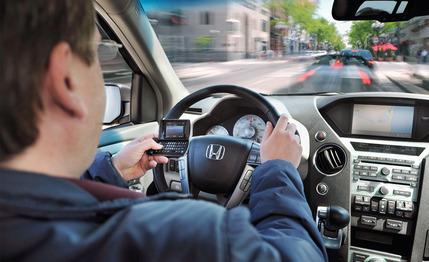
Communication, communication, communication, but at what cost? In many countries it is illegal to use the phone while driving the car, but many people still do so. Maybe using the phone doesn’t seem such a risky thing to do, but texting?

Figures suggest that many accidents are caused by texting drivers, and many companies are offering possible solutions to the problem. Some Apps block phones that are moving through their GPS systems, but this also blocks passenger phones and cannot tell when the owner is on a bus or train, so have override options. Maybe this override option would be attempted while driving however, and that might be dangerous.

A somewhat typical sight?

Other systems make it so difficult to access the texting facility that it would be impossible to use while driving. Well this is all well and good but a teenager that NEEDS to send a text will find a way, and persistence might not be a good thing at this point. The more difficult it is to enter then the more concentration required, and probably more accidents and deaths caused.

Many of the systems available today also require downloading, so they only work in the phone that carries the App. These systems only work if somebody has downloaded it into a phone (typically their teenage son or daughter’s) and the user cannot work out how to disable it, or doesn’t have another phone or friends for just such emergencies.

More sophisticated systems plug directly into the car and broadcast directly to the driver’s seat, but here hardware is required and other problems of system compatibility are raised.

Although I make light of the situation we are addressing an extremely serious issue. If behaviour does not change than these systems may actually put more people at risk, and that is obviously not to anyone’s advantage.

Many other systems that read out text messages or allow you to dictate them are also available, but I am raising a finger at systems that aim to prohibit rather than adapt behaviour, sold to worried parents that think they might be able to stop their children doing something, and not at those that are aimed at responsible drivers.

So does anybody have experience either as a parent or teenage user that they would like to share with the community?

For a few references and more discussion see this article on NBC News.