DIY Electric Brain Stimulation

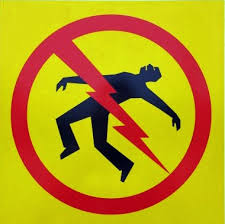
electric shock

Many years ago when I was just a teenager, I came across an interesting machine. It was supposed to tone your muscles while you sit on the sofa eating crisps and drinking tea, by using electric current. Easy to use, just plug the leads into the box, attach the pads to the skin using elasticated bands, and pass the current through your leg muscles. You feel a little twitch, the muscle flinches maybe and somehow is exercised.

Well I of course didn’t need to lose weight or build up my muscles, I weighed 68 kilos, but I had the very thought that any teenage adventurer home scientist idiot would have, “I wonder what it does if you stick it on your head?”

Unfortunately my experiments were soon discovered and the offending article was removed (the machine, not my brain or sense of experimentation) which is a shame, because if not I would today be considered a pioneer, the father figure of the growing DIY brain stimulation movement.

I do not want to suggest that anyone should try it at home, but the movement for self brain stimulation is on a roll. I won’t include any links but you can discover how to build your own stimulator and where to place it either using text, photos or videos easily and freely available online. The small army of practitioners are conducting experiments upon their own brains, circulating their findings and claim real results.

Although these results are anecdotal (not totally “scientific”) users claim that their capacities for mathematics have improved, problems of depression have been lightened, memory is better and that chronic pain can be relieved.

This week the Journal Science News carries an article about the movement, and a couple of months ago WIRED also addressed the problem, and I would like to raise a few issues to add to their arguments.

We might think that it may not be a good idea to conduct such experiments upon ourselves without any expert help, but the people who have had their lives improved through these actions would not agree. Experimentation in this field goes back many years, far longer than you would imagine (in the 11th Century experiments included using electric catfish and other charge generating fish were proposed to treat patients, rays placed on people’s heads etc), and many of the practitioners today are doctors. There is even a commercially available set up that is marketed to gamers, as one finding suggests that the use improves their playing capacity.

This field in some way reflects the path of home treatment using non prescribed drugs in cases of cancer. Many groups exist that experimentally treat themselves with medication that has either not been approved, trialled correctly or is not commercially available for other reasons. If these trials are reported correctly the information they produce becomes important data, and we tend to find that people report extremely well when they are talking about their own bodies and choose their own treatment. And trials of this type may not be possible (or wanted) under the control of drugs companies or research organizations.

So there are obvious ethical issues to take into account, including issues of trust, reliability, risk, responsibility, legal implications and the list goes on, but people will always experiment. According to Doctor Who that is why the human race is what it is, why it is so wonderful.

Once again I find myself thinking about the enhancement problem and its series of fine lines, ideas of the democratization of medicine flow in, and we must not forget how much science is done in this way and how much good comes out of ad-hoc garage experimentation. Do you know what Benjamin Franklin did with a kite and a key in a lightening storm?
Powered Exoskeletons

hulc-testing-1

As some readers will know, I have a great interest in prosthetics and other aids that help people to overcome barriers due to their being in some way different. Recently I wrote articles about prosthetic limbs, interviewed the World record holding runner Martina Caironi and looked at canes for the blind. Many posts ago I looked at elective amputation, and today I would like to cast my gaze over exoskeletons.

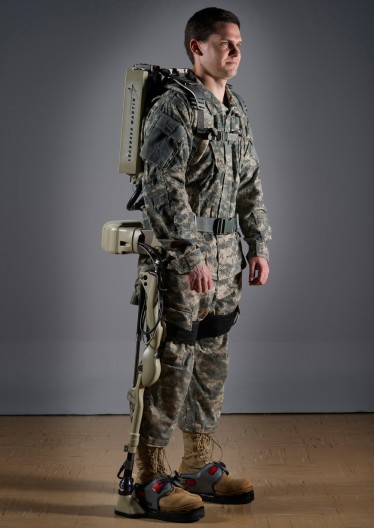
Companies have now started to produce powered exoskeletons in various forms, for both military and civilian use. Dual use technology has also always been of interest to me for some time, as it is difficult to see how we could draw a line between civilian use and development and military use. If we think that most robot limb and hand developments are geared towards treating soldiers who have been injured while on active service, then we see why the military is the largest investor in such research.

If we take the powered exoskeleton the link is more obvious. The military want an armoured exoskeleton that supports itself (so the soldier does not have to carry the weight) that can enable said soldier to carry more ammunition and supplies, heavier weaponry and move quicker and for a longer period of time.

Robocop comes to mind. But one thing is for sure, the FDA recently gave approval for the sales of the first exoskeleton in the USA, and you can also get one if you live in Europe or parts of the Middle East (at a cost of about $65,000), and so they will soon be seen on the streets.

And there are also many applications in hospital. The machines are used to get people walking again who have had accidents, to build up muscle and to aid other forms of rehab such as balance loss. Who could say that technology that allows someone to walk again after years in a wheelchair is a bad thing?

Exoskeleton in Medical Use

Exoskeleton in Medical Use


Well there are actually some arguments related to this. Many of the following are taken from an article called Exoskeletons in a disabilities context: the need for social and ethical research , written by Jathan Sadowski of Arizona State University and available here (payment required).

One problem is that creating the model of how it is correct to move and “be”, makes the non acceptability of alternatives worse. To give an example, the more technology works towards making us all walk upright, as many humans do, the more those who do not walk upright become marginalized. Society does not change to incorporate the differences, but moves to “rectify” the differences, as if it was just a problem to be solved. This may not be the right approach. This wonderful article by Jenny Davis explains all.

Another possible problem is dependence. If a person has access to such a machine they may grow to be dependent upon it. What happens if they lose the use of the machine? If they can no longer afford it, or it is withdrawn, or breaks down? With dependency comes withdrawal, and we might imagine that it would be serious cold turkey in this case. And all this comes without mention of the problem of availability to all. These systems are not cheap.

There are many industrial applications that relate to the needs for the soldiers above, allowing workers to carry heavy objects for long periods of time, or use heavier machinery, something that could on the surface be seen as little more than an advancement in industrialized production methods. This kind of technology would be fantastic for disaster workers too, as well as fire fighters and people working in remote areas or difficult to access spaces.

Here are a couple of links that you might be interested in. This Forbes video shows the development of a new military exoskeleton, once more explaining its civilian use. This TED talk is a little older, showing the development of the same project. Neither has any critical view of the technology however, and the TED talk almost looks like publicity.

In some of the cases above the use of this technology could undoubtedly be described as human enhancement. In others some would say that it is something more akin to a mechanical wheelchair that improves mobility. But one thing is for sure, as Sadowski point out in the article cited above, “any serious consideration – whether critique, condemnation, or support – of enhancement technologies must also incorporate critical inquiry about ethics, politics, justice, and social relations”.

The Rosetta Space Mission

rosetta

This week I am muscling in on Christopher’s space series with a guest post about comet exploration.

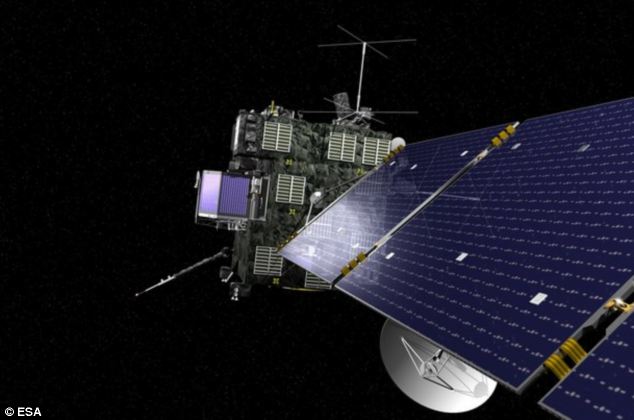
In a couple of weeks (on November 12th to be precise), scientists will try to put a lander on a comet for the first time ever. The mission blasted off 10 years ago, made its rendezvous and began orbiting in August of this year, and is currently being prepared to touch down.

The mission is called Rosetta, and it is operated by the European Space Agency. It is a risky mission though and there are no guarantees that the lander will be able to plant itself safely on the comet. But if all goes well, the lander will stay operational as the comet flies closer and closer to the sun in its elliptical orbit, so that it can study how proximity to the sun changes the elements that make up the comet. The orbiter will follow, and should stay with comet until the end of next year, while the lander will operate until the spring when it will then get too hot to function.

Comets are some of the oldest structures in the solar system, so learning what they are made of and how they undergo change is seen as the closest thing to going back to the formation of the system currently possible. Scientists hope to gather evidence about water and carbon content, to see if the Earth could have got its first water and elements that are needed for the development of life from such bodies.

The Europeans Space agency has an interactive graphic so you can see how Rosetta arrived at its destination, and it is well worth a look. You really get an idea of the task of getting to something that is just a few KM across and traveling at 55 000 Kilometres per hour.

This article in the online journal Science gives lots more information, and there are some great photos here.

The European Space Agency are also running a competition to name the area where the craft is due to touch down. They want the public to propose names and reasons to use them, so that someone has the chance to enter the history books as their name will be immortalized. Why not give it a go, read more here.