Misshapen Food

bendy-marrow

More About Food Waste

I read with interest this week that leading UK supermarket chain Asda is starting to sell oddly shaped vegetables in a bid to waste less food. This announcement leads me to draw a few conclusions that I would like to share with you all, and brings back a few memories.

My mum and dad had 3 boys to bring up, in the dark shadow of the mills of Manchester, and they probably weren’t what we would call rich (today). Every year we went to Skegness for our summer holidays, and every Sunday went to the market.

Markets were a different thing then I think, everyone went. My mum used to buy her biscuits there. She bought them in a bag, a huge bag a bit like the ones we use today to put the rubbish in. The biscuits were broken. They had not made it into the boxes in the factory, were collected up and sold in huge sacks for next to nothing (I presume).

There was a chip shop too that put batter bits on your chips if you asked, the crumbs that had fallen into the fat off the fish, lovely.

As I became some form of adult I continued the tradition. A local chocolate maker sold bags of ‘misshapes’, again chocolates that had come out of the mold wrong, had treacle dribbling out of them or had got squashed. The same chocolates that cost a fortune in their branded high street shops.

Surely this must be a good way to use the wasted ones, although there is the issue of supply and demand that I raised in my previous post about food waste.

Vegetism

So back to Asda. They are going to sell strangely shaped vegetables for less than their regularly shaped cousins. Are they going to sell them for less though because maybe they are worth less (or worthless)? This is a strange idea for sure. They are all fresh vegetables, they all contain exactly the same nutritional value, you can cook them all and they all taste the same, so why sell them for less?

Well we live in a society here in Europe that has engineered a situation in which only certain shapes are good. You might recall I mentioned ableism in a recent post and it certainly isn’t difficult to see how the human figure has been moulded into an ideal type, with all variations somewhat frowned upon or in need of correction (particularly I feel in the case of women).

And this is also the case for vegetables. In this case aesthetics is enshrined in law, as the European Union has regulations about the size and shape of fruit and vegetables. These regulations were ridiculed in the popular press ten years ago as it was said that straight bananas could not be sold. Read all about it here.

And vegetables come in at least 3 categories; nice looking that go into supermarkets, not so nice looking that go into processed food production, and unfit for human consumption, that go into animal feed. But it can all be used, you get less for the ugly ones however.

So producers have always been able to sell these vegetables, but for different uses and at different prices, so I must come to the conclusion that this is a marketing ploy in order to sell them for more. Just my opinion of course, but cynicism runs deep in my line of work.

It would be great to see them though in with their cousins for sale all together at the same price, but reports are that they are often left on the shelf to rot. Apparently people prefer a correctly curved banana to a straight one, and a straight marrow to the one in the photo above.

Selling Surplus Food

community shop

This week I want to add a post to my food series and related posts from earlier this year.

One of the posts in the series was about wasted food.

The Scale of Waste

Just to give you an idea of the content I opened with the following: It is estimated that in the USA between 40 and 50% of all food produced is wasted. There are about 320 million people in the US, so we could safely say that this wasted food could feed at least 100 million people.

And the shocking thing is that nearly all of this wasted food is edible. It is close to its sell by date, the packaging is damaged or incorrectly labeled, Christmas pudding in January. Much of it never even gets to the shops, it fails a quality test because the label is not correctly attached or the packet printing is wrong, and it is discarded.

This week the first UK based Community Shop opened, and in this shop they only sell discarded food. Sounds like a great idea, they take food that is lost during the preparation stages, on its way to the supermarket, and food that is discarded once it has arrived or sat on the shelves for a while, and they re-sell it. Very cheap (70% less), you can make a profit and waste problem resolved I thought. Great!

But of course it is not that simple.

Supply and Demand

One problem is that if you sell this food at a fraction of the previous price, people will buy it and not the full price food. This means that for every tin of beans bought at the community shop, a supermarket sells one tin less. So they might not like that, and that is why in many cases they prefer to destroy the food than to pass it on.

This problem can be seen in this case on a local scale, but it also happens on a global scale. How do you think the farmer in South Africa feels when she sees thousands of tons of free US grown grain distributed for free in a neighboring country? She cannot compete and sell her food any more. Feeding a population without charging them directly destroys surrounding markets.

This is not just a food problem. When we donate our old clothes and they turn up worn by kids in Kenya (Manchester United shirts come to mind), that means that those kids did not buy their clothes, and the local clothes suppliers, and makers, and distributors, don’t work.

So the community shop have found an answer. You have to be a member to buy food there, and to be a member you have to be receiving benefit from the government and live within a local postcode area. Only 500 members at a time, and membership is not for life. The shop also offers free courses in food preparation, CV writing, and many other things that help to manage the household and improve quality of life. Sounds great, but we should remember that many people are working poor that do not receive benefits, or have fallen through the benefit net, what about them? What we need is more of these shops, so that the entry rules can be broader.

This is a great idea. Let’s use the stuff instead of throwing it out. And to be honest I have little sympathy for an industry that is so wasteful and non-sustainable.

If there were a community shop of this type on every corner we could all benefit, and I for one wish them well with their endeavour.

Drone Wars

Drones

Mauricio loves remote control aircraft. When I bought a model plane for my son he was the first round to see it, he told me how to strengthen the wings, and recounted tales of daredevil antics and crashes in the heart of South America.

Now he wants to get a license to pilot a drone, because now in Italy where he lives you need a license, which is not the case in the USA.

Drone Use and the Law

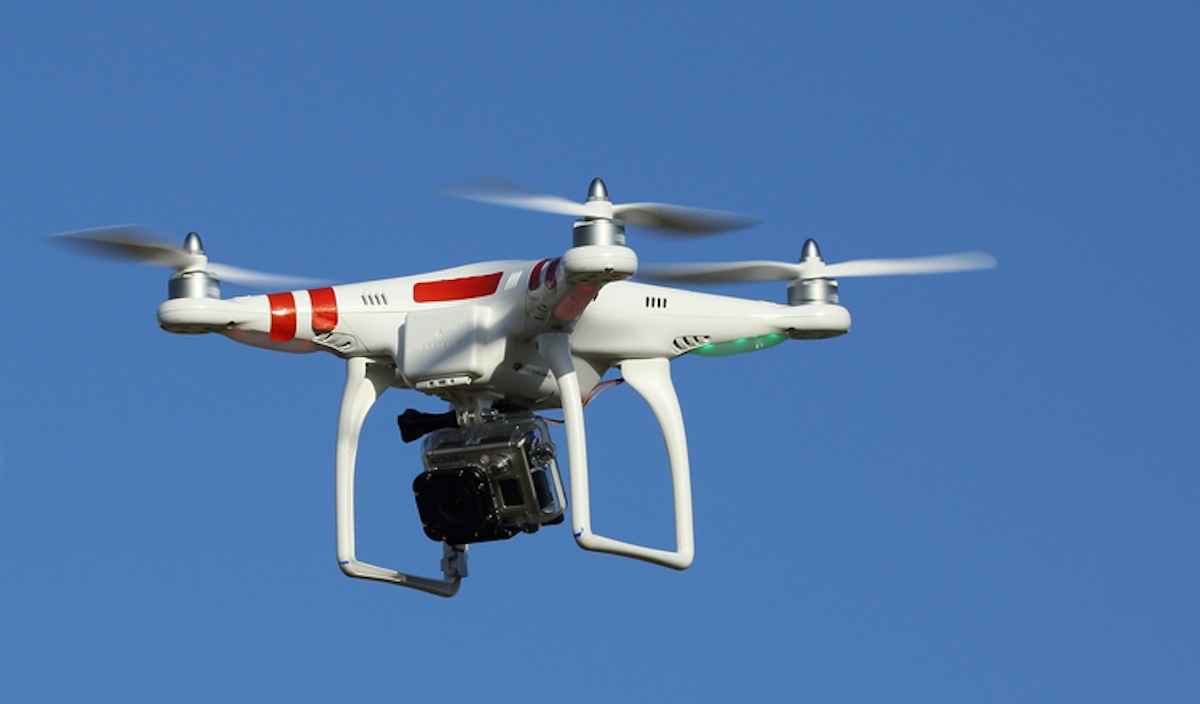
Drone use is becoming ever more common, but there have been a few pieces in the press about people getting into trouble for drone use.

In October, a European football qualification match was abandoned after a drone carrying inflammatory language on a large tail was flown over the pitch. It’s appearance caused a scuffle between players that got so out of hand that the referee had to lead the players off and later abandon proceedings.

In what I might see as a copycat incident a week later, a man was arrested after a drone was seen flying over Manchester City’s stadium during a game. Read more about these events on the BBC.

This week reports abound of a near miss at Heathrow airport in London involving an unidentified drone. An Airbus carrying 180 people almost collided with the drone that is too small to appear on radar. Police are searching for the pilot. This article describes the event and goes on to explain flying rules in the UK for such machines. The owner of the drone will be in serious trouble when the police catch him, and could face fines of up to half a million pounds.

In a related incident police are investigating reports of drone flights over a nuclear power station. Once again in October but this time in France, police received reports of a series of drone flights over nuclear power stations. The flights were at night, and seem to have been coordinated, and this fact has set a few alarm bells ringing with the French authorities. Were they spies, terrorists, anti nuclear campaigners or just people having a laugh? Who knows? Read more here.

Drone use is becoming ever more common and the trend is bound to increase, but given the problems above this growth is certainly not unproblematic. In a previous post I wrote about privacy implications, and earlier this year Christopher wrote about Amazon’s possible drone delivery service. Find the links here.

On a scientific note NASA are developing a biodegradable drone. It is made from mushroom and cloned paper wasp spit, and the materials used are hailed as possibly offering a new substitute for plastic. If the machine crashes it simply biodegrades leaving no trace, so could be used in sensitive areas without fear of contamination.

Certainly one to look out for.