Bluetooth Gloves

bluetooth gloves

Life in the Netherlands involves biking. Biking involves getting cold hands in the winter. Getting cold hands in the winter means difficulty operating your mobile phone.

It is typical, you are riding down the cycle-path, it is raining, your hands are cold, you might be wearing gloves. The phone rings. You stumble to the side of the path, take your gloves off if you are wearing them because otherwise you can’t get into the pockets of your jeans, through the waterproof trousers and take out your phone. By this time at the last second the person decides that you are not going to answer and bang… missed call with a withheld number. What was it? You will never know.

And your hands are now even colder, the touch screen does not register and in a nervous moment you drop the phone trying to put it back into your pocket with wet hands. You get off the bike, put the stand down, go to retrieve your phone (the back has come off so you have to reset various things) and the bike falls over because of the weight in the panniers.

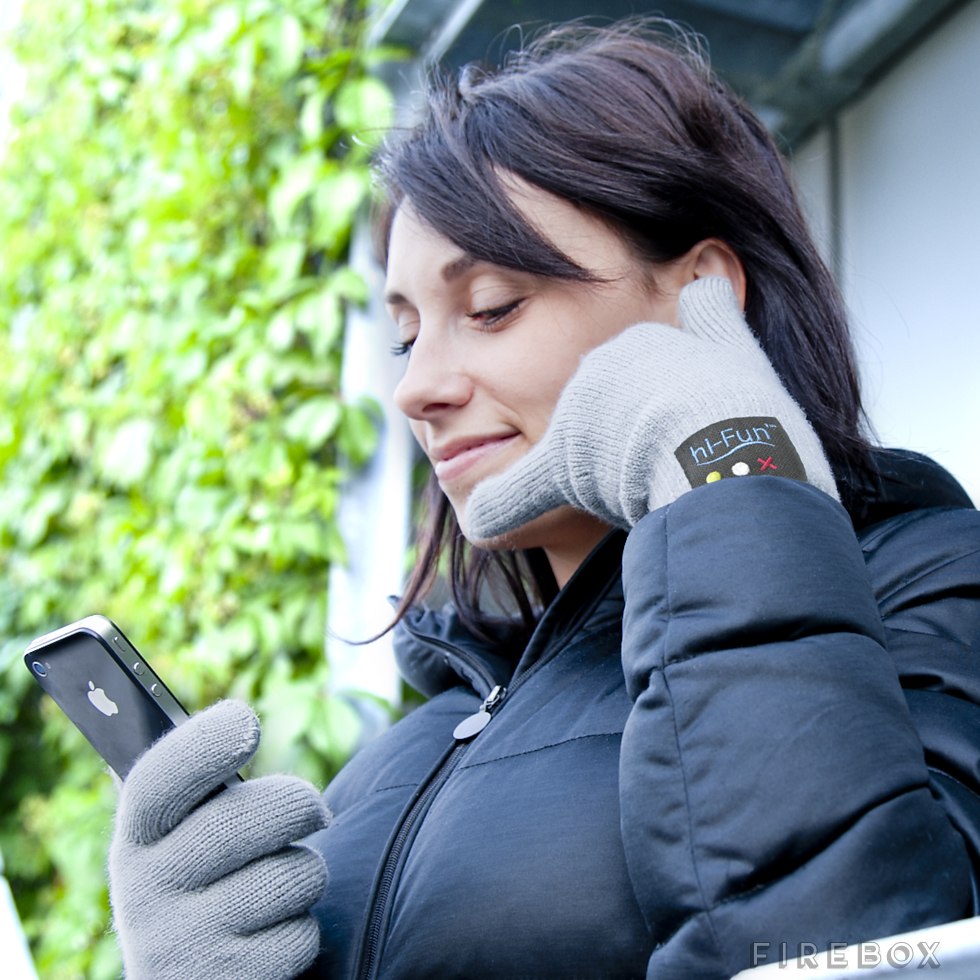
This every-day occurrence could become a thing of the past though, thanks to a fine invention. Bluetooth gloves. Yes ladies and gentlemen, gloves that use bluetooth to operate your phone. You just press the answer button on the glove, make the phone with your fingers as you do when you are pretending to make a call or playing with the kids, and speak. The sound comes out of the thumb, and the pinky has a microphone.

Available in black or grey, mens or women’s sizes, but unfortunately only with the phone fitted in the left hand, the gloves can even be worn while operating a touchscreen. They are dry cleanable and charge with a USB.

I know what is going on my list for Santa.

Car Trouble

car loans

Last week the New York Times ran an interesting article about cars fitted with the so-called starter interrupt device.

Many might know that some cars have an engine cut off switch that can be remotely operated. If someone steals your car you might be able to track it and turn the engine off if you have forward thinkingly fitted one. But they are becoming more commonly used today on cars that are sold with lease or debt payment.

And it is extremely simple, I sell you the car and as long as you repay the debt or lease charges the vehicle is yours to do what you will, and drive where you like. But if you miss a payment, I can remotely track your movement and at the moment I see fit I can block the car.

So one morning, you have not made the payment on Friday because you are on holiday, you go out to take your child to school, or the dentist, or the hospital because she is sick, and the car won’t start.

Now I would agree that if you want a car you should pay for it, and that if you don’t keep up payments you may lose it, but there are other knock on effects to using such technology in this way. Of course there is the problem that you might block a car that would be used in an emergency situation, like the one suggested above. But the effect of having such a ready resource in reclaiming the car may lead you to sell it to someone who might have difficulty repaying the loan. If you knew that you might have to first find the car, send a car transporter out to recover it and incur some time and financial interference, you might think twice about selling it to someone with a bad credit rating and precarious situation.

If you know you can just track the car, block it when it is in a good place for you to collect, and always know where it is, then who cares? Give them the car and get it back later.

These devices are currently fitted on about 2 million cars, and the article states that their use is helping to push the use of sub-prime auto loans. I am no financial guru but I have heard a lot of talk and read a lot about sub-prime mortgages, and they don’t get good press.

So even if we put aside the issue of privacy, as the lender can see your every move (I put it aside because if you carry a mobile phone you are in the same boat), there is the problem of physical security in case of malfunction, data protection and of course dragging people into high rate loans and all the associated black market dealings that go with debt. But we should not forget that this technology also means that people who would not be able to buy a car can get hold of one, and people might accept the device if the choice is that of car with device, or no car.

High rate loans are justified because they are high risk, so I might argue that if you take the risk out of the loan then the rate should drop, this does not however seem to be the case (surprisingly).

Read more on the argument through the link to the New York Times above, and let me know in the comments section if you have any experience.

INSS Social Sustainability Multi Media Competition

threeleggedstool

Technology Bloggers is pleased to support the Integrated Network for Social Sustainability (INSS) Digital media competition “Visions of Social Sustainability”.

The overall goal of the INSS network is to produce a clearer, more applicable definition of social sustainability, and to create opportunities for engaging people in discussions about social sustainability. The network is made up of individuals from various jobs and professions to consider social sustainability, and aims to put people engaging with social sustainability in touch with one another to speed up and promote understanding of this important aspect of sustainability.

The competition is looking for creative explorations of what social sustainability means, how it is being pursued, and how it might be advanced further. The hope is that it will push forward discussion of social sustainability by bringing a broader range of voices into the discussion.

We would invite all readers to think about submitting an entry, give a voice to their ideas and push debate and action in a positive way. Technology Bloggers Editor Jonny Hankins is part of the team that have prepared the call, and through the Bassetti Foundation will help to promote the winning entry.

So why not get your camera or telephone out and have a go?

— Call For Entries —

Multi-Media Competition: Visions of Social Sustainability

What does social sustainability mean to you? Where do you see it in practice? And what are the ingredients for a more sustainable world?

In the past several decades, sustainability has grown into an important and all-encompassing priority for communities and nations around the world. While there is little debate that current patterns of development, production, and consumption are un-sustainable, there is less agreement about what a sustainable world looks like.

There are countless visions of sustainability, and the Integrated Network for Social Sustainability is interested in your vision of social sustainability in a short video or digital media presentation.

Eligible Entries

Amateur or non-professional artists/producers may submit one piece of work in any digital media format up to 10 minutes in length, including but not limited to videos, photo essays, games, and apps. Submissions may be produced using cell phones or other household recording technologies. Limited to one entry per person or group.

How to Submit

Submissions can either be sent directly to visions.of.sustainability@gmail.com or via a link to any large file hosting service (dropbox, hightail etc). Email us with any problems uploading or sending the files. To be considered for the competition, entries must be received by 5 pm EST on January 3, 2015.

Judging

All eligible submissions will be hosted on the INSS YouTube channel and website. The competition will be judged through public vote, and will be promoted through the member institutions of the INSS.

Winning Entry Publicity

The winning entry will be shown at the April 2015 INSS annual conference, where its producer(s) will be invited to present their work. The entry will also be hosted on the INSS website and promoted in other INSS communications. The Bassetti Foundation will promote the winning entry on its website and will seek international press coverage of the winning producer(s). 

Rules

  • Your entry must respect copyright. Any music, video and photos must be your own or used with permission and acknowledged in your description (royalty free or stock audio/photos are ok to use).
  • Your entry must not be owned by someone else (e.g. if you’ve entered into another contest and they now own it).
  • Your entry should be appropriate for a public audience in language and images.
  • Still image and/or graphic slide shows are also eligible, as well as any other digital format.