A lunar base

You may be wondering whether we have the ability to have a permanent base on the Moon. In the late 1960s and early 70s twelve men set foot on the Moon. Nobody has set foot on the Moon since… but why?

The answer is quite unfortunate really. People got bored.

In the 60s the Soviet Union and the United States – arguably the two most powerful nations at the time – were racing to the Moon. Russia won the race to send a man into space – and return him safely. Russia also won the race to construct a space station. America however won the all important race to the Moon.

For a space explorer looking up into the night sky in the 50s and 60s, the goal was always to get to the Moon. So what happened when America got there? The space race lost public support. People started questioning why there was a need to go into space, why money wasn’t being (better) spent elsewhere. The US had shown that it could get to the Moon, and it could get there first, so why carry on?

Today

As the recent crash of the Virgin Galactic test flight and the ISS destined rocket which exploded show, going into space can still be dangerous. That said however with today’s technology we are more than capable of travelling into space reasonably safely.

It is thought that the Moon has a lot of water buried within its surface. Water is a critical element required by us to live. Water can also be used to make rocket fuel. Rocket fuel uses hydrogen and oxygen – the key components of water.

Rockets on Earth need huge amounts of fuel to escape the reaches of Earth’s gravity. The Moon is significantly lighter than Earth, and therefore rockets would need much less fuel to take off. This makes flights into space (to Mars for example) much more viable, if they take off from the Moon.
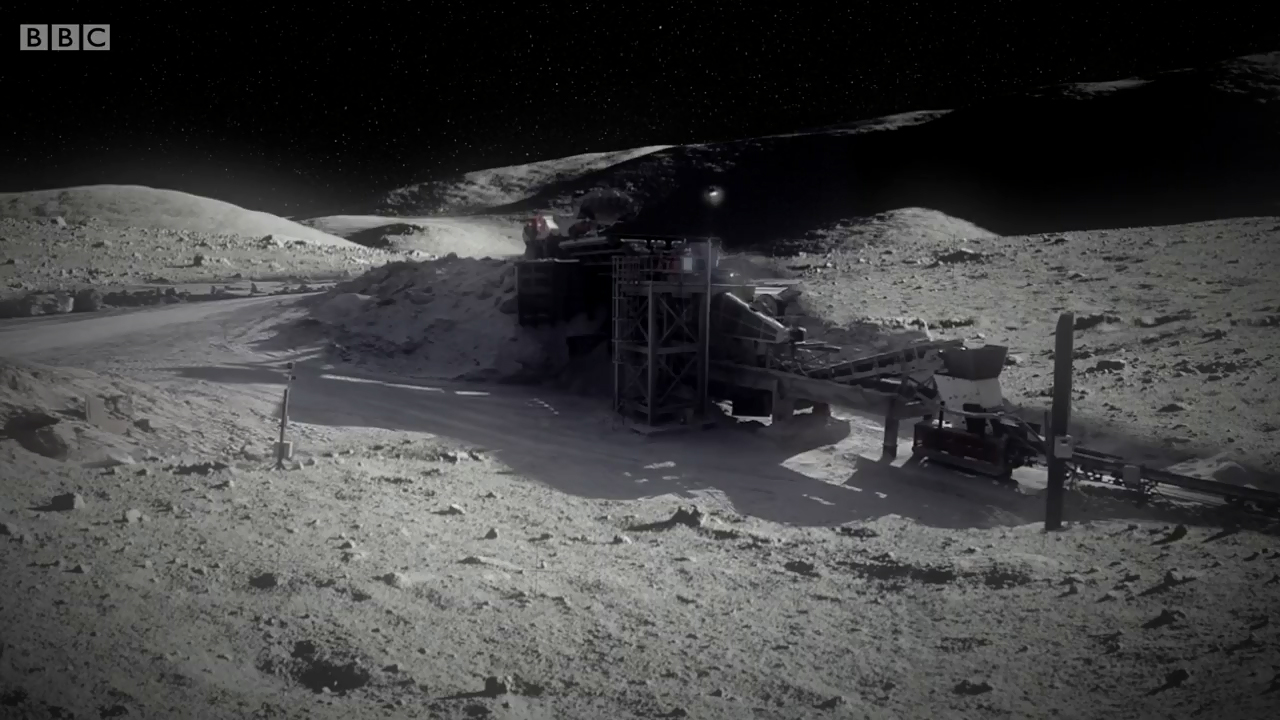
A manufacturing plant on the MoonNow, you may be thinking that we would need to get the rockets to the Moon in the first place, so why waste time relaunching them from the Moon? Well maybe we wouldn’t. The Moon has many of the resources we would need to build rockets. We would be able to create manufacturing bases on the Moon, with very little supplies from Earth. Progress would only be accelerated by the use of our new friend (or foe?) 3D printers.

All electrical power could be provided by solar panels – which we could build on the Moon. Lunar sun is very predictable, and with no atmosphere, the energy we could generate would be much greater than here on Earth.

Moon Base

A permanently manned Moon base is not a new idea. The US has had many plans over time to create a Moon base – originally for military reasons, however now for other reasons like energy and space travel. Japan, Russia and India are also currently all exploring the concept of establishing a base on the Moon within the next few decades.
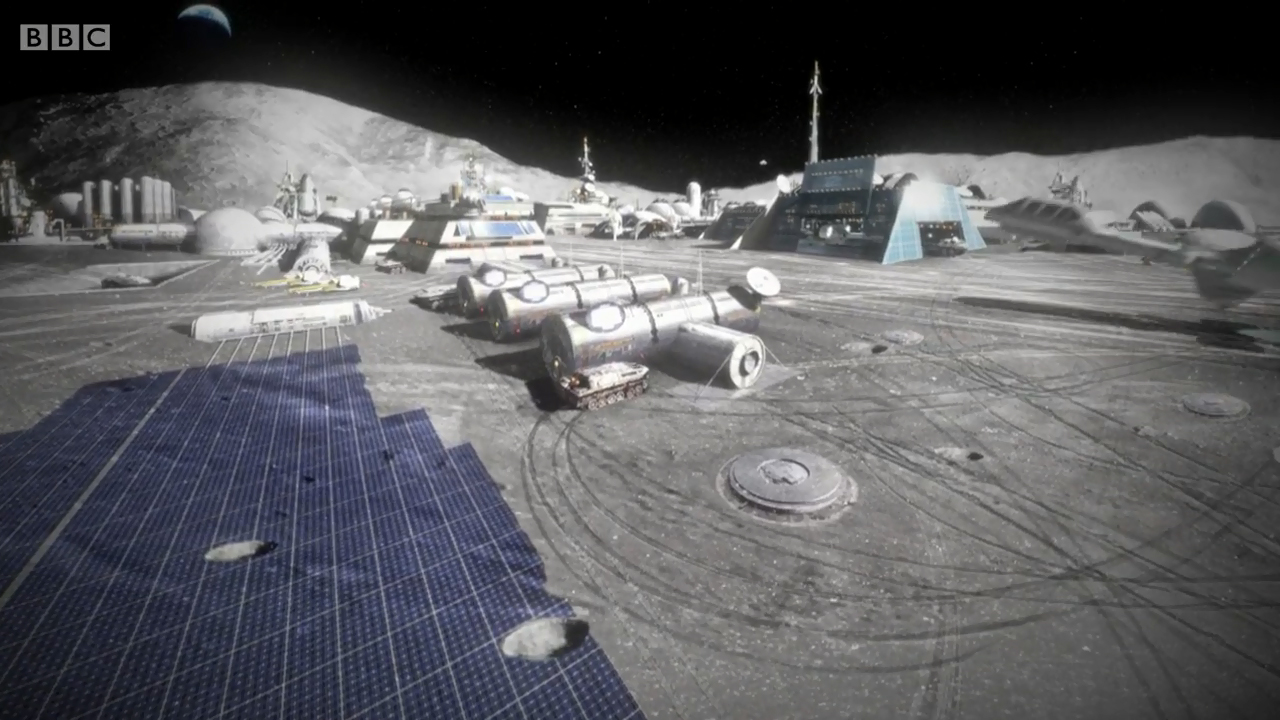
What a Moon base could look like

The Moon could be a great service station for rockets. Missions into outer space could use the Moon as a pit stop to pick up supplies and refuel, before going on their way.

The Moon’s potential for solar energy could also be another interesting use for a Moon base. If we could cover vast areas of the Moon in solar panels and then transmit the energy back to Earth, we would be able to solve the global energy crisis. Naturally you would have to somehow persuade fossil fuel companies that it is a good idea first – and considering the power and influence they have, this could be difficult.

We currently have the technology and capabilities to create a permanent lunar base, now all we need is the enthusiasm and funding to make it happen.
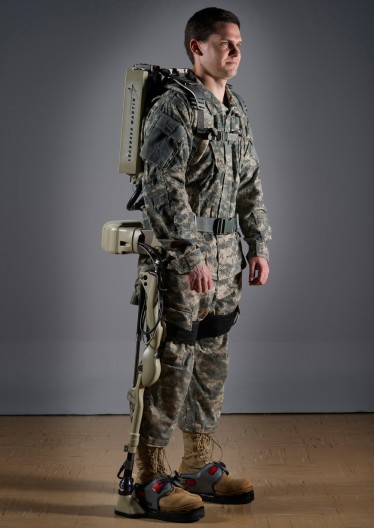
Powered Exoskeletons

hulc-testing-1

As some readers will know, I have a great interest in prosthetics and other aids that help people to overcome barriers due to their being in some way different. Recently I wrote articles about prosthetic limbs, interviewed the World record holding runner Martina Caironi and looked at canes for the blind. Many posts ago I looked at elective amputation, and today I would like to cast my gaze over exoskeletons.

Companies have now started to produce powered exoskeletons in various forms, for both military and civilian use. Dual use technology has also always been of interest to me for some time, as it is difficult to see how we could draw a line between civilian use and development and military use. If we think that most robot limb and hand developments are geared towards treating soldiers who have been injured while on active service, then we see why the military is the largest investor in such research.

If we take the powered exoskeleton the link is more obvious. The military want an armoured exoskeleton that supports itself (so the soldier does not have to carry the weight) that can enable said soldier to carry more ammunition and supplies, heavier weaponry and move quicker and for a longer period of time.

Robocop comes to mind. But one thing is for sure, the FDA recently gave approval for the sales of the first exoskeleton in the USA, and you can also get one if you live in Europe or parts of the Middle East (at a cost of about $65,000), and so they will soon be seen on the streets.

And there are also many applications in hospital. The machines are used to get people walking again who have had accidents, to build up muscle and to aid other forms of rehab such as balance loss. Who could say that technology that allows someone to walk again after years in a wheelchair is a bad thing?

Exoskeleton in Medical Use

Exoskeleton in Medical Use


Well there are actually some arguments related to this. Many of the following are taken from an article called Exoskeletons in a disabilities context: the need for social and ethical research , written by Jathan Sadowski of Arizona State University and available here (payment required).

One problem is that creating the model of how it is correct to move and “be”, makes the non acceptability of alternatives worse. To give an example, the more technology works towards making us all walk upright, as many humans do, the more those who do not walk upright become marginalized. Society does not change to incorporate the differences, but moves to “rectify” the differences, as if it was just a problem to be solved. This may not be the right approach. This wonderful article by Jenny Davis explains all.

Another possible problem is dependence. If a person has access to such a machine they may grow to be dependent upon it. What happens if they lose the use of the machine? If they can no longer afford it, or it is withdrawn, or breaks down? With dependency comes withdrawal, and we might imagine that it would be serious cold turkey in this case. And all this comes without mention of the problem of availability to all. These systems are not cheap.

There are many industrial applications that relate to the needs for the soldiers above, allowing workers to carry heavy objects for long periods of time, or use heavier machinery, something that could on the surface be seen as little more than an advancement in industrialized production methods. This kind of technology would be fantastic for disaster workers too, as well as fire fighters and people working in remote areas or difficult to access spaces.

Here are a couple of links that you might be interested in. This Forbes video shows the development of a new military exoskeleton, once more explaining its civilian use. This TED talk is a little older, showing the development of the same project. Neither has any critical view of the technology however, and the TED talk almost looks like publicity.

In some of the cases above the use of this technology could undoubtedly be described as human enhancement. In others some would say that it is something more akin to a mechanical wheelchair that improves mobility. But one thing is for sure, as Sadowski point out in the article cited above, “any serious consideration – whether critique, condemnation, or support – of enhancement technologies must also incorporate critical inquiry about ethics, politics, justice, and social relations”.

The Importance of the Moon

Earth's natural satellite - the moonThe Moon is something many of us take for granted. It doesn’t really do that much, it just sits up their in space.

When someone talks about the Moon what springs to mind? Werewolves? Cheese? Wallace and Gromit?

Maybe you think of Apollo 11 in 1969 and Neil Armstrong and Buzz Aldrin setting foot on the Moon.

I watched a very interesting BBC documentary recently called Do We Really Need the Moon? It explored how important the Moon has been to the development of life on Earth, and how important it may become in the future of space travel.

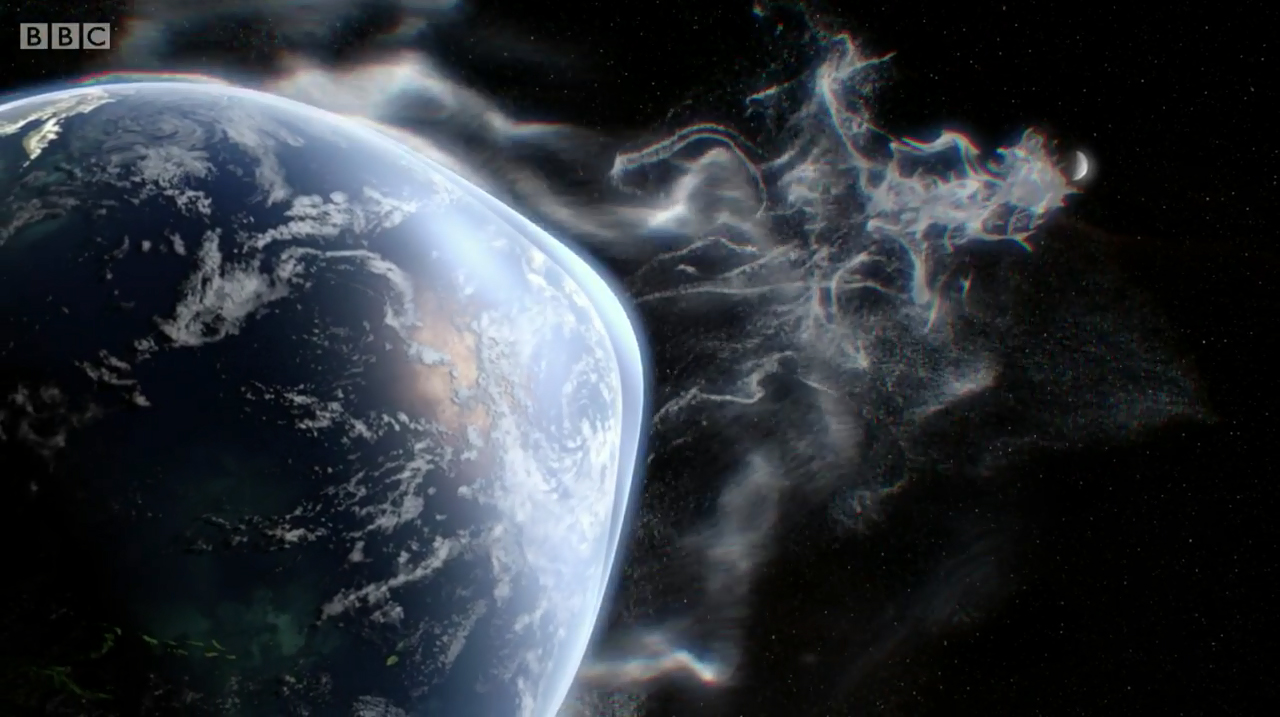
The Moon is likely to have been critical to the creation of life on Earth. It is believed that the Moon was formed when another planet crashed into Earth. At this point, the Earth was an uninhabitable, unstable lava wasteland. The collision created millions of pieces of molten rock which were sent into orbit. The biggest of these chunks of liquid rock grouped together (thanks to our old friend gravity) to form a new structure. Eventually all the pieces either became a part of the Moon, joined onto the Earth, or were flung off into space.

This massive collision reset Earth’s chemistry. Over the next 7 million years, it is thought that the Earth cooled, and water vapour condensed to form oceans. Oceans which the Moon controlled. The water nearest the Moon is affected by its gravitational pull more. This means that water recedes in other areas, amassing in the part of the ocean that is closest to the Moon. This is what creates the tides we know today, the same tides that are thought to have helped to create life – around 4 billion years ago.

Moon's gravity pulling the Earth

A picture from the BBC documentary Do We Really Need the Moon? showing how the Moon’s gravity pulls the oceans of the world towards it – creating tides.

So the Moon helped to create life, but that’s not all, it also helps to maintain it. The distance the Moon is away from the Earth, means that the tides are not too extreme. If the Moon were 20 times close than it is today then the Moon’s gravity would be 400 times stronger than it is today. This would create a huge tidal surge that would completely submerge all major cities around the world. At night, London would be underwater, and then a few hours later the waters would recede and flood New York. Evolution would not be able to adapt to changes that happened this quickly, and life on Earth would not exist.

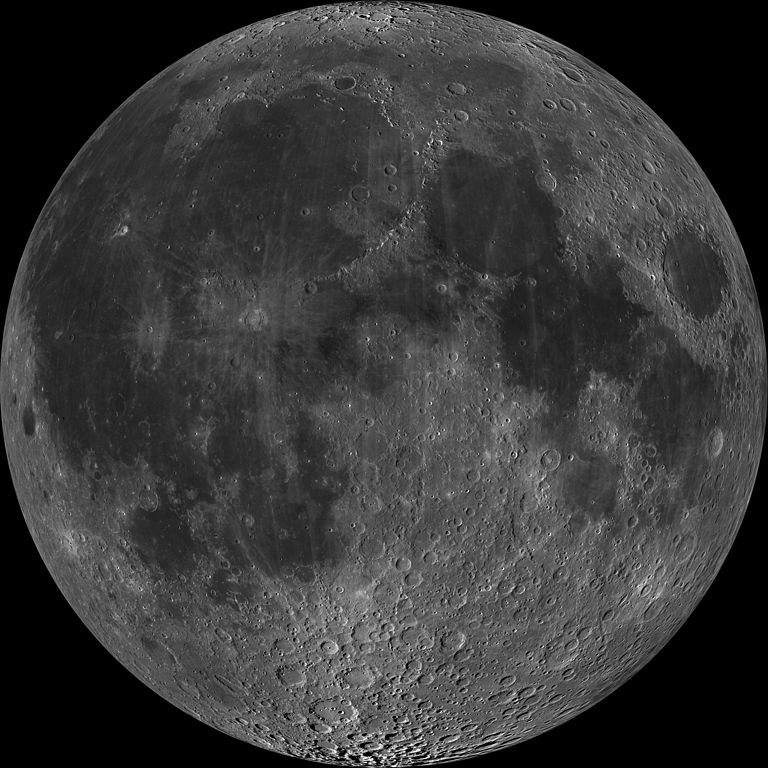
The Moon also protects us in another way. Here is an image of the nearside of the Moon – the side we always see.

The nearside of the MoonNow here is an image of the farside, also known as the dark side of the Moon.

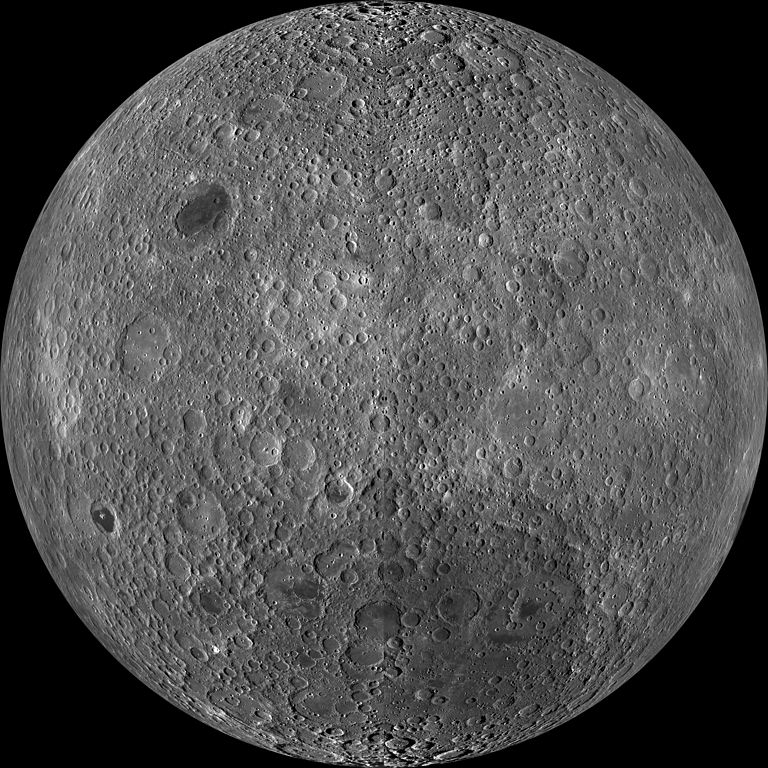
The farside of the MoonNotice a difference?

The farside is covered in a mass of craters, whilst the nearside is largely unscathed. Every crater on the farside of the Moon is a potential impact that the Moon has prevented for the Earth. Imagine that all meteoroids in space are chunks of iron, and the Moon is a giant magnet. The Moon pulls a lot of this space debris towards it.

Inevitably some meteoroids will collide with Earth, however the Moon does a pretty good job of shielding our planet from a lot of dangerous impacts.

We are pretty lucky really, if the Moon were much closer, or bigger, we wouldn’t be able to survive. Likewise, if it didn’t exist, we wouldn’t be here in the first place.

So next time you see the Moon, spare a thought for how integral it is to life on Earth.

That’s Not It!

Enjoyed this article? Feeling like you want a bit more Moon stuff? Next week I continue to look at the Moon, this time from the perspective of space travel!