Could You Benefit From An iPhone VPN?

If you need a secure connection on your iPhone, then you may find an  need an iPhone VPN.

It is important that you sign up with a trusted VPN provider. With a trusted iPhone VPN provider, you will get the best service and most reliable connections. The best VPN providers write all of their own software and can therefore offer the fastest service worldwide.

What Does an iPhone VPN Do?

Simply put, an iPhone VPN protects your privacy. When you have a VPN for your smartphone, you have access to four primary advantages over standard internet browsing:

  • Stop ISP Inspections. Prevent your internet service provider from throttling, prioritizing, and inspecting the data that goes in and out of your iPhone.
  • Protect the Activities That You Do Online. A VPN is a secure “tunnel” that takes you to the internet. With a VPN, you get to cruise the internet your way, not someone else’s way.
  • Protect Your IP Address. With an iPhone VPN, the only thing websites will see is the server’s communications.
  • Prevent Location Identification. With a VPN, your IP address is substituted for one that is not based on your location. This prevents location-based ads from affecting your internet experience.

An iPhone VPN Allows Access to Country Specific Sites

Some people feel that an iPhone VPN is actually very limiting. With a VPN tunnel, you can access country specific sites, but not sites outside that country.

If you have a US VPN, for example, you would be able to visit US sites, but not Canadian sites. The same rules apply for every country’s VPN connections.

Though limiting, this type of connection provides the greatest amount of security for the end user. That is why you should use a global VPN provider for your iPhone VPN needs. Global VPN providers have servers located around the world and allow you to access your favorite websites from anywhere. If you need to access a secure site in France, but you live in Canada, you can log into the French VPN and have a high speed connection.

An iPhone VPN Provider Should Provide You Many IP Addresses

One of the difficulties that VPN providers face is limited resources and a reliance on third parties. If you are choosing an iPhone VPN provider, you should look for one that can provide you with many IP addresses. For the most reliable connections the provider should write their own server software, own their own hardware, and manage their own network.

Why Is A 256 Bit Encryption Better?

A 128 bit encryption module is not as secure as it used to be. That’s why the best iPhone VPN providers utilize 256 bit encryption to provide highest level of security possible. You should have access to multiple protocols like PPTP, OpenVPN, and L2TP/IPsec to secure all of your devices.

Encripted data

VPN can offer safer surfing, thanks to network encryption

Summary of Benefits

An iPhone VPN is not a substitute for your mobile provider, as you need internet in order to access the VPN server. Once you have logged into your secure tunnel, however, you get the added security benefits that a VPN provides.

When you want a secure solution to browse the internet from your iPhone, then a VPN is often safer. Bypass location based IP blocking, avoid geographical restrictions, and access your favorite websites from home or abroad.

A Bad Memory Erasing Pill

The February issue of Wired magazine contained an article about an interesting medical breakthrough related to memory. Scientists working on the development of a pill that can erase bad memories have achieved success in laboratory rats.

memory erasing pill

Bad memories, a thing of the past?

It is a long and detailed article, but I will try to summarize it in a few sentences. Memories are stored in different parts of the brian, emotions in one part, visuals in another etc. In order to remember something a sort of chain must be formed that link the separate parts of the memory, a chain formed by protein. If you can block the protein you can block access to the memory.

Scientists have been experimenting for decades to try and find a compound that can do this, and recently seem to have found one that works on rats. The experiment is relatively simple, the rats are exposed to series that they learn to recognize, an example might be a series of musical notes followed by a painful electric shock. As soon as the rats hear the first note in the series they get scared and agitated. Administer the compound and the association is lost, you can play the series and the rats no longer remember the consequences until BANG, the shock arrives.

Cruel but bearing important consequences, if the links in the chain can be broken then the memory is not cancelled but the individual no longer has access to it.

As I said above different parts of the memory are stored in different places, so the hope is that different compounds will be able to delete different aspects of painful memories. One might close access to the memory of the scent of an ex girlfriend who left you for your best mate, or the pain experienced in an accident, or the vision of your dog jumping out of your third floor bedroom window while chasing a ball that you accidentally threw too hard for him to catch, or other such traumas.

Talk is of selected memory loss by pill, but of course this is far in the future if ever at all, but the very prospect raises some interesting ethical dilemmas. We are who we are by experience. I don’t play with knives; I have a scar with 7 stitches in my hand to remind me why, but even without it the memory of a Christmas Eve trip to Wythenshawe Hospital lingers on.

And having seen various governments conduct more than questionable research on their own populations (and others) and I am not just talking about despot regimes but the very birth states of democracy themselves as this apology given by President Obama demonstrates, I sincerely question the ethics behind such a development.

So the question is this, are we seeing a great medical and technological breakthrough, a leap in human advancement, or the creation of another dangerous tool once it gets into the wrong hands?

Google Fiber start laying optical fibre cable

On the 6th of February, Google announced that the company was “ready to lay fiber” in Kansas City (Kansas and Missouri), and restated the goal of getting customers up and running in the first quarter of 2012. The project is nothing short of revolutionary, both for Google and the broadband industry as a whole.

For Google, this is a major first foray into the consumer ISP and infrastructure side of the tech industry. It’s also an opportunity to offer and refine the company’s core online products – without the restrictions of scaling down to suit users’ limited bandwidth access.

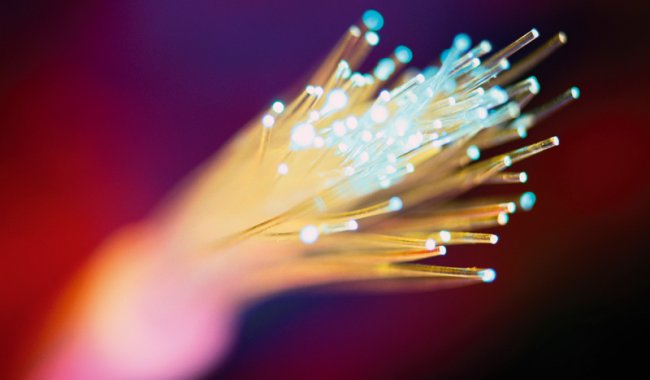
An optical fibre broadband cable

Data can be transported at the speed of light through optical fibre cables

For the ISP industry as a whole, it’s potentially alarming. By the end of the year, many internet service providers may have a much higher standard to live up to, and many restless customers on their hands, due to the new competition. Everything depends on two basic questions: how much more bandwidth will Google be able to offer customers, and how much will they be charged for it?

How much speed can you get from optical fiber cables?

Google promises 1gb/s fiber connections. 1 gigabit per second is the same as 1,000 megabits per second – “more than 100 times faster than what most Americans have access to today.”

That’s so impressive that one can’t help being a little suspicious. After all, nearly all of the broadband companies claim a much higher speed than their service actually delivers; due to network overhead, distance from the node, ‘peak time’ traffic, and various other details, your average speed is probably only a fraction of what your ISP promises.

Google Fiber has one active trial in progress, a small community near Stanford University. A user posted a speed test not long ago showing a 151.68 mb/s download speed, giving a good real-world example of what day-to-day users can expect from Google Fiber.

Other fiber companies aren’t even claiming speeds like Google’s (let alone delivering them). The provide in current “fastest internet in the US”, Verizon’s FiOS, tops out at 150 mb/s (if your math skills are sleepy, that makes Google Fiber potentially over 660% faster). The runner-up is AT&T’s U-verse, which has a “Max Turbo” plan of 24 mb/s. In both cases, real-world data shows users getting a wide variety of results, from far worse to sometimes even better than quoted (especially when using the companies’ own speed tests. Hmm…).

How much will Google’s fiber optic speeds cost?

Google’s answer:

“It’s too early to say how much we plan to charge for service, but we do plan to set prices that are competitive to what people are currently paying for broadband access.”

Critically speaking, this could mean anything from around $40 to $200 per month.

The 150 mb/s FiOS plan mentioned above will currently set you back about $200 each month, while AT&T’s 24 mb/s is listed on the web site at $63. To be fair, the closest FiOS plan, at 25 mb/s, would cost about $70/month.

However, the most recent figures for US consumers put the average monthly cost for broadband at around $40. Admittedly, there’s a lack of up-to-date statistics in this area, but if there is a difference, our average cost is most likely a little higher now than in 2010-2011.

The Bottom Line

While Google Fiber looks incredible promising, it’s is still an unknown factor; the actual results and pricing plans are months away.

However, we know for a fact that higher speeds and lower costs go hand-in-hand else where in the world. We know that Google’s effect on the Kansas City tech industry and economy in general has been and will be very positive; and we know that – for whatever reason – many companies and media organizations have suddenly been much more interested than ever in pointing out Google’s flaws and changing public perception of the company.