Steps you can take to protect your identity and assets

Identity theft ravages the financial world about like a force-five tornado. With just the four digits of your social security number, a sophisticated “digital impersonator” not only has power to take all your money but also to open credit accounts and secure mortgages totalling potentially a million dollars or more.
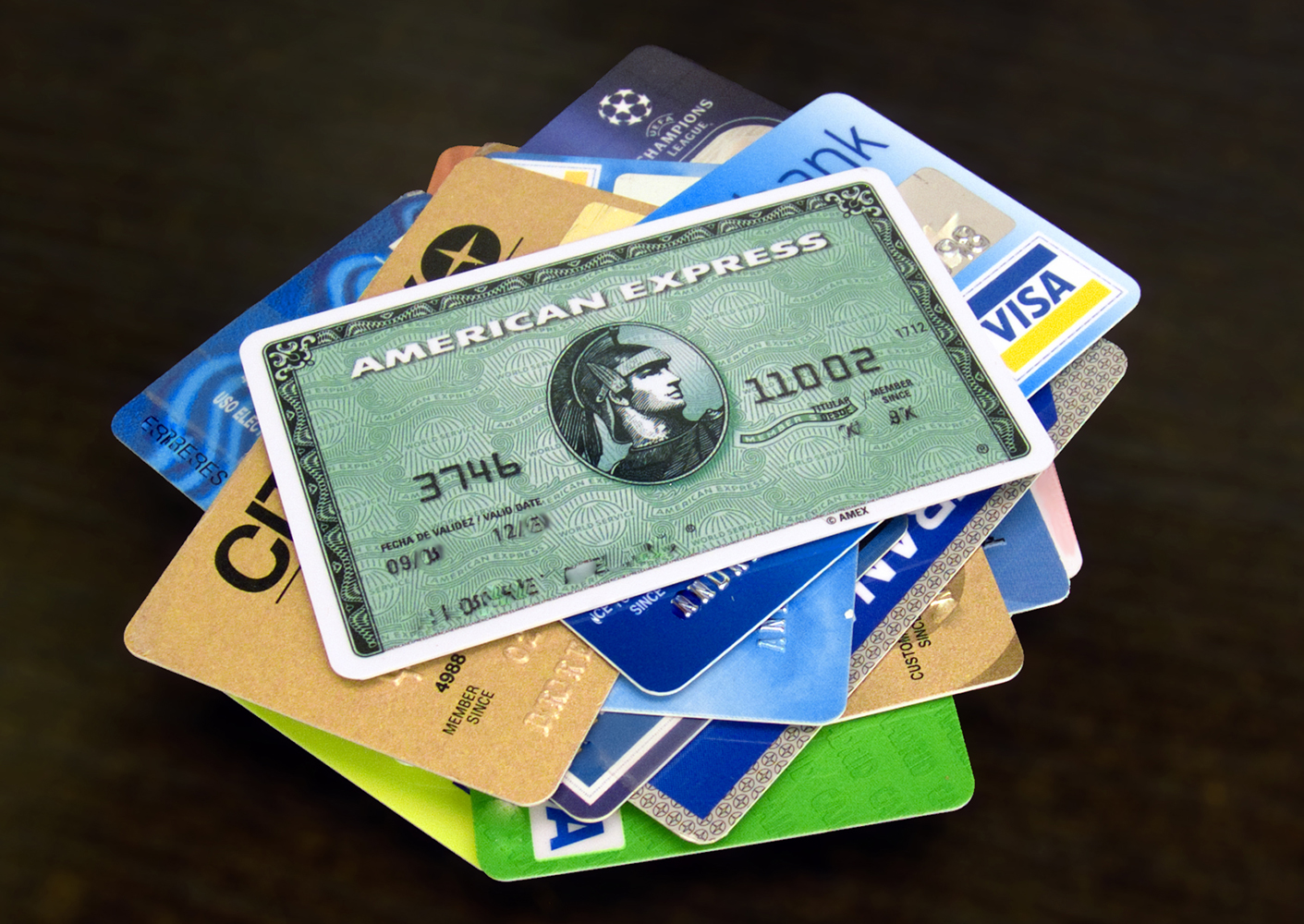
More credit cards increases vulnerability to identity threatNaturally, the more assets you have and the better your credit scores, the more damage a skilled identity thief can do. Therefore, although you do not want incipient paranoia to drive you into the company of identity-protection scammers, you do want to safeguard your accounts against intruders and thieves of all descriptions.

First, follow your common sense. Shred everyday documents that reveal your financial information, keep sensitive documents out of your trash, and digitize your most important financial information, protecting it with impenetrable passwords. Then, develop healthy habits that will keep your personal information safe wherever you go and whatever you do:

Empty your purse and wallet

Make cash the official currency of all your commerce. The more you use credit and debit cards, the more you make them vulnerable; you obviously increase the risk of losing them, but you also put them at-risk of password theft or “skimming”, the use of electronic devices to capture the numbers on their code strips.

On an ordinary day, you need only your driver’s license, your health insurance identification your roadside assistance card, and the one credit card you use for emergencies – the one with the best, most efficient theft and fraud protection. Carry enough cash to cover your transactions and provide for an emergency stop at a coffee shop! You’re safe and good to go.

Refuse to do business over the phone

Under no circumstances should you ever transact business over the phone, because you have absolutely no way of authenticating the person on the other end really is who he or she claims.

Automated transactions give you a few more protections than voice transactions, but they still come with risk that a determined identity thief may steal the numbers you send and therefore gain control of your accounts.

Especially refuse to share the last-four digits of your social security and charge account numbers with telephone service representatives. Exercise similar caution about internet transactions, double-checking to make sure your easy-access, user-friendly bill-paying and shopping sites have high-quality encryption and other hack protections.

Create and re-create strong passwords

If you watch crime dramas and mysteries, you know that every sleuth, whether good guy or bad guy, easily guesses the most common passwords – your birthday, your children’s and pets’ names and your address.

Sophisticated computer spies have compiled lists of the top twenty most frequently used password formulae, all of which are so painfully obvious even the “Home Alone” villains could guess them. Use your own criminal mind to develop passwords only you could know. Then, change those insidious, super-sneaky passwords about once each month.

Keep your distance

When you must use the ATM, or when you use your debit card at the gas station and in other public locations, make sure people are not peering over your shoulder, and shield the keypad with your free hand while you enter the magic digits.

Whatever precautions you take in semi-public situations, take them to an exponent of ten when you use a credit or debit card at a major retailer, because you are extremely exposed as you use the elevated keypad at the check-out stand.

Check every “mistake”

Good financial management requires you reconcile your account statements every month. Personal safety demands you check and reconcile your accounts at least every week. Use your banks’ and creditors’ websites to review deposits and purchases, making sure your own records match theirs. Whenever you see a discrepancy, call the customer service line immediately, engaging the representative until you feel satisfied they have corrected the error or you have taken proper steps to protect your account and assets.

“I used to take pride in being a trusting person,” says one identity theft victim, “No more! Now, I take pride in how safety-conscious I have become.” Stressing the emotional and practical consequences of identity theft, “You cannot imagine how vulnerable and violated you feel when an invisible thief steals everything you have worked to save. Then, you cannot imagine how much work it takes to reconstruct your genuine financial self.” Feeling a little bit safer and more secure because she has survived the ravages of identity theft, the victim says, “Now, a thief will find it easier to break into Fort Knox than into my accounts.”


Home genetic testing, pros and cons

Recently I have been getting interested in home genetic testing. I have written a few articles about this matter, including a 3 part post on the Bassetti Foundation website about a conference that I attended a couple of weeks ago at Harvard University.

The speaker at the conference was Anne Wojcicki, CEO of the world’s largest commercial genetic company called 23andMe. They offer a kit that you spit into and send back, then they analyze 4 million variables and you check out the results online.

Recent technological advancements have brought the price down beyond belief. What cost $100 000 a few years ago and took months cost $1000 last year and now $300  and can be done while you wait.

What they call Next Generation Genetic Testing has meant that the analysis has become incredibly more intricate, where as a few years ago they analyzed a few thousand proteins, they can now do millions, so if you already had your genome sequenced a few years ago you might want to re-do it to gain ever more information.
A strand of genomeAs I said I went to this conference with the CEO from 23and Me. They are a relatively new company but have the majority of the market share in DNA genetic analysis. The CEO very much presented her organization in business terms, but continuously highlighted the research they conduct in looking for cures for new diseases. They have amassed an enormous database and can conduct statistical analysis on Gene mutations in a few hours that only a few years ago (or without them they argue) would take years.
So what do they actually provide you with for the money?

Results are viewed online, and consist in various types of analysis presented as bar charts, pie charts and statistics. So one line of interest is where your Genes come from, for example how much of you is from Africa, Asia, Europe or elsewhere. How much of you is Neanderthal.

Then we get into the interesting stuff about how your genes relate to your parents, who are you most like.

Carriers and sufferers of diseases learn about their mutations, so if you have or are carrying a genetic disorder this information is also presented.

Then we move onto risks for the future. What percentage rise in risk do you have in your genes for developing certain diseases? Maybe you have a 20% rise in risk of developing Alzheimer’s or getting breast cancer. Here we are moving out of the present and world of scientific analysis and into the world of risk.

A world of interesting information and probably very useful in many cases and just a bit of fun in others, but I would like to raise some issues about the above.

No doctors are involved in giving this information, an individual reads their results online, so one of my reservations is about interpretation. What does a 20% rise in risk of breast cancer mean? How does an individual react to such news? What can or will they do? Also in terms of a negative result what are the effects? I have reduced risk of contracting breast cancer so I skip my mammogram for a few years, after all I am at low risk.

And what if I discover that I have some kind of genetic disorder? Well should I tell my brothers? Maybe they have it too. Do I have the right to tell them? Or am I obliged to tell them? Do they have the right to know or indeed the right not to know?

And ancestry, what if I discover that my father is not the man my mother is married to?

Then as a concerned scientist I start thinking about the data, and discover in the contract I signed (without reading because it is 10 pages long) on the internet gives the company the rights to distribute my genetic information to other research organizations. OK all in a good cause but are they going to make the information non traceable? Is that even possible when such an amount of intricate information is involved? Probably not say the scientists at Harvard.

I am not saying that 23andMe are doing anything wrong at all, their database must be a great resource for science and particularly medicine, possible benefits should not be underestimated and I am sure that their hopes and aims are all pursued in good faith, but I wonder if such a database should not be independently regulated. At present these types of operations are practically unregulated in the US, and maybe this should not be the case. Technology is moving ahead at an incredible rate in this field and nobody can say what this material will reveal, to whom and for which purposes. I note on the video that Christopher linked on his post about Google that they are one of the company’s biggest investors, and as they are a corporation specialized in data collection that does not really surprise me.

Legislation has been passed in the US called GENA, whose aim is to protect individuals from unfair treatment from certain sectors on the grounds of genetic testing. It is not however definitive and as I say only covers specific areas of commerce such as health insurance and employment, but I am dubious about the power of the state to enact laws as quickly as needed. Lawmaking is a slow process in a fast moving world as the genetic testing debate has proved. Equally however we don’t want to slow down the pace of research due to regulation, as that too has serious consequences for individuals who might be looking for breakthroughs in certain treatments.

I fear though that if you pay for such a test and the results show a tendency towards getting a cancer of some sort, a health insurance company might accuse you of hiding or having access to information you should have disclosed, and make life difficult when it comes to paying for the health care you need or for your funeral (I don’t think life insurance is presently covered under the legislation).

Or that one day they might ask you to lick a stick when you go in to the broker to buy your holiday insurance or apply for a job. What do you think?

Sponsored: Samsung launches Samsung Memory campaign

This is a sponsored post on behalf of Samsung. To find out more about sponsored content on Technology Bloggers, please visit our Privacy Policy.

Samsung has recently started an innovative new campaign, to raise awareness of ‘Samsung Memory’.

Their campaign includes three evil characters: Battery Brutus; Fiona Freeze; and Loading Ball Larry. These three characters are presented at the ultimate enemy to any techie! After all, who wants their device (be it a TV, smartphone, tablet etc.) to run out of juice, freeze or take forever to load?

Battery Brutus, Fiona Freeze and Loading Ball Larry - SamsungSamsung have been working really hard to improve user experience, which is why they have decided to launch the campaign, to let people know about it!

Taking an Environmental Approach

As time goes on, more and more firms appear to be altering the way they provide their products and services in order to make them more environmentally friendly. Unfortunately there are many firms which still refuse to take environmental factors into account, however Samsung is (I am sure proud to say) not one of them!

In their recent upgrades and updates, Samsung have gone that step further to ensure that your devices stay ‘alive’ longer, need fewer charges, and perform better for longer.

That means you should be able to keep Battery Brutus at bay for longer! Check out the video (Samsung ad) below to see him in action.

%CODEUMSC1%

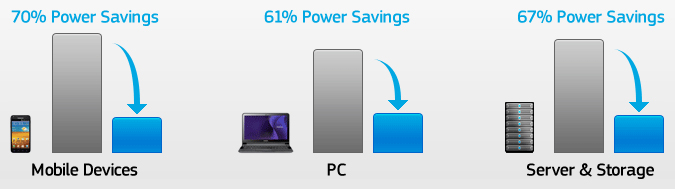
The below image shows just how much power Samsung’s devices conserve. That saving means less charges, which means less power being used, which is ultimately better for the environment!

Power savings Samsung devices haveSamsung also take into account the environment in terms of the materials they use. Below is a quote directly from Samsung.

“Our products continuously evolve. We use the latest technology. The most advanced materials. The safest components for you, and for planet earth. Samsung Memory is only manufactured with the most environmentally responsible materials.”

Top Speed Processing

Samsung’s latest devices are fitted with the high-spec memory and processors, to ensure that you can multi-task with ease, without your device freezing or loading. This means that you can also keep Fiona Freeze and Loading Ball Larry at bay!

Here is the Samsung ad which features Fiona Freeze at work.

%CODEUMSC2%

The last of the characters in the Samsung campaign, Loading Ball Larry, demonstrates just how frustrating loading can sometimes be. Please don’t smash up your device though, next time it loads!

%CODEUMSC3%

To find out more about the campaign, the characters and the technology involved, please visit the Samsung Semiconductor webpage.