Technology and the future of work

Technology is always changing and advancing the way we live our lives, unless you are a luddite and live in an Amish community that is! Some people oppose technological change, and I respect them for that, but personally I embrace it – techie all the way!

Technology is likely to improve the way we do business significantly in the near future, but how? In this article I am going to write about some of the latest and greatest technology which is going to revolutionise the way we work!

Portable Laser Keyboards

Okay, so you may be thinking that we already have keyboards that are pretty portable, you can get role up ones that you can take almost anywhere. The problem with these is of course, they do take up space, and often they cannot connect to your smartphone or tablet.

The future solution to this problem is already here: The Magic Cube. The Magic Cube is a super portable wireless laser keyboard, which has been developed by a company called Celluon. It is basically a little box which can project a laser keyboard onto any flat surfaces, and then works out what you are typing by where your fingers break the lasers.

A wireless laser keyboard called the Magic Cube

The Magic Cube – a wireless laser keyboard

This is no ordinary keyboard though, it can connect via Bluetooth to most smartphones, laptops, tablets and desktops, so wherever you are, no matter what your device, if you have your Magic Cube, you have a keyboard!

Hand Motion Technology

In the very near future, we will be able to control screens using our hands, and not by touching the screen (that technology already exists) but by simply waving a hand in the air.

The 2002 film Minority Report featured futuristic hand motion technology where detectives could push images off to the side and bring up more content just by waving their hands in the air. This was in the movie, because the film makers heard that the technology was being developed.

Better Integration

In the future we are likely to see much better integration of all technologies. Mainly thanks to the likes of cloud computing and improvements in wireless technology, it should become easier and easier to transfer files from device to to device.

Apps

Smartphones and tablets have and are still revolutionising the way we do business. Smartphones and tablets have significantly improved the way we do business and communicate, but it is the apps that you can download onto them that are likely to significantly change the way we do business in the future.

We already have apps that can scan and store your business cards, store details on your asset and save your important documents, but in the future you can expect many more effective, impressive apps. Some examples of apps which we may see developed in the future (or that are being developed now) are the likes of more powerful, real time translators, high performance graphic design apps, apps which make paying, transferring and receiving money much easier, human quality text to speech apps, and many more.

QB Robots

A US based company called Anybots have created a very cool little robot called QB, which uses the latest in wireless technology to create a portable webcam, so when conference calling, you almost feel as though you are in the room (thanks to your movable position) with your colleagues.
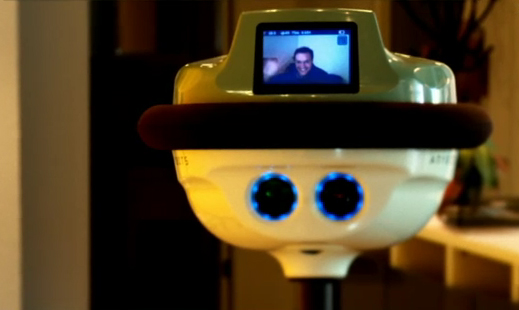
Anybots QB Robot

The head of one of Anybots wirelessly controlled QB robots – notice the webcam eyes and screen inbuilt into the head

The robots have freedom of movement, so they can go anywhere in the office. On the head section of the QB, there is a webcam, so that you can see what the robot sees, and a screen, so you can be seen by those in the office.

QB means that you can be anywhere in the world, and yet still check up on those in the office, meaning that working out of the office is so much easier than ever before! QB could also help to significantly reduce the costs to businesses of travel, as fewer employees will need to be on the move.

3D Printing

3D printing is a new technology, which some critics say will be as big a revolution as the internet! 3D printing will allow firms to print products to order in store, bringing huge savings to firms in terms of transportation. Some predict that by the end of the decade, 3D printers will be a common household object, where we can print things, in 3D out of a whole range of different materials. I plan to write an article in the near future about 3D printing, so stay tuned!

UPDATE: I have now written that article, and it can be found here: 3D printing – a revolution on the horizon?

So, the future looks very exciting, but what do you think of it? Have you heard anything that I haven’t?
Five changes in video conferencing for the next decade

The collapse of the global economy has left big business needing to cut costs in every coroner it possibly can. For many executives the solution lies in finding high tech alternatives to many of the most costly aspects of business. One of the most effective ways this is being done is through video conferencing.

The constant stream of meetings and sales pitches being presented all over the world in the flesh accompanied by high priced business class air fairs and four star hotel rooms are coming to an end. More and more organisations are looking to replace this with video conferencing, making international meetings a far quicker and cheaper process.

As the quality of video conference technology improves and the experience gets closer to that of a real life encounter the adoption of video conferencing technology is only going to become more wide spread.

Video conferencing is already available in extremely fast frame rates at full HD resolutions, but what else can be done to help make the form of communication seem more real. What are the technological developments we can expect in the next decade?

Skype's Logo

Skype can be used as a video conferencing tool

1 – Translation software

With video conferencing making global operations affordable for even smaller business, more business are going to be looking to have presence over seas and this will call for low cost translation services.

Translation software is quickly developing; two years ago we saw the iPod app that used it’s camera to instantly translate any written text, and this will quickly be combined with high quality voice recognition technologies that are become standard on the new generation of smart phones. We are not far off software that will quickly and efficiently translate the spoken word.

2 – Holographic projection

Previously the types of light needed for this kind of projection were too hot to be used in the kinds of small devices available in offices. However laser lighting means that holographic projectors will soon be able to be built small enough for not only office use, but could also be built into many portable devices such as smartphones.

Flash memory in smart phones could soon be replaced with a new storage format based on this technology, holographic memory. This will greatly increase storage capacities as the same area of a storage device can be used multiple times by projecting the light at different angles, read speeds will also become much faster as holo-memory can be read from many different points in parallel. This eliminates many of the large file size issues that have been hindering the spread of video technology

3 – Video takes over from the written word

As high quality webcams become more standard features on modern netbooks and better integrated with communications services such as Facebook, it is expected that people will begin to move away from writing emails and instead compose video mail instead.

For many a video message is quicker and easier and also seems more personal, now that it is as easy as clicking a button on Facebook to send one it is only a matter of time until they over take emails in the frequency with which they are sent for personal communication. The paper trail that emails leave behind may mean it takes longer for them to be used in business.

4 – A rise in personal broadcasting

YouTube videos are increasingly becoming an entertainment format that rivals television. The content on You Tube that is produced by individuals or very small companies is now genuinely entertaining yet far cheaper to produce than more traditional formats. With cost cutting becoming more essential these lower budget forms of entertainment are only going to increase. This could shift the way the entertainment industry is structured with more talent choosing to run there own company and be there own boss broadcasting themselves over the web.

5 – Increased usage of Telehealth

Also expect to see the medical industries developing more technologies based on video conferencing which will allow doctors to diagnose and treat patients from a distance. Telehealth hardware is already on track to be a $990 million market by 2015 and predictions are that this will continue to $6 billion five years after that.

At the moment telemedicine technologies are very much focused on developing countries, where there are shortages of doctors in rural communities. As telemedicine technology improves though it could be adopted in the west too allowing anyone to be treated by the best doctors in the world, no matter there location.

Are broadband speeds on the rise?

Many providers will be increasing their broadband speeds from 100Mbps to 120Mbps at the start of 2012, with an estimated completion date in mid-2013. The increase will be really good for customers in the UK, who are looking for faster internet speeds for both personal and business use. Faster speeds could boost the economy, as well as change the way households and businesses use the internet.

Giving access to a super-fast internet is all part of building a newer and improved economy in the UK. The government alone has set goals to expand broadband speeds within the next three years. By the end of 2015, investors predict fibre optic broadband will be available to two-thirds of the UK. Many providers are doing their part to support the economy, understanding that the internet is such an essential part of the everyday lives of their consumers. People are using the web to assist them in every aspect of their lives these days, so having a fast and reliable internet connection is important now more than ever.

Investors will be bringing even faster speeds to the UK. It is thought that around 300Mbps speeds will become available in limited locations within the next few years. Currently, many providers are trying to keep up with these investors by doubling their speeds, allowing customers to upgrade from 10 Mbps to 20Mbps. Those who subscribe to their highest speeds of 30Mbps will be upgraded to 60Mbps. Some providers aim to roll out the changes free of charge, so customers may be pleasantly surprised by the change in their broadband speed! Users will be able to benefit from streaming television, movies and music twice as fast as before.

An example of some optical fibre internet cablesThe increase is good news for the UK, which currently ranks somewhere between 10th and 40th globally in terms of average broadband speeds – depending upon where you get your figures. Once upgrades are complete, the average UK broadband speed could increase to around 16.46Mbps, a massive download speed increase!

Consumers will be gaining this speed boost at the most opportune time, since the highly popular Netflix, this week launched its service in the UK. Such services require high bandwidth speeds and will undoubtedly attract large numbers of costumers, all of whom will need super-fast internet to watch their favourite movies and television shows.