What renewable energy will you be looking into?

The recent government incentive to promote ecological mind sets in the home is good news for the environment. Householders will be offered loans to deck out their homes with energy-saving appliances and equipment, including extra insulation and new boilers.

So what exactly do you need for your home?

Loft Insulation

If you’ve no loft insulation in your house, you could be losing up to a quarter of your home’s heat through the roof.

Most newer buildings are built to a standard taking into account this loss, but if you have a home that’s a little older, chances are you’re wasting all that lovely warmth and putting yourself out of pocket.

The Green Deal will provide owners of uninsulated homes the chance to reduce the energy used in heating by proving loft insulation.

Wall Insulation

You could be looking at losing up to a third of your home’s heat through uninsulated walls. Cavity walls are much more energy efficient than the solid walls of older houses, and if your home was built before around 1940, it’s more likely to have the latter.

With good wall insulation, you’re looking at making a real saving in energy bills so it’s a good idea to find out if you’re equipped to keep all the heat in your home.

Boilers

According to energy efficiency ratings, a band A boiler is 20% more energy and cost effective and a band G one. It’s usually the older boilers branded with the G rating.

If your boiler is outdated, you could be losing a lot of money from it. Modern, band A boilers have an energy efficiency rating of 90% and allow you to keep much better tabs on your energy use. It’s worth investing in thermostatic radiator valves so rooms that aren’t being used aren’t heated too.

Katy Jones at Dulas had this to say of the feed-in tariff scheme:

“The feed in tariff incentive from the UK government is encouraging many people to consider installing renewable energy technologies; it will naturally mean that some renewables companies also look to offer energy efficiency measures as part of their product portfolios.”
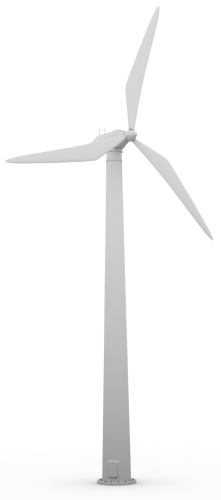
One single wind turbineProducts which will include solar panels. Fitted onto the roof, solar panels are capable of generating renewable energy for the home. And if they are producing more energy than your household needs, you can sell that energy back to the National Grid.

From our perspective,” Ms. Jones continues, “Solar PV is a viable, cost effective way to generate free electricity and is especially good for high energy users looking to reduce their energy costs or with Carbon Reduction Commitments to meet.

Other renewable energy sources will include micro wind turbines, which will be accepted on the Green Deal. Though they are a little small to provide all of your energy, it’s the little things that make a big difference to an energy bill.

With the government backing you, it’s never been a better time to look into renewable energy.

Struggling to write

When most authors are struggling to writer, [ironically] they often write a post about what to do when you get ‘writer’s block’, hoping it will kick-start their writing back into gear.

I am struggling to write, as you may have noticed from the sparsity of posts this month – this is only post 9, and we are already 25 days into February.

Ideas lightbulbThe typical ‘writer’s block post’ will contain thoughts and ideas on how to stimulate that fantastical, creative chunk of your brain that is responsible for your ideas and your best works.

My problem isn’t that that part of my brain is taking a nap, quite the reverse: its in overdrive!

Many bloggers give the famous advice “find your niche and stick to it”. I like to defy the trend though, and we are a different sort of blog, hence we can take a different sort of approach to blogging. As a writer for Technology Bloggers, you are literally spoilt for choice when it comes to what to write about. You could research innovating new technologies, explore how the internet is changing our lives, educate on the world of SEO, discuss blogging practices – you get the picture, we aren’t just technology!

With so many topics, how do you choose what to write about? Do I aim to help you with a ‘how to guide’, wow you with a ‘facts and stats’ post, inform you with my take on a breaking news article, teach you how something works, what do I do?

You have no idea how many posts I have started to write, saved as a draft and then abandoned because something more interesting has sprung to mind.

I am going to focus. You can expect more. A few weeks ago I wrote about what I perceived to be the the blogging dilemma: quality vs quantity, and you should have taken from that post that I will only ever post stuff that I think you (or someone else) will want to read, and stuff which I believe is ‘quality’.

Enough said. Now to get writing proper posts.

Your Input

On a final note, do you have any suggestions/requests? Is there anything you want me to explore? I will gladly take ideas for posts. I won’t always run with them, but if I like the idea, I shall try.

Anything unclear about how we run things, or what you can expect?

Have faith, we shall battle on!

P.P.S

On a [final] final note, do you think my writing is getting too casual and informal?

I notice I am changing the way I write, and part of me likes the change, but another part is anxious that I may loose my credibility. You know me right?

Anyhow this is blogging, not literature!

P.P.P.S

The above ‘P.P.S‘ was going in another post, but I thought it fitted in here better 🙂

Asteroid Hunting

Many of you will have seen the video of the meteor that exploded into the atmosphere above Russia last week, and I would just like to offer an overview of the event from a practical scientific prespective.

The meteor was about 15 metres across, and as such too small to detect. As we all saw though a meteor of this size can do extensive damage. It weighed about 7000 metric tonnes, travelling at 18 Km per second and exploded at a height of between 15 and 20 Km. This is pretty close to the ground if you think that an aeroplane flies at about 10Km and we are certainly not dealing with somewhere where nothing happens.

The force of the explosion was about 30 times that of the Hiroshima bomb, a pretty devastating blow by all counts. We should think ourselves lucky that it did not happen over a major city.

Trees blown over after the 1908 impact

Trees blown over after the 1908 meteor impact

In 1908 in Tunguska also in Russia a much larger meteor hit. This one was about the size of the DA14 meteor that flew past Earth later on the same day last week, and it blew trees down over an area of about 2000 square Km. Once again it hit over Siberia so less damage than could have occurred, but if you think that the event of last week over Russia only threw out about 5% of the force of this one than we don’t need much imagination to envisage the possible catastrophe. Several photos are available around the net and I offer one above. There are also plenty of huge craters to see.

NASA have the Near Earth Program, and they have the mission of monitoring the many things that fly close to Earth.

It is not an easy job though as you might imagine, they use ground based telescopes so can only see something that is big enough to reflect enough light, and last week’s hit came directly in line with the sun, so practically impossible to see.

NASA has managed to identify 90% of near Earth asteroids that are more than 1 Km across, and something of this size might threaten life on Earth itself if it hit. There are more than a million near Earth asteroids however that are 20 metres across or more but  very few of these have been identified and mapped.

The B612 Project is hoping to put a telescope into Space before 2018 that will be able to spot something of that size, but until then they will go largely unseen.

Keeping on a related topic last May I put a post up about asteroid mining, and recently the BBC has carried some updates on this project.

It is currently a 2 horse race, but it seems very speculative. And I remember a song about horses of this type.