The power of the social networks and the media

Many people take a very negative view of the media. In the UK, there has recently been a press standards enquiry, which looked into the unethical practices some media organisations (specifically newspapers) were using.

Many people also take a negative view of social networks. Twitter has been in the firing line a lot lately, helping to break super injunctions and spread rumours at amazing speed.

I think sometimes we forget that the press and social media can also be a force for good, and so in this article I am going to talk about something positive that only happened thanks to the power of the media and social networks.

The Story

Martha Payne is a nine-year-old girl from Argyll and Bute, (Scotland) who started a blog in May this year called NeverSeconds. On the blog she wrote about her school dinners, under the alias of Veg. She took a camera into school and photographed her school dinner. When she got home, she wrote about it, posted a picture, and then rated each meal.

She gave the food a rating out of ten on her ‘Food-o-meter‘ scale, detailed how many mouthfuls it took her to eat it, what courses it was (i.e. starter and main or main and dessert), how healthy (out of ten) she rated it, the price, and how many pieces of hair she found on it – and yes, one day she did find one!

Martha Payne's first blog

Martha’s first image on her blog – pizza, croquet, sweetcorn and a cake, a meal she rated 6/10 on her food-o-meter

Martha set up a link on her blog to the charity Mary’s Meals, with the aim of raising £7,000 for the charity, through donations from those who read her posts.

All was going well for Martha, until her blog featured in a local newspaper. Here’s what happened in Martha’s words:

“This morning in maths I got taken out of class by my head teacher and taken to her office. I was told that I could not take any more photos of my school dinners because of a headline in a newspaper today.

I only write my blog not newspapers and I am sad I am no longer allowed to take photos. I will miss sharing and rating my school dinners and I’ll miss seeing the dinners you send me too. I don’t think I will be able to finish raising enough money for a kitchen for Mary’s Meals either.

Goodbye,
VEG”

So that was it. Martha Payne, a nine-year-old girl who ran a blog with the aim of raising some money for charity, and developing her language skills through writing about her school dinners, was no longer allowed to blog.

It was actually the local council that had told the school to ban Martha from posting, as they were unhappy with the coverage of the story in the local paper. It was alleged that the article had made catering staff fearful for their jobs.

The publicity generated from the local paper reporting on the blog helped Martha to reach nearly £2,000 in donations for Mary’s Meals, an amazing achievement, which is why it is such a shame that the blog had to be shut down.

A sad end to the blogging career of a little girl with good intentions.

But it didn’t end there.

The news reached the council leader who was unhappy with the action taken, and as a result instructed senior officials to lift the ban.

Martha could blog again!

This was now a big story, and national media organisations were keen to publish their account of events. The Telegraph, The Guardian and BBC news were some of the most notable media organisations to cover the story. Most notable, the BBC article received well over 1,000 comments, and tens of thousands of social shares!

Going Viral

Martha Payne from NeverSeconds

Martha Payne – NeverSeconds Author

First it was just a story. Then it hit the media. Now it was the turn of Facebook and Twitter. Within hours of the BBC publishing their article, tens of thousands of people had shared it, and the NeverSeconds blog hit counter soared from a few thousand views to over a million! Martha was soon trending on Twitter.

The story was so inspirational, many people wanted to pay tribute to Martha’s fantastic work, and did so by donating to the charity she supported – Mary’s Meals. Martha smashed her £7,000 target in a matter of hours, as donations to the charity flooded in. Overnight, Martha became the top fund raiser for Mary’s Meals on the JustGiving website.

By the end of the week, (in just 4 days) donations had topped £50,000! This prompted even more publicity, as the media reported on the remarkable story of the girl who raised tens of thousands for charity, by writing about her school meals.

The NeverSeconds site hit counter now reads in excess of eight million and the donations to Mary’s Meals are over 1750% of Martha’s £7,000 target – currently standing at £123,969.32.

Martha has since been out to Malawi to see one of the projects her fund raising efforts went to help. For more information on her trip, have a read of this BBC news article.

Martha has been named as the Human Rights Young Person of the Year, for her outstanding work, and continues to blog over at NeverSeconds to this day.

The Streisand Effect

This story is a fantastic example of how the media and social networking can be a force for good, and encourage people to think of others. It is also a good example of the Streisand effect in action, the concept whereby attempting to cover something up, thanks to the internet, leads to that very thing getting greater publicity.

Smile today for the story of NeverSeconds 🙂
Mistaken Identity

A couple of months ago I wanted to buy a new sofa. I found something that looked great in my local online sales paper, so I had to decide whether to go and see it. This involves hiring a car or taking a train and bus, because it was not close to my house and I don’t have a car of my own here in the US. Another possibility was just to hire a van, go and see it and buy it on the spot, a slightly riskier option.

So I did what many do, I looked up the seller via Google to see who he was. He turned out to be the CEO of a local business, so I made my decision. I hired a van and drove out, bought it on the spot, a lovely piece. I based the decision on the seller’s Linkedin profile, presuming that I had the right person from the name, and all went well.

The BBC recently broadcast a program on the World Service Outlook program along the same lines, but with a different outcome. It is available on Podcast here, but I would like to outline the story for you all.

In 2009 Iran saw street protests following the disputed presidential elections. Violence flared and a young woman was shot dead. Her name was Neda Agha-Soltan. Journalists from the international press soon picked up on the story, and rather like me searched Facebook and other sites for a photo of the victim. They found one and published it.

The next day Neda Soltan, a university professor saw her photos in the press. They had the wrong person. Obviously this may have caused some distress for her friends and family, so she contacted the press institutions and told them of their mistakes. They however continued to use her photo, and soon it was appearing on leaflets and became the face that distinguished the protests.

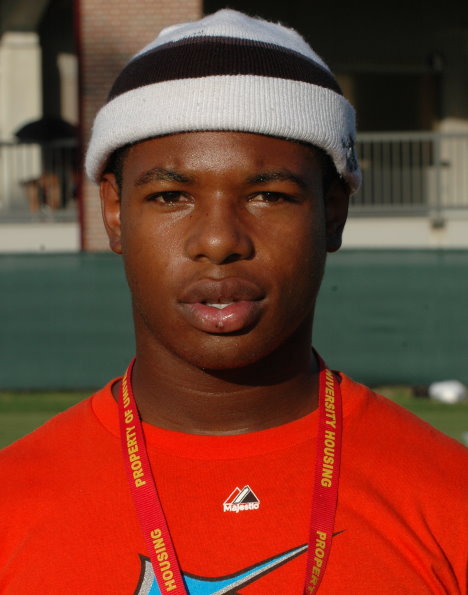
Johnny Hankins, is it me?

Johnny Hankins, American Footballer.

A few days later government secret service officers turned up at the professor’s house. They wanted to prove that the rumours of the death were all false, a CIA or EU plot to discredit the government, and they had proof that Neda was still alive. They wanted her to come forward and display to the world that she was still with us.

When she refused she was arrested. Upon her temporary release her friends managed to smuggle her out of the country, into Turkey and on to Germany where she claimed political asylum. She is currently in the US but has not seen her family and cannot return to Iran.

Jonny hankins again

The Internet has given journalists incredible tools and access to information, but here a mistake has ruined somebody’s life. The first thing people do when they want to learn about a person is type their name into their favourite search engine. Facebook is like a CV, but contains far more intimate and possibly compromising information, but users seem not to take this into consideration.

Another Johnny hankins

Another Johnny hankins

In the case above there seems to be no recourse to the law, and anyway it would not help. A bit of responsibility wouldn’t go amiss  on both sides though!

Different ways of surfing anonymously

This is a sponsored post. To find out more about sponsored content on Technology Bloggers, please visit our Privacy Policy.

Many of the file sharing websites like Mediafire, Megaupload, Rapidhshare and torrent websites like torrentz.eu, monova.org, fenopy.eu etc. are blocked now in India in order to stop piracy of software and movies. But music and video lovers are looking for alternate ways to access these blocked websites. There are many alternative and secure ways to access these blocked websites without using proxy.

Using VPN Client

One of the easiest options is to use free VPN (Virtual Private Networks) services which can connect your network to remote servers in other countries and you can access these blocked sites easily. VPN uses a secure VPN tunnel to connect to remote sites through private channel. There are many free VPN services like proxpn, UltraVPN, OpenVPN etc. which can be downloaded free of cost. You can download the VPN client and install it on your desktop or laptop. Once you install and connect to the internet through VPN whatever data traffic and requests come from your machine will be sent in encrypted format through a secure VPN tunnel. Also the request will be anonymous and it won’t be possible to track your source IP address as NAT (Network Address Translation) happens which converts your private IP to public IP address.

Once you have installed the VPN you can automatically access any of the blocked sites as you will be accessing through a VPN server located remotely in some other country. Hence you can enjoy downloading your favorite movies and videos from websites like MegaUpload, Rapidshare, Mediarefire and other popular torrent websites even if you use HTTPS for secure connection. VPN is secure and safe way to access blocked sites and prevents your computer from getting attacked by spyware or malware. Many of modern browsers use VPN for connecting securely over internet.

Another option is use to free DNS services like Open DNS. You can use settings as 4.4.4.4 for preferred DNS and 8.8.8.8 for alternate DNS server. Once you download the VPN client install in your machine and restart it. Then start the VPN client by providing the username and password which is registered while downloading the VPN software. After that select any free server in USA, UK or any other foreign country and click Connect. You will notice the message that data transfer is SSL secure and now you are connected to internet through the VPN client. Now you can access any of blocked torrent websites and file sharing sites like Rapidshare or Megaupload easily.

Using Tor Browser for Anonymous Surfing

Another easy way for accessing blocked websites is by using proxy server. There are internet filters and firewalls which monitor user traffic and block access to such illegitimate sites. But using certain advanced tools you can bypass this filter and enjoy access to such blocked websites. One such tool is the Tor browser which was designed by U.S. Naval Research Laboratory for the purpose of anonymous and secure browsing.

In order to anonymously browse through internet without relying on external proxy server, you can use the Tor browser which can be downloaded freely from Tor website https://www.torproject.org/.

Tor ProjectOnce you download and install the Tor browser, start the application and open Vidalia control panel which automatically opens the Mozilla Firefox browser. Whatever requests come from your machine will get routed through anonymous servers maintained by Tor and will bypass internet filter which block access to specific websites. Hence, you can browse through your favorite file sharing and video sites without using an external proxy server. All, the user data will be erased from cache once you close the browser and is very secure.

EDITOR NOTE: There are many different ways you can access the internet, of which most are safe and legal. That said some methods could damage your computer and may not be legal in the country you are in, so always check beforehand – note by Christopher