Politics and the Environment

Yesterday the official data came out and the year 2012 was the hottest year the US has experienced since records began. Not only that, but it was the hottest by a long way.

The Hurricane Sandy experience, as well as a recent spate of wildfires and drought, has meant that the topic of climate change is firmly on the table, but the dissenting voice still carries political clout.

There are two polar positions here, with a large political lobby arguing that climate change has nothing to do with human actions, that either the Earth is warming naturally or that there is no proof that the world is warming at all. This goes against mainstream European thinking, and we can see many differences in approach between the two continents. In Europe we no longer use plastic bags on mass, they are now almost all biodegradable, and we can only buy low wattage compact fluorescent lamps as old style light bulbs have been fazed out.

Here the government is moving towards the same goal. In Massachusetts an organization called Mass Save subsidizes the cost of replacing old bulbs with new. The money comes from the user who has to pay a supplement on the electric bill to fund the scheme, but all is not without issue.
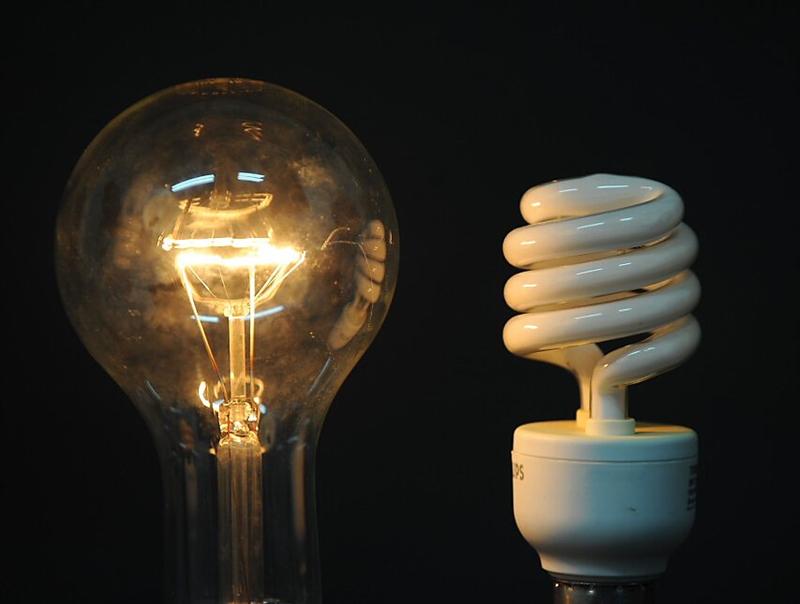
which do you favour?

A traditional and new style lamp

These bulbs contain mercury, a naturally occurring but poisonous substance. This means that they have to be disposed of properly, as if they are just dumped into the ground they can poison the surrounding water ways, very much in the same way as batteries do. They are also much more complex than old style bulbs, they require assembly and raw materials for their components, and much of this work is carried out in China with the usual questions of human rights and exploitation that are associated with this type of process.

Some sections of the political world (the Tea Party for example) offer this as proof that the environmentalists are poisoning the Earth and that their arguments are based upon false suppositions. Statistics are produced that seemingly show that a few lamps may do a lot of damage, but they do cut down electricity consumption enormously, and here in the US a lot of electricity is still produced by burning coal, and that is an extremely dirty and polluting affair.

The amount of mercury is also disputed, bringing poison into the house, light that burns skill, all kinds of terrifying scenarios, and I am certain that these lamps do present a real issue of environmental threat, but it is not through such scaremongering that progress will be made.

For the lamps to be efficient and effective they must be disposed of properly. For this to happen the public must be informed and take action. These bulbs must be correctly packaged when they fail and taken to recycling hubs where skilled operators know how to dismantle them.

As many readers might know, the environment and all issues surrounding its protection are extremely politicized in the US. Research data is difficult to come by, and large sums of money are involved, particularly on the side of the sceptics. But cuts in electricity use must be a good thing, but only if the collateral effects of such a mass introduction of ever cheaper technology that purports to be wholly good are properly investigated and managed.

Low mercury lights are available too, but I would like to say that the amount of mercury present in even a non low mercury version is extremely small. You have a lot more in the fillings in your teeth for example, but you should still go to the dentist for a check up every now and again.

In practical terms, I recently changed 12 bulbs in my house and my monthly electricity bill dropped by about 20%, good for me, good for the planet, but let’s not see it out of context. The keys are nothing more than management however, good research that is available to all, education on the pros and cons of different possible solutions, and less political manipulation.

Here are two takes on the story. A critique of the way these problems arise through big business funding of the sceptic argument and a critique of from the other side.

Both politically loaded as you will see.
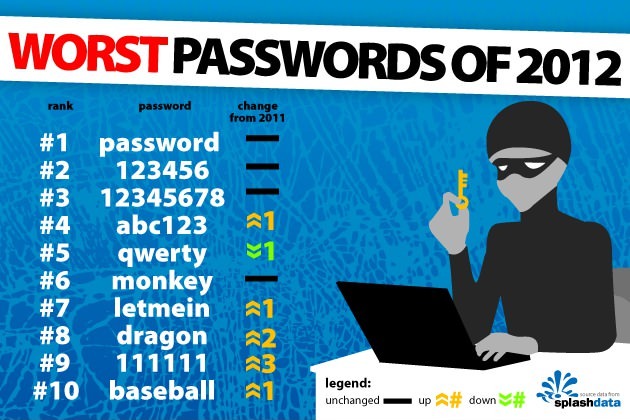
Kill the Password

This week I would like to draw readers’ attention to an article that appeared in Wired at the end of last year. Written by Mat Honan and entitled Kill the Password: Why a String of Characters Can’t Protect Us Anymore, it makes for really interesting and alarming reading.

The author starts by explaining that he lost all of his digital life last year as his accounts were hacked, an event that lead him into investigating online security and how it is breached.

What he discovered is not for the faint hearted. The linking together of different accounts using an email as username means that any seriously interested party with a little time on their hands and very little money can relatively easily get into a single account, and from there into the others.

His conclusion is that the culture of using passwords for security is outdated, a thing of the past and that anyone who tells you otherwise is either deluded or trying to convince you of something that is not true.

The worst password choices

Worst passwords of 2012

The availability of information is a problem because of the personal question access to resetting your password. Mother’s maiden name, place born etc. are easy things to find out about anybody through ancestry sites or other documents. Once you have somebody’s email address, you try to reset the password using the personal questions through the provider’s website. The answers might be on Facebook, or on their blog, or maybe intuitive, but they are out there.

Then to the customer services rep that you speak to by phone. They are people and can be misled. The article contains a transcription of a conversation between a hacker and one of these people. As the user needs to be able to reset the password they are offered a series of questions that get easier and easier to guess. Names of best friends is possible using Facebook or other social network publications, but if not try favourite food or others, but the example given is name of one of the files in the account. Try Google, Amazon, Personal, one will be right.

So the problem is that the system needs to be flexible and easy enough to use, so we must be able to easily change our passwords, but this makes security impossible.

How can this problem be addressed? Here the trade off is privacy. If the company knows you, through your search histories, places you have been, where you work and what you like to do they might better be able to tell if the password reset-er is you, but you lose any privacy you think you might have.

Voice recognition can be tricked using recordings, biometrics and fingerprints too. Once a system uses these things that cannot be changed or reset the problem is magnified. If I have a fingerprint lifted from a screen I can use it to get anywhere and new fingers are hard to come by these days, so what do you use next?

The article poses these problems from the point of view of somebody who has been hacked, but the author also looks at who these hackers are and even meets a couple. It is big business in certain circles, particularly in the Russian speaking world where organized crime has a large stake and makes a lot of money through stealing identities and all that follows. In other circles they are just “kids” having some fun wreaking havoc.

There are a few simple strategies outlined in this (not short) article that are worth following but none are foolproof, and that is a lesson we could all learn from. Just a word of warning, it contains some harsh language.

On a lighter note happy new year to everyone, and my mum’s maiden name was Windsor (no relation to either Barbara or Elizabeth).

Year End Update

As the year ends I would like to look at some of my post over the last year or so to give an update about what has unfolded since I wrote them.

2012 Ending

The End is Near

I will start with Citizen Science. In 2011 I wrote an article about online gamers as scientists, and this year a couple of posts touched upon the issue of citizen science.

Recently the UK press has carried a story about a WW2 carrier pigeon whose remains were found in a chimney. The bird had a capsule on its leg that contained a message in code. Experts were unable to understand the message so they released the data into the public domain in the hope that somebody would be able to decode it. A perfect example of citizen science, the use of the Internet to access millions of brains.

A gentleman in Ontario responded with what he believes is the meaning of the note, although debate is rife around the issue of verification. He claims that the code is from WW1 and nothing more than a series of acronyms. Read this BBC article for more.

Still way back in 2011 I wrote a post about prosthetic limb technology and the fact that someone had opted to amputate a hand in order to have a robotic replacement fitted. Recently doctors have reported great improvements in prosthetic control, including controlling the artificial limbs through thought.

This experimental science has been going on for some time now, with implants in the brain interpreting neuron activity in order to make the limb move. As sensors get better movement improves and so control is greater. This week researchers in the US have released video of a woman operating a robot hand through thought. Watch it here on the Independent newspaper site.

One thing that isn’t addressed in the press coverage that I feel is important is that the person does not have to be attached to the arm, they can operate it remotely. This must have implications for how research and the handling of dangerous materials may be treated in the future.

If you want to see where this technology might take us just have a look at this video reportedly of someone controlling a remote control quadcopter using only thought waves. Incredible stuff!

More recently I wrote a piece about the compulsory tagging of students in a Texas school district. The project has run into problems as one of the students was withdrawn and moved to another school for refusing to wear the tag on religious grounds. Read the report here.

Andrea Hernandez refused to wear the tag saying that the bar code it contained could be the mark of the beast, an interpretation she takes from the book of Revelation. When they removed the mark from the tag she continued to refuse to wear it however so was effectively expelled. She is taking the school to court over the matter presenting problems to all those involved in the project.

I also wrote about the MOSE project to protect Venice from the rising seawater that floods the city ever more frequently. Recent news (in Italian) states that the project will no longer be ready in 2014 (2012 was the original date set for completion) but will possibly be finished in 2016.

The major problem seems to be lack of money. The project budget has increased massively, and the economic crisis has meant that money is found piecemeal so that the work can continue.

I do not want to be too critical of the land that bore my wife and children, but unfinished engineering projects are not uncommon in Italy, let’s hope this one does not end like many others.

Next week I will be taking a self enforced holiday, so no post on Thursday. Happy winter solstice to all, enjoy the festivities, thanks to everyone who has read and/or commented over the last year and I will be back in the new year (presuming that the Mayans were mistaken).