Enter the Smartpen

I was an English teacher for many years in Italy, and every year I played a game with the students. In groups we had an hour to invent an incredible product, prepare publicity for it and act it out to the class.

I had a can of Happiness and the logo “Happiness, now available in cans”. Many of the inventions revolved around making your school life easier though, including the intelligent pen that could for example write the correct answers in the test or translate from one language to another.

Well girls from Liceo Secco Suardo your dreams have come true. You in fact saw the future. Roll out the Smartpen.
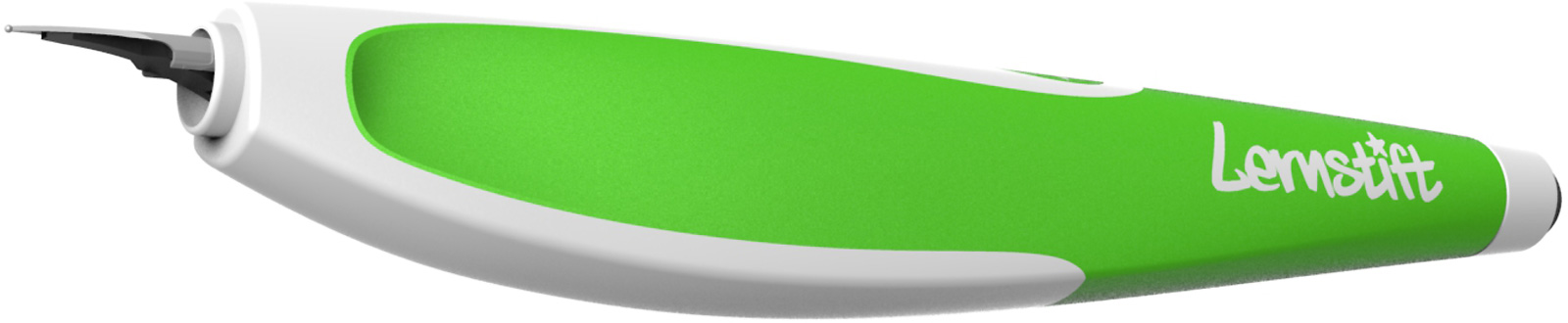
 

Learnstift's Smartpen

Learnstift’s Smartpen

The Learnstift Smartpen checks your spelling as you write. Incredible but true. Learnstift is a German Start up, and they are about to release their incredible product in English and German. It has 2 functions, one to help you write better that recognizes the form and shape of individual letters, and one that checks the spelling.

The pen has a tiny Linux computer inside that runs off a battery. It is fitted with a non optical motion sensor and a vibrating mechanism, so it can recognize the word you have written and if it is spelt wrong it will vibrate so you can try again.

It has wi-fi so you can connect to your phone or other hardware, and with a launch price of between $150 to $200 it is cheaper that paying me to come round to correct your homework.

Joking apart the producers hope the pen will become a valuable learning tool and of particular interest to dyslexic children. Although initially only in German and English as the project takes off more languages will be introduced.

Any of you who have learned a new language will understand how such a tool could be used in language learning and business communication, and as the pen can be made in ball point, fountain and even pencil versions I think there might be a fuchsia for it.

What do you think?
Parenting in the Age of Digital Technology

Last month the Northwestern University in the USA published a national survey entitled Parenting in the Age of Digital Technology. The report is available for free download through the Parenting CC Portal , but here I would like to take a quick look at some of the findings and questions raised and see if we can provoke some debate.

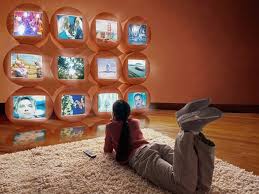
Multiple Screen Viewing

Multiple Screen Viewing

The study explores how parents are incorporating new digital technologies (iPads, smartphones) as well as older media platforms (TV, video games, and computers) into their family lives and parenting practices, and it gives an idea of how parents use and view this technology.

We should point out that this is a US based survey.

The 10 key finding could be seen as the following:

1 While new media technologies have become widespread, a majority of parents do not think they have made parenting any easier.

2 Parents use media and technology as a tool for managing daily life, but books, toys, and other activities are used more often.

3 Parents still turn to family and friends for parenting advice far more often than to new media sources like websites, blogs, and social networks.

4 Parents do not report having many family conflicts or concerns about their children’s media use.

5 There is still a big gap between higher- and lower- income families in terms of access to new mobile devices.

6 Parents are less likely to turn to media or technology as an educational tool for their children than to other activities.

7 Parents assess video games more negatively than television, computers, and mobile devices.

8 For each type of technology included in the survey, a majority of parents believe these devices have a negative impact on children’s physical activity, the most substantial negative outcome attributed to technology in this study.

9 Many parents report using media technology with their children, but this “joint media engagement” drops off markedly for children who are six or older.

10 Parents are creating vastly different types of media environments for their children to grow up in, and, not surprisingly, the choices they make are strongly related to their own media use.

Some other interesting points arise, such as that 40% of families are described as media heavy and spend more than 11 hours a day in front of the screen. Half of all families surveyed have 3 TV’s or more in the house. 40% of 6 to 8 year olds have a TV in their bedroom. 70% of parents state that having mobile devices has not made parenting easier with 40% stating that they have a negative social skills effect upon the children.

The conclusions are in some ways surprising though as the authors demonstrate evidence that parents are still more likely to resort to traditional means of entertainment as rewards and punishment, and they are convinced enough about the educational possibilities offered by so called new media to not worry too much about their negative effects.

An interesting read if you have half an hour, but comments and debate about the summary above would also be educational.

Music Royalties and Spotify

The BBC World website is reporting that Thom Yorke, the singer from Radiohead, has pulled some of his music off Spotify and Rdio because he says that their royalty payments are too low.

To be exact he tweets:

%CODETWEETTB7%

Radiohead are not new to this type of provocation however. In 2007 they released an album “In Rainbow” that could be downloaded only from their website. The interesting line was that the listener could pay whatever they wanted for the download, there was no fixed price.

They came in for a lot of criticism as this article in the NME shows, with some people claiming they were making it more difficult for new bands to make any money from their releases.

Well Thom does not agree. The album was “bought’ 3 million times in its first year of release and Yorke himself says that the band made more money from this one album than all of the others put together.

So this leads to the obvious question about Spotify, how much do they pay?

Busking pays more than Spotify

Busking pays more than Spotify

As a musician myself I have a good knowledge of how the payment systems worked in the days before digital downloads. When my band released albums or singles and we received radio play we were paid. In the UK about 15 years ago an artist was paid about $30 a minute for a play on national radio. This means about $90 to $100 for a song, minus the 20% that the PRS take for collecting it and distribution. It’s good money. One single that gets 10 plays on John Peel or other fringe shows could make $1000, enough to make another.

Now Spotify is different of course because a play is personal, not to an entire country. This article on the Music Think Tank blog explains how royalties are worked out, but I will try to explain here as simply as I can.

Spotify make money from advertising and subscriptions. They pay 70% of their income out in royalties for the music they play. They pay out pro-rata, so if 1% of all streams happen to be your music, you get 1% of that total payment. Simple enough (maybe).

So lets look at the numbers.

In 2011 Spotify generated $20,333,333 per month.

They distributed 70% which is $14,233,333.

They had 1,083,333,333.333333 streams per month.

Let’s say I got 20 streams a month, about 0.00000184615% of the total royalties payout.

I make $0.26 a month, that is 26 cents. $0.01 per stream, minus the 15% that the digital distribution company takes for putting the tracks up and the 10.2% publishing fee.

About a quarter of a cent per play, in round terms, anyway not a lot of money by anyone’s standards.

Of course the more people use Spotify, the less an individual stream is worth.

In the US Pandora, another streaming site is pushing Congress into passing legislation that will cut this rate further, by 85%.

Even Pink Floyd have been complaining that artists are being duped.

I for one keep making music and releasing it to the world, I don’t expect to get rich though!

UPDATE: This week the BBC has a follow up article about Thom and Spotify. Check it out here.

UPDATE: Spotify has now revealed it pays artists $0.007 per stream. That’s a lot less that previously thought.