Sequencing Baby DNA, a Project in Boston

Last week the Science in Mind blog on my local Boston.com website ran an interesting story that is definitely worthy of reflection. It involves 2 local hospitals that are carrying out a project funded by the National Institute of Health (USA). The projects involve sequencing the DNA of newly born babies over the next 5 years. Read all about it here.
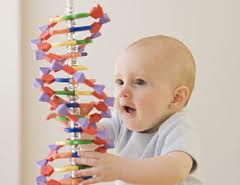
Babies to have their DNA sequenced

Babies to have their DNA sequenced

Now sequencing the DNA of babies carries with it several risks and ethical concerns, as well as well argued benefits. If we take the benefits first, doctors may gain information about a baby, such as high risk for a certain disease, genetic mutations that may require changes of lifestyle etc. They might also find explanations for problems that might otherwise go undetected.

There are though as I say risks and concerns. How will parents react if they discover that their baby has a high risk of an incurable disease? How will the knowledge gained through the test effect the way the parents view and behave towards their children? Are we giving families information that will change their understanding of parenting to such a degree that it might destroy the very fabric of their social relationships?

This is not to mention the social implications of giving out such information regarding extended family. If for example I am told that my baby has a genetic mutation carried by the parents that might have a serious effect on its life, should I tell my brothers and cousins so that they can screen their prospective wives, make decisions about having children or even worse a pregnancy already in course? And not to mention the obvious problem of discovering that the father is not the man stood in the room with the mother.

These problems are in fact the issues that the researchers running the project are hoping to look into. The question is if the clinical benefits outweigh the risks of such an approach.

I have written a lot about this subject in recent years if you would like more to read:

In June of last year I wrote a post here on Technology Bloggers called Sequencing the Genome of Unborn Babies. I also raised a lot of similar ethical concerns in May of the same year in Home Genetic Testing, Pros and Cons.

On the Bassetti Foundation we find DNA Privacy Issues from January of this year, a series called Architectures for Life from 2012 and a review of a book called Go Ask Your Father, just for starters.

My own personal view is that much of the promise peddled to us surrounding medicine and the sequencing of the human genome has yet to be delivered. One problem is money. Personalized medicine sounds like a great idea. I get my genome sequenced, we can see which drugs might work the best, the type of treatment I need etc. But drug companies cannot make, test and market a drug especially for me even with all of this information, it is just not cost effective. They want big sellers, generic medicines that work to some extent on everybody, not something that is fantastic for me with my particular gene pool.

There are clinical benefits, I am not arguing otherwise, but we must wait to see how great.

Facebook Addiction?

Do you ever feel that Facebook has got the better of you? That it has some kind of force that draws you in every time you go near your computer? Well if so you should know that you are not alone.

Two researchers here at MIT have conducted some experiments to see if they could halt their addiction in its tracks. The researchers put some code into their machines that monitors the sites they visit through their browser. When they visit Facebook too often an electric shock is sent through a peripheral device to their keyboard, and they get a jolt.

Now if you have ever spent any time with cows you will know that they respect electric fences because they hurt, and the researchers think that this system might deter them from too much use. They call it Pavlov’s Poke.

And surely enough after a few shocks the boys used Facebook a little less.

Thumbs down.

Thumbs down to Facebook overuse.

There is also the story of a young man who hired a woman through our local newspaper to help him avoid Internet distraction. She sat next to him in his office and slapped him in the face when he lost the thread of his searches. Probably a little cumbersome as a solution though, not to mention pricey. Read the story here.

So the boys came up with an automated version that posts a job request through Amazon’s Mechanical Turk service when the quota is reached. The job requires a person to call and abuse you reading from a script, simple and a much better use of human resources I would think.

And we might really be talking about addiction here. A study cited in Forbes by the University of Chicago claims that Facebook is more addictive than cigarettes or alcohol, with the average user spending 400 minutes a month on the site.

Another report from the University of Utah shows that people who use Facebook a lot are led to believe that other people’s lives are better than theirs.

This is an easy conclusion to come to when you look at photos of your friends (and people you don’t really know or never really speak to face to face) while they are on holiday, having fun in clubs, meeting new people and going to music festivals, while you are sitting at home in front of your computer feeling miserable. Photos of arguing with your partner or the kids waking up at 4 in the morning are rarer.

Researchers at the University of Michigan came to the same conclusion. Read their report in full here. This is a brand new piece of research.

The truth is that these social media sites are designed to be both addictive and necessary. They make you feel better in some ways, people of course like you, but they distort views of real life and can lead to distraction and unhappiness.

They make money by selling, so they need as many online presences as they can get and for as long and often as possible. They are (as they openly admit) marketplaces, designed to sell access to their users for publicity purposes. They are not apolitical and have goals, and their success makes or breaks their share price.

On a personal note I recently applied for a job in the USA as a freelance journalist. Although I have lots of experience, good qualifications and a measurable reader base, I got no further than the application form. The employers wanted details of my social network, Facebook, Google plus etc, not my writing.

I had nothing to offer them.

Protecting Our Coral Reefs

Last month the US military announced that they had dropped four unarmed bombs into Australia’s Great Barrier Reef Marine Park last week during a training exercise that went wrong. Two aircraft dropped two bombs each, one an inert practice bomb but the other an unarmed lazer guided explosive bomb into the World Heritage marine park. The bombs fell into an area away from the coral and the military report that they did not explode.

The action obviously caused outrage within the environmentalist and marine protection community, and it led me into looking into the state of our reefs today.

According to Global Coral Reef Monitoring Network we have lost 20% of the planet’s coral reef in the last 20 years. They also sate that a further 35% is in serious danger. We are talking about an area in total of 284,800 square kilometres of the seabed that is currently inhabited by coral.

A Coral Reef

A Coral Reef

Anyone who has ever been to the Great Barrier Reef will have seen the effects that mass tourism had on the reef in the past, before it became better regulated. Large parts of the reef lie dead. Overfishing is also one of the major causes for concern, as is climate change, the change in sea levels and the ever growing problem of rubbish (particularly plastics) that float around the reefs.

Recently however scientists at the University of Marche in Italy have discovered that some of the substances used in suncream could damage both the reefs and other maritime life. This presents another serious problem, as millions of us splash it on before going into the sea, washing zinc, various nanoparticles and petroleum derivatives into the water and over the reefs.

We could call it involuntary pollution, and we can debate the risk factor (risk to my skin versus risk to ocean life), but you will be pleased to hear that some cosmetic companies have started to produce a more ecologically sound form of suncream.

%CODEVIMEO1%

The UK based company Aethic for example produce an Eco-compatible suncream called Sôvée, and they are working with King’s College London to develop a suncream that mimics the capacity that coral naturally has to protect itself from the sun’s rays.

Any development could have multiple uses, and at least help to remove one of the dangers that are threatening these structures.