US Border Laptop Searches

This week in the US many news outlets are reporting a story that relates to how private the data on your computer, hard drive or mobile phone may be when passing national borders.

In a legal ruling a judge has in effect supported immigration officials’ rights to look inside your computer if you want to bring it in to the USA. The court ruling relates to an incident in 2010 when Pascal Abidor, a student crossing from Canada, had his laptop confiscated and searched.
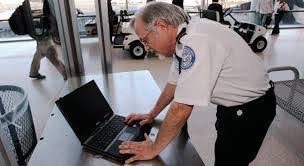
A Laptop Search

A Laptop Search

The student claimed that this was unconstitutional as the 4th amendment states that “The right of the people to be secure in their persons, houses, papers, and effects, against unreasonable searches and seizures, shall not be violated….” The US has long held however that this amendment cannot be upheld when dealing with people entering the country.

The judge ruled however that “The agents certainly had reasonable suspicion supporting further inspection of Abidor’s electronic devices”. What is not widely reported is the circumstances that lead to this decision. Abidor has both French and US passports, and upon entering he chose to show the passport that did not contain Visas that demonstrated that he had visited Lebanon and Jordan,  giving officials the impression that he was trying to hide something.

Agents spent five hours searching his laptop and USB drives, and then demanded that he write down his passwords and hand over the laptop and storage media. The laptop was returned by post 11 days later.

There are rules about what the authorities must do with data seized in these cases. All data that is deemed innocent must be destroyed within 7 days of seizure unless permission is given to keep it for longer. Many blogs however cast doubt upon whether an unregulated and poorly reported system can actually enforce this however, an online search of the story gives many different perspectives. The Homeland securities News Wire has one of the most informative.

I presume that like me many of you keep a great deal of personal data on your laptops, from tax returns, bank details, love letters and personal photos, and all of these things may be accessed in a case like this. One issue that has come to the fore has been brought by researchers and reporters, who may not be able to reveal sources of information for ethical, security or legal reasons, but may unwittingly do so by leaving evidence of their informers’ identities on their computers.

The line is blurred here, as today smuggling must include information smuggling and authorities may need to search information media, but an individual must be aware that all information carried over an international border is open to search. This must have repercussions in terms of industrial as well as personal privacy.

Useful Christmas Gifts

In some parts of the world Christmas is well on the way, and shoppers are happily spending the bank’s money in shopping centres to buy presents for their loved ones.

In my family we have a different approach, and I would like readers to consider the model. It might possibly go some way to improving the welfare of many and the health of the global community at large.

The charity OXFAM offer a wonderful service called Oxfam Unwrapped. Why not buy a present for someone but have it delivered to someone who really needs it? I like this system, although I have some suggestions that I will make later.

So each year I buy my brother a set of school books for English language teaching through Oxfam. My brother speaks good English however, and so Oxfam send the books to a school in Malawi, where they serve a full class of bright and eager Malawian kids. My brother receives a card directly from Oxfam letting him know that his gift from me of 26 school books has been delivered by Santa to the school.

Everyone is happy.

The Unwrapped service offers all kinds of gifts, but I would stick to inanimate objects, project funding or education rather than live animals, although this is just a personal choice. The introduction of a live animal might cause problems to a family though (only my personal idea), as circumstances might not be ideal for their arrival.

I must admit that even living in affluent Cambridge Massachusetts, the arrival of a cow or even a couple of chickens or goats would not be too easy to manage, and I am sure that other situations exist that might not be improved, albeit through good will, by addition to the family. I am sure Oxfam know what they are doing though, they have been working in this field for many years.

Another possibility is to donate to research, projects or product development.

I like the idea of sending something to benefit others, and there are many ways of doing this. Just for a single example take a look at these coffee mugs. Each mug has the logo of the beneficiary printed on it, and 50% of the price is donated directly to the organizations.

Or donate to a project that is working to improve lives. The Liter of light project I wrote about earlier in the year is in need of funds, and there is another local project that is close to my heart that involves playing football (soccer).

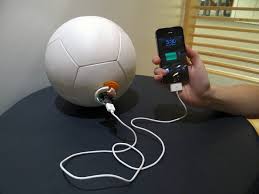
A group of Harvard University students (women) had an idea a few years ago that has finally come to fruition. They have designed a football that can convert the energy created as it is being used into electric power. So the ball has a small socket within its cover, an inductive coil mechanism turns the kinetic energy into enough power to run a light for 3 hours after just 15 minutes of play.

Socckett powering a light

Soccket powering a phone

After a full match the ref can charge his or her mobile phone.

Soccket, as the ball is called, is currently under trial in South Africa, and they could do with some advance orders to help its development. They are giving the balls away for free. You can buy one at the company website, and they will give it to someone on your behalf. They also have a skipping rope (jump rope) that works in the same way as the ball, so if football is not your sport of choice you can still join in the fun.

If we all diverted a portion of the money we spend this Christmas to projects whose goals are to improve lives, we could make a lot of difference. We could avoid battling other shoppers, buying needless things, creating thousands of tons of waste and modify an extremely wasteful and destructive economic system.

We could all do a little bit of good, and as William Shakespeare once said “How far that little candle throws his beams! So shines a good deed in a weary world”.

The FDA Shuts Down Home Genetic Testing Company 23andMe

On Monday the US Government FDA forced the main home testing company 23andMe to stop selling its saliva genetics home testing kit. As this is their only product this means that they effectively shut down their operation.

Looking at Genes

Looking at Genes

The problem seems to be that the company is offering testing for gene mutations that may lead to rises in probability of contracting diseases. This is considered a medical test by the FDA, and so they require trials and results in order to see how well the tests work before they license them. 23AndMe have been unable or unwilling to provide such results, so cannot market their device unless they take away all of the medical arguments.

This is the technical reason, but there are serious ethical issues surrounding home genetic testing. The following are just a few of my own ideas:

Without serious research doubt must remain about the quality of the results. The samples are not second tested, and the quality of testing cannot be of the same level as other medical hight cost exams. There have been problems reported due to the small number of people involved in the test groups, as statistics require masses of data that are not yet available.

Are customers qualified to interpret the results? What does a statistical rise in probability actually mean to a person that has never studied statistics or probability? And the results are delivered without any counseling, so if there is bad news the customer is left to process the information alone.

Here just a few examples might demonstrate the difficulty. If I have a 1% chance of contracting problem A, but I have a gene variant that means that I am 70% more likely to contract it, I might be distraught. The reality is that I now have a 1.7% chance, very little difference, but I might try to change my lifestyle, treat my kids differently, get paranoid, have preemptive surgery, who knows how an individual will react without medical advice?

If on the other hand I am negative for a mutation for something I might adopt an equally problematic stance. I don’t have the gene mutation that leads to skin cancer so I can stop worrying and have another hour on the sun bed. Social factors are really the big ones in many cases.

And what about testing your children? How will parents react knowing that their child might be susceptible to certain problems later in life?

Oh and if I discover that I have something hideous, should I tell my brothers? They might carry it and pass it on to their children. How personal is this type of medicine? It is familial, not individual.

The 23andMe problem is a prime example of money ruling. They have operated for 6 years, without regulation and blatantly challenging the FDA and medical profession that they see as holding up progress. As far as I can see this is about as far away from the responsible innovation that I have spent my recent life trying to promote as I would like to see anyone go. I would add though that it is a systemic problem here in the USA, not a personal divisive choice, and it is very different to the European approach underscored by the precautionary principal (with all its critics).

For further reading you will find several of my articles linked through this post on the same subject from last year.

The National Post has a good article too that includes both sides of the argument.