Vehicle Reversing cameras, a real safety improvement?

Congratulations on a beach

Congratulations Jonny! You have the honour of posting Technology Bloggers 500th article – which is also your 125th! It is also the first post of Technology Bloggers fourth year. (Image Credit)

A car reversing cameraImage Credit
At the end of last month the National Highway Traffic Safety Administration (USA) finalized long-delayed rules that will require automakers to install back-up cameras in all vehicles by May 2018. This was a long fought battle, the auto makers not wanting to be forced to adapt such measures.

And we must consider the costs, possibly between $500 and $900 million a year, to be borne by the purchaser, manufacturer and of course the state. The legislation is aimed at avoiding death or injury caused when drivers reverse over their own children or the elderly (the main victims in such accidents).

All well and good I say, maybe the rules will save some lives, and we should bear in mind that they did take 10 years to pass. But how many lives will they save?
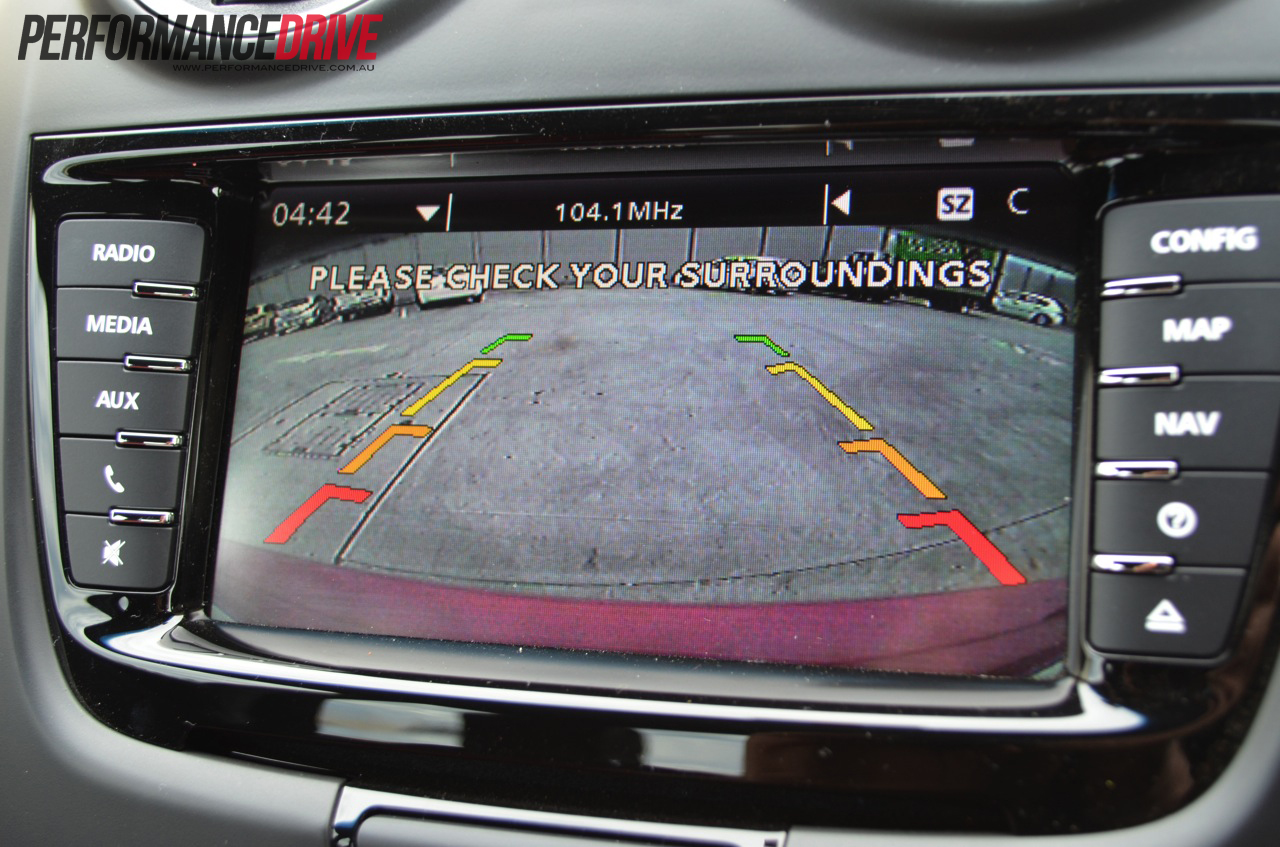
A Typical view in reverse

We have to bear in mind that auto-mobile manufacturers estimate that upwards of 60% of all cars would have had the technology as standard by 2018, we are talking about the remaining 40%, so an incremental improvement on an already rolling ball. But how many people are killed each year in the USA in accidents of this type?

According to this article, fittingly enough from the Detroit News, 60 to 70 lives a year would be saved if all the fleet had rear view cameras, but of course as stated above 60% would have already had the cameras, so the legislation itself would save about 15 lives a year and save 1300 injuries. But how many injuries and deaths are there a year in the USA?

On average in recently in the USA there have been about 35 000 deaths and more than 2 million injured in motor accidents. According to the US Census Bureau most of those were caused by speeding and alcohol.

Now I would question the rationale of spending the amounts of money required to install cameras in all cars when the number of lives saved is going to be so small. We are talking about between 15 and 25 million dollars per life, when there may be better ways of spending this money and saving more lives.

If we look at the legislation in context, I think there are other questions that need to be asked too. The US government Distracted Driving website offers another bewildering array of statistics and related information, with mobile technology use once more taking the blame for accidents. But we might imagine that it is illegal to text and drive, but it is not in all states. Several states still allow you to send a text message while driving. Texas for example bans texting for bus drivers and novice drivers, and in school areas for everyone, but I can drive and text in Texas perfectly legally. Arizona only bans bus drivers from texting, and in south Carolina there are no rules about using mobile technology while driving.

Although road deaths have come down dramatically in the USA, those related to driver distraction have gone up. This could be related to changes in how the statistics are reported, or might be related to increased usage of mobile devices, I cannot tell that from the data provided in the census.

A table is available here that summarizes the current situation.

As a quick comparison in the UK you can be charged with reckless driving if you are involved in any accident, and texting and hand held telephone use is against the law. If you are eating or drinking however this can also be taken into account, and there is research that suggests that eating and drinking while driving can dramatically slow down reaction time. Check out this article in the Telegraph newspaper.

So I want to ask a serious question about this US legislation that we could ask about a lot of other legislation. Do these new rules really make driving safer, or do they make us feel that we are safer, or do they just make us feel that we are doing the right thing?

I don’t honestly believe that this legislation will really make driving much safer for anyone, although this is of course my own opinion. I am not making light of accidents that involve reversing over children or old people, but there must be plenty of more efficient ways of cutting down road deaths than this (like taking action to deter mobile phone or texting use for example).

Reports from the INSS Sustainability Meeting

As readers might know this weekend I attended the Integrated Network for Social Sustainability (INSS) Meeting in Charlotte North Carolina. It was a great event, and I met a lot of great and interesting people, and over this week I would like to write a bit about them and what I learned.

The first is Adrienne Brown, a second year at Dickinson College in Carlisle Pennsylvania. She is currently participating in an application competition which involves answering a prompt with a two-hundred word essay and a two minute video. The organization orchestrating the web-based contest is the Arctic Climate Change Emerging Leaders Program Fellowship (ACCEL). This year they will be piloting an internship program with two positions, one in Washington DC and the other in Berlin, where the two student finalists will work on developing creative marketing strategies using media technologies.

The Arctic Today

The Arctic Today

Adrienne believes that there is a growing need to use technology to talk about important social issues, and as the popularity of social media platforms increase many social movements have started to use these technologies to market their cause to a particular audience. That audience tends to be young and motivated and therefore are a resource of human capital just waiting to be tapped.

To get the ACCEL internship students must gather public support for their essay and video responses. Essentially to demonstrate their ability to wield the powerful weapon of the internet to gain support and spread a particular message. Those who are stronger at encouraging people to act will theoretically get the most votes and present themselves as a good candidate for the position with the ACCEL. Once the public voting ends on April 13th the students who have collected the top ten amount of votes will move to the final round and submit a resume during an interview.

Adrienne feels strongly that the environmental field has not done enough with web-based marketing and is really excited for the opportunity to work on developing a public relations strategy for Arctic environmental issues. At the INSS conference she presented her video response and asked the network’s members to vote for her. Take a look at her essay and video and if you like the ideas presented follow the links and vote for her, and check out the other participants.

I will tell more stories about the event and people involved as the week goes on.

MIT Researchers Develop ‘Living Materials’

My friends from down the road at MIT have just announced that they have managed to make bacterial cells produce biofilms that can act as “living materials.”

In the press release that you can read here, the researcher state that they can use the man-made living materials to conduct light or generate energy. Like live cells, the living materials are environmentally responsive, but also have all the traits of non-living particles.

To quote senior author Timothy Lu, an MIT assistant professor of electrical engineering and biological engineering, “Our idea is to put the living and the non-living worlds together to make hybrid materials that have living cells in them and are functional. It’s an interesting way of thinking about materials synthesis, which is very different from what people do now, which is usually a top-down approach.”

Lu said the practical, everyday uses for the research would be self-healing materials, solar cells, diagnostic sensors and more.

The paper was published in the journal Nature Materials.

The researchers used mostly the E. coli bacteria for its naturally produced curli fibers biofilm. Curli fibers are proteins that stick E. coli to various surfaces, which is probably one of the things we don’t generally like about it, but they are useful for the project because they help retain non-living particles.

e-coli

E-coli

The research team also demonstrated how the cells even appeared to communicate with each other, designing living materials that could coordinate the stimulation of each cell to control the composition of the biofilms.

To quote Prof Lu again “It’s a really simple system but what happens over time is you get curli that’s increasingly labelled by gold particles. It shows that indeed you can make cells that talk to each other and they can change the composition of the material over time. Ultimately, we hope to emulate how natural systems, like bone, form. No one tells bone what to do, but it generates a material in response to environmental signals”.

I like the bone analogy. Some months ago I visited another lab here in Cambridge where they use natural animal traits to design applications for science. You can read about my visit to the Karp Laboratory for Advanced Biomaterials and Stem Cell Based Therapeutics here, but the general idea is that researchers mimic the natural world. Lab Director Dr Jeffrey Karp explained that evolution offered incredible examples of innovation that could be used for scientific research today. We were shown examples of how porcupine needles are used to model surgical needles, and how gecko climbing techniques can be applied to medical adhesive design.

I look forward to learning about possible applications.