The Edge of Knowledge

quote-life-is-a-travelling-to-the-edge-of-knowledge-then-a-leap-taken-david-herbert-lawrence-108885

What do you think about machines that think? Or should I say machines who think? That is the 2015 EDGE question.

Edge of Knowledge

Edge.org was launched in 1996 as the online version of “The Reality Club” and as a living document on the Web to display the activities of “The Third Culture”. What is the third culture? Oh to put it in their words.  ‘the third culture consists of those scientists and other thinkers in the empirical world who, through their work and expository writing, are taking the place of the traditional intellectual in rendering visible the deeper meanings of our lives, redefining who and what we are’.

And members (Edgies) have been responding to an annual question now for some time.

What should we be worried about? What is your favourite explanation? How is the Internet changing the way you think? What will change everything? You know, just regular questions. OK big questions.

And this group contains a lot of famous names. Well this group is made up of famous people is a better description, from many walks of life, and so the answers are extremely interesting. Go and check a few out on the website.

Artificial Intelligence

As is the preamble on the website:

“In recent years, the 1980s-era philosophical discussions about artificial intelligence (AI)—whether computers can “really” think, refer, be conscious, and so on—have led to new conversations about how we should deal with the forms that many argue actually are implemented. These “AIs”, if they achieve “Superintelligence” (Nick Bostrom), could pose “existential risks” that lead to “Our Final Hour” (Martin Rees). And Stephen Hawking recently made international headlines when he noted “The development of full artificial intelligence could spell the end of the human race.”

But wait! Should we also ask what machines that think, or, “AIs”, might be thinking about? Do they want, do they expect civil rights? Do they have feelings? What kind of government (for us) would an AI choose? What kind of society would they want to structure for themselves? Or is “their” society “our” society? Will we, and the AIs, include each other within our respective circles of empathy?”

So how close are we to these predictions, dreams and nightmares? There is plenty of stuff on the web to feed the interested, and surely enough developments will surely move in that direction. Last week we learned that a computer can work out aspects of your personality thanks to your social media use (see the post here). But intelligence? Computing variables is not intelligence.

And can we say that learning is intelligence? Computers can certainly learn, but can they think? Can they reason? What does it mean to think? To make a decision based on what? If the decision is based on experience then to some extent it is a calculation, or a computation, and if that is the case then a computer can think.
So back to the question. What Do You Think About Machines That Think?

Drone Wars

Drones

Mauricio loves remote control aircraft. When I bought a model plane for my son he was the first round to see it, he told me how to strengthen the wings, and recounted tales of daredevil antics and crashes in the heart of South America.

Now he wants to get a license to pilot a drone, because now in Italy where he lives you need a license, which is not the case in the USA.

Drone Use and the Law

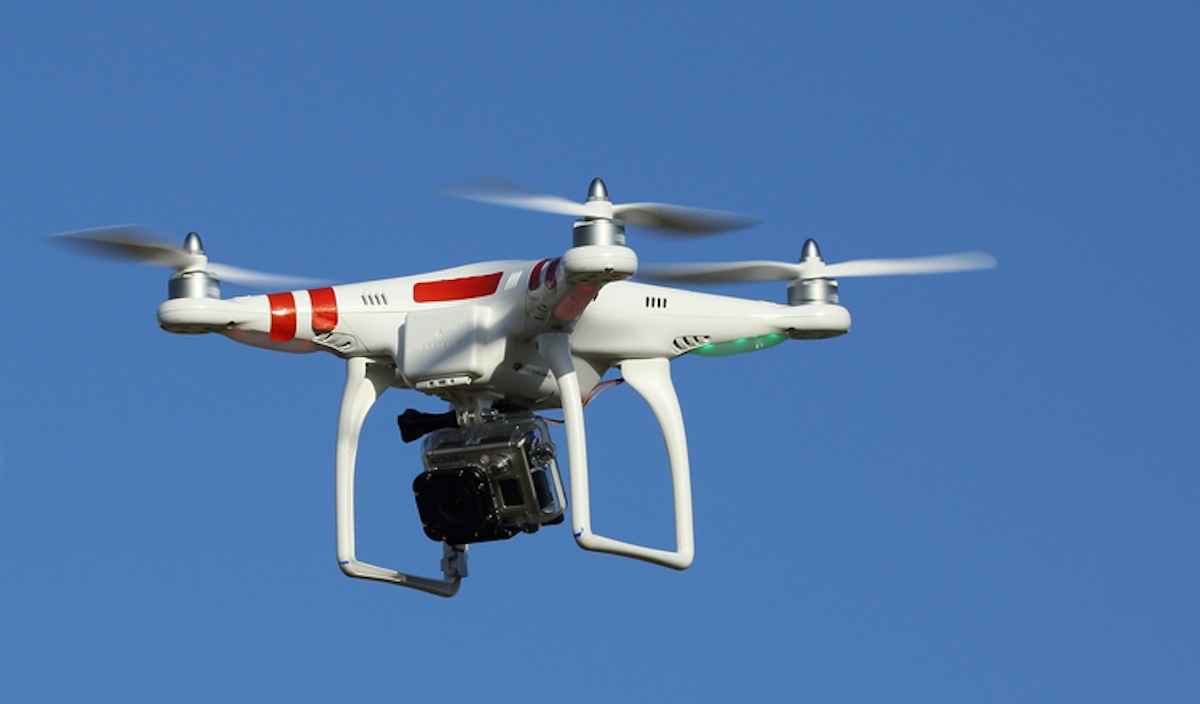
Drone use is becoming ever more common, but there have been a few pieces in the press about people getting into trouble for drone use.

In October, a European football qualification match was abandoned after a drone carrying inflammatory language on a large tail was flown over the pitch. It’s appearance caused a scuffle between players that got so out of hand that the referee had to lead the players off and later abandon proceedings.

In what I might see as a copycat incident a week later, a man was arrested after a drone was seen flying over Manchester City’s stadium during a game. Read more about these events on the BBC.

This week reports abound of a near miss at Heathrow airport in London involving an unidentified drone. An Airbus carrying 180 people almost collided with the drone that is too small to appear on radar. Police are searching for the pilot. This article describes the event and goes on to explain flying rules in the UK for such machines. The owner of the drone will be in serious trouble when the police catch him, and could face fines of up to half a million pounds.

In a related incident police are investigating reports of drone flights over a nuclear power station. Once again in October but this time in France, police received reports of a series of drone flights over nuclear power stations. The flights were at night, and seem to have been coordinated, and this fact has set a few alarm bells ringing with the French authorities. Were they spies, terrorists, anti nuclear campaigners or just people having a laugh? Who knows? Read more here.

Drone use is becoming ever more common and the trend is bound to increase, but given the problems above this growth is certainly not unproblematic. In a previous post I wrote about privacy implications, and earlier this year Christopher wrote about Amazon’s possible drone delivery service. Find the links here.

On a scientific note NASA are developing a biodegradable drone. It is made from mushroom and cloned paper wasp spit, and the materials used are hailed as possibly offering a new substitute for plastic. If the machine crashes it simply biodegrades leaving no trace, so could be used in sensitive areas without fear of contamination.

Certainly one to look out for.

Sending People and Animals into Space

laika

I watched NASA TV all afternoon today. I wanted to see the launch of the new US Space Agency flagship Orion, but unfortunately technical issues led to it being postponed. They will (and I will) try again tomorrow.

Space Difficulties

This is an interesting launch for one major reason, it is the first test flight of a capsule that will carry people, possibly to Mars, but certainly into outer space. The test is going to send it way out beyond the orbiting space station (3600 miles), into an area that is much more inhospitable.

One issue that is different at that kind of distance is radiation. The radiation level is high, high enough to effect machines let alone humans, and so the test will measure how much the engineers have managed to insulate the capsule from this problem. Incidentally this problem is often cited as evidence that the US moon landings were faked, with critics saying that the astronauts would not have survived the radiation levels if they had actually gone there. But that is another post!

Another thing to be tested is its capacity to withstand the temperatures of re-entry in to the atmosphere. You might recall one of the Space Shuttle missions ending in disaster as it burnt up on re-entry due to faulty tiles on the underbelly.

Now I would like to see a rocket launch, but it is a completely different thing to see one with a capsule carrying people attached. I remember the golden days of space travel, when it was only animals that had the chance of orbit. (I don’t really remember them).

Animals or People?

It is after all a dangerous game going into space. This Wikipedia article lists all of the deaths involving space travel, both on the ground and in the air. 19 people have died during space flight, but another 11 have died in training, and if we think that only 533 people have been into space then the fatality rate is high.

So will they send animals in the capsule to test it out again? I doubt it, but alongside the 500 odd people in space we should not forget our animal friend heroes, some of whom gave their lives for this great mission.

Fruitflies, a pest sometimes and national heroes on other days. Fruitflies were after all the first animals sent into space, way back in 1947. In 1949 they sent a resus monkey up called Albert 2, although he died on re-entry. They did have some sensor data however so it ewas not all in vain. They are little remembered though, unlike Laika the dog. Laika was rescued from the streets of Moscow, trained, and sent on a one way mission into space. It is not known how long she lived, the capsule burned up on re-entry, and I am not sure why she was sent, but a heroic end to a flea ridden mut it was in November 1957. There she is in the photo above.

2 dogs did however make it back in one piece after a quick orbit. In 1960 Belka and Strelka made it back home, and I am sure received the welcome they deserved.

Then there was Ham, a chimpanzee. He was trained to interact with the vessel, pulling levers and feeding himself. He became a celebrity upon his return and there is even a documentary film available about his and his friends’ pioneering lives.

If you would like to know more about animals in space (I bet you can’t wait) check out this link.

I am looking forward to a launch tomorrow, with or without animal passengers.

On a final note follow this link to see a photo reportage about abandoned NASA facilities. The places that launched some of these great missions are now in ruins. Makes you think!