Art in Technological Development

Art is a Powerful Engine for Responsible Innovations

Art as a driver for responsible innovations is really my thing, and fortunately I am not alone.

In4Art is an interesting project that creates space for experiments on the intersection of art, science and technology and translates the outcomes to strategic implications and innovations.

The project’s focus is to increase the impact of art in society and economy by bringing systematic change to the domains of circular economy, material research and next generation internet. Care and Environment, a mix of sustainable development goals and positive impact for the broad society.

All of which sounds fantastic to me and worthy of further investigation, particularly bearing in mind that they have just launched a new explainer site for anyone interested in their Art Driven Innovation method.
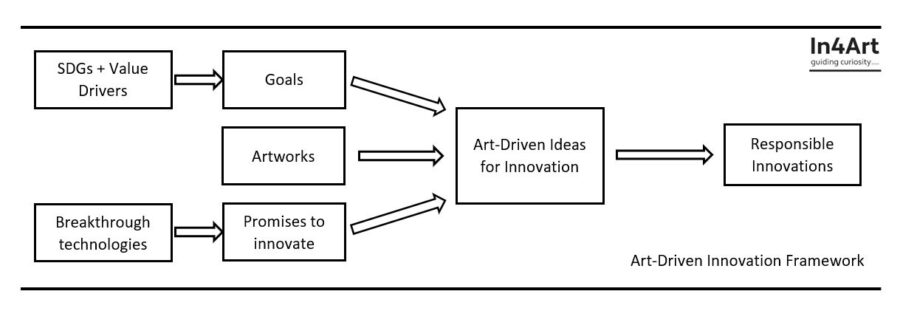
Art experiments today often take place at the cutting edge of technological development, and can spark as well as act as an engine for innovation. See the diagram above taken from the website, it shows how artworks (or really the different ways that art broadens thinking) can be introduced into the process and have an effect on technological development.

From the website:

In4Art was founded in 2015 by Rodolfo and Lija Groenewoud van Vliet with the mission to increase the impact of innovative art in society and economy.  We believe art is a powerful engine for responsible innovations. It acts as an accelerator for innovation, offers reflections on our fast-changing high-tech society and by translating that into art-driven innovations it enables impact from economical, ethical, environmental, social and legal perspectives. Therefore, we create space for experiments on the intersection of art, science and technology and translate the outcomes into inspiration, strategic implications and responsible innovations.

We act as partners for the development of artistic prototypes into art-driven innovations and share their trans-formative potential, while building a network of forward looking, 21st century thinkers and doers. To do so, we created the method – Art-Driven Innovation, which guides us in our innovation projects, collection, experiments and research, focusing on breakthrough technologies in the domains of next generation internet, materials for a sustainable future and biotech.

Art on the Blog

The topic of art and its relation to technological development is not new to the blog, several years ago we investigated nano-art, but the focus on how artistic involvement can influence trajectory, and move towards responsibility is new and exciting.

The artworks section of the explainer site offers some fantastic examples of technology/science/innovation/art fusion.

A very thought-provoking project with an entertaining pair of websites, why not take a look? Technological development and art have always had close connections after all.

Just think about Leonardo da Vinci!
Fossil vs Hybrid vs Electric

Last time, we explored “self-charging hybrids“.

Today I present an overview of the four most common ways of powering a car in 2020 – little disclaimer there since this almost certianly won’t be the case in 2030!

1) ICE – Internal combustion engine car

This car is 100% powered by fossil fuels, i.e. fuels up with petrol or diesel to burn in the “combustion chamber” (engine).

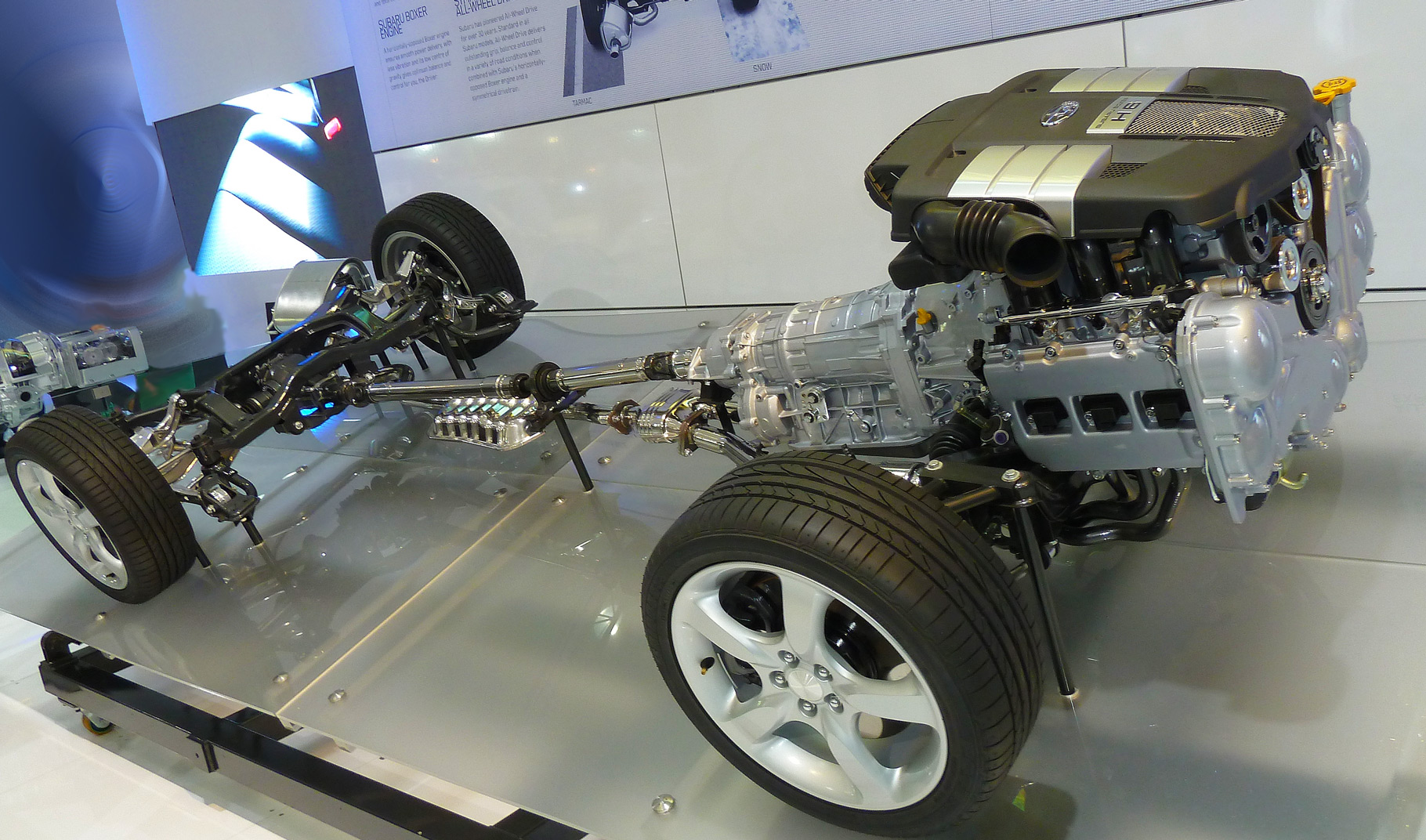
An ICE powertrain
The drivetrain for a petrol powered car

ICE cars get a around 30-55mpg (miles per gallon) in combined (urban and rural) driving conditions.

2) Mild hybrid – what Toyota and Lexus like to call “self-charging”

These are also 100% powered by fossil fuels.

When braking, some energy is recovered from the spinning wheels which feeds a small battery – similar to how a 12-volt battery is charged. The car can then drive a limited distance on this charge. Any physicist will tell you “self-charging” isn’t possible, the energy comes from somewhere – in this case it’s from the petrol that was burnt.

Mild hybrid cars get a around 35-60mpg on average.

3) PHEV– Plug-in hybrid electric vehicle ⛽🔋

These cars can drive a short distance (10-25 miles) on electricity alone. They can be plugged in to charge like an electric car or filled up with petrol and driven like an ICE car.

They have regenerative breaking to recover energy back into the battery. So once they use up their charge, they are effectivly a mild hybrid.

The disadvantage of PHEVs is they are less efficient than EVs in electric mode and less efficient than an ICE cars in petrol mode, since they are carrying the weight of an engine and fuel tank, as well as a motor and a battery.

Plug-in hybrids get a around 50-75mpg on average.

4) EV or BEV – Battery electric vehicle 🔋

These cars are 100% powered by electricity. That energy could come from the UK grid (currently still 30% fossil fuel powered) or it could come from renewables – such as charging solar panels on your roof.

An EV powertrain
The drivetrain for an electric car

Many electric cars have one-pedal driving, recovering energy back into the battery, right until the car stops – the most efficient way of slowing down.

Electric vehicles can achive over 175mpge (miles per gallon electric)!

Here’s another article from the series explaining why electric cars are so efficient. 🙂

How do self-charging cars work?

Toyota, Lexus and Kia use self-charging as a term to describe their hybrids.

Mild hybrid doesn’t sound as exciting or technologically advanced as a self-charging car, which is probably why they market them as that!

How Do Self-Charging Cars Work?

A self-charging hybrid has a small battery and an electric motor. When the vehicle brakes, the initial phase of braking is used to charge the battery. Brakes (disks and pads) then kick-in after.

This is a basic form of regenerative braking (or regen) something plug-in hybrids (PHEVs) and electric vehicles (BEVs) do too, but to a greater degree and effectiveness.

The small amount of energy recovered from braking is then able to be used to drive a limited distance. The battery can only run for around a mile before it needs recharging.

What Powers a Self-Charging Hybrid?

Exhaust pipe emissions on a self-charging car

Unfortunately, a self-powered car breaks the laws of physics, as the energy must come from somewhere. In one of Kia/Lexus/Toyota’s hybrids, the power comes from burning fossil fuels – the petrol in the internal combustion engine.

This means self-charging cars are 100% powered by petrol. All the propulsion achieved is down to petrol – since the cars don’t plug-in.

If we refer to hybrids as self-charging, we should really refer to all petrol and diesel cars as self-charging, since these cars don’t need plugging in to charge their 12-volt battery which powers the wipers, headlights and other electrical ancillery services.

How Far Can A Self-Charging Car Travel?

Toyota et al claim that their mild hybrids can be driven over 50% of the time on “pure electricity”. That makes them seem awfully green, given we tend to associate electricity with being green and petrol with being polluting. This claim is misleading for two reasons:

  1. All the electricity used to driver is generated by burning petrol, so it certainly isn’t the clean energy you can get from the grid or solar on the roof of your house.
  2. It’s crucial to remember that Totota reference time not distance – if you drive in stop-start traffic, the engine might be off for a large proportion of the time as you’re stationary. Some of the slower speed driving may be achievable using the battery, but because the battery is very small, it will drain extremly quickly and require recharging – so the petrol engine turns on. In terms of distance driven, around 1-3% of the distance driven uses the battery. This translats to around 2 miles in 100 miles of driving.

Do Self-Charging Cars Exist?

Will we ever see a car that can power itself? In the Toyota sense of self-charging, no. It’s not possible to drive a hybrid without putting petrol in it.

Lightyear One

However, there are projects like Lightyear One, working to create cars that you may never need to plug-in! These are pure electric cars (not hybrids, so no fossil fuels) and can be charged by plugging-in, or from the solar panels built into the roof, bonnet and boot! ☀️⚡🔋🚗

Lightyear are aiming to be able to charge an impressive 12 kilometres (7 miles) from 1 hour of sunshine charging – using the solar panels on the roof! For those who drive short distances, or travel infrequently, that could mean you’d never need to plug-in!

More info on the Lightyear One in this Fully Charged video.

Should Self-Charging Be Banned?

In Norway (home of the EV, where over half of cars sold in 2020 were fully electric) they’ve banned adverts that reference “self-charging” believing the term is misleading.

I believe marketing a petrol car (100% powered by fossil fuels) as self-charging should be banned. It makes polluting cars that burn fossil fuels seem cleaner and if you don’t do your research, you might think you’re doing your bit to look after the environment when actually, nothing could be further from the truth.