We need to act on climate change for the sake of others

In the South Pacific ocean lies three tiny atolls that go by the name of Tokelau. These islands have a population of around 1,500 people, around the size of a big village.
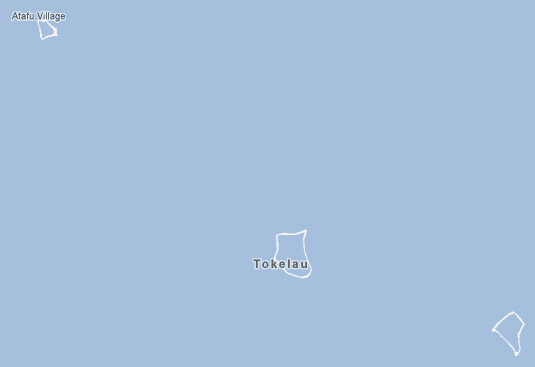
The Tokelau islands

The three tiny atolls that make up Tokelau

However, bad news is on the way for the people of Tokelau, as climate change is threatening every single one of the residents lives. Droughts are a real problem in the area, as despite being surrounded by sea water, there is very little freshwater that locals can use. Climate change means that rains are decreasing in the area, and drought is increasing.

The second issue for this tiny group of islands is the sea itself. Sea levels around the world are rising for two main reasons: ice caps are melting, and thermal expansion (when water gets hotter, it expands) – these are both caused by climate change, i.e. global warming of the planet.


The final issue for these tiny atolls is that they are made out of coral. Coral is a very delicate substance, that requires very specific conditions to grow and survive.

Basically, these islands are stuck between a rock and a hard place, and it doesn’t look like their situation is getting any better.

It is rather unfair of one to say that the use of fossil fuels on these islands is what has sealed their fate, as compared with the likes of China, the USA and the EU, the islands have virtually no greenhouse gas emission – they probably are responsible for less than 0.0001% of global emissions, leaving the rest of the world responsible for the other 99.9999%.

Despite this, Tokelau has announced that by September 2012, there will be no greenhouse gasses produced there at all, they will run 100% on renewable energy! Photovoltaic solar panels will make up 97% of their energy, whilst the rest will come from local coconut oil made into biodiesel. What is really amazing is that its per-capita income is only about $1,000 per year, a fraction of that in many western countries.

Why is Tokelau bothering though? Their fate is sealed, sea levels will rise further, drought will increase and coral will decline. However, this tiny group of islands believes that if they make a stand now, maybe, just maybe the rest of the world will follow.

The people of Tokelau will most likely be taken in by nearby neighbours, however their home islands will be lost forever, along with their natural beauty and potential. But that’s not the point.

I believe that Tokelau is a warning for what is to come for the rest of the earth. Climate change is happening and it’s real. If we carry on the way we are, we will almost surely destroy the planet we call home.

I have read predictions that by 2050 most of the worlds megacities and centres of economic and political power will be underwater. That includes the likes of London, California, the Netherlands and Bangladesh. That’s a lot of people who will be affected.

We need to take a stand now, for the sake of the future of planet earth.
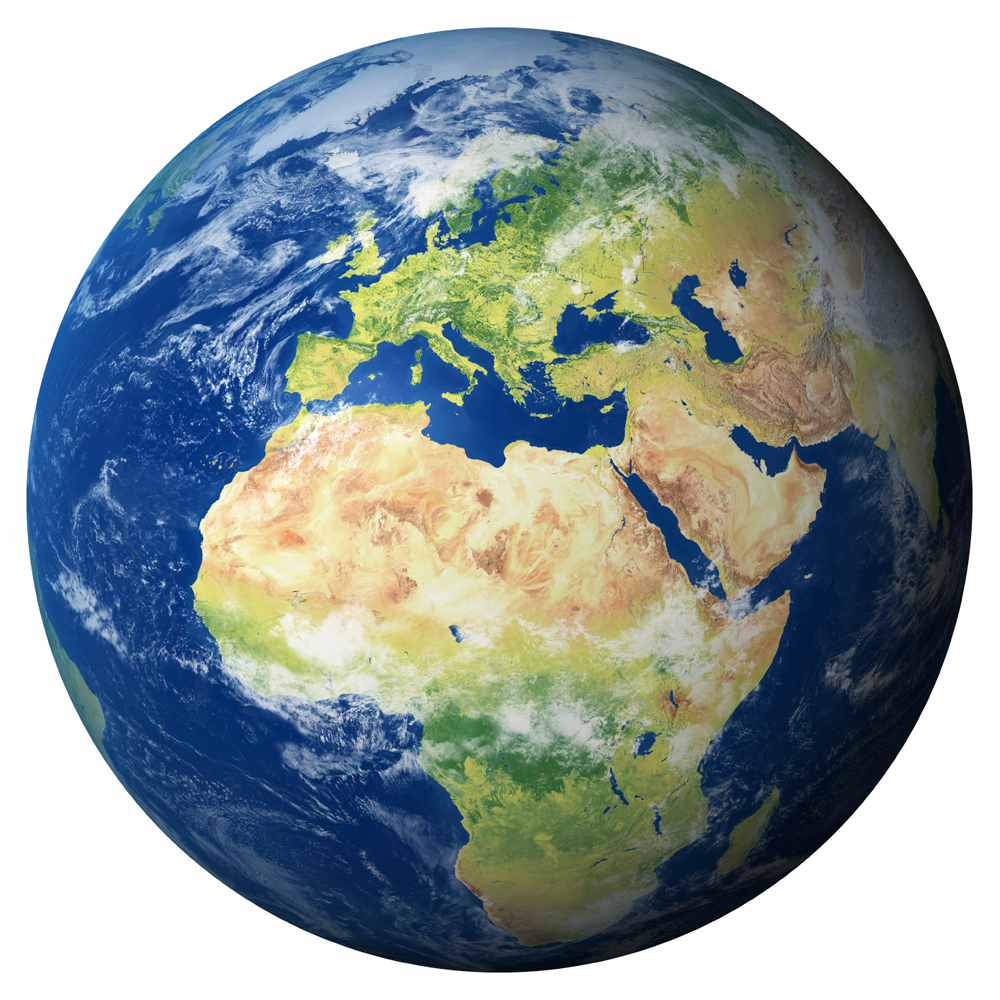

A Europe centred picture of the Earth

Why not install solar on your roof? It could heat your hot water or power your electricity, even creating extra which you could sell back to the national grid! Why not have a small wind turbine set up in your back garden, that could do wonders for your energy bills!

Think about it. It is our world, we need to look after it.

From the bottom of my heart I ask that you think green, save resources and our home. We really are so lucky that in the whole of space, the perfect conditions came about so that our planet were ever to exist, with it’s vital magnetism and ozone layer, which helped to create and now sustains life.
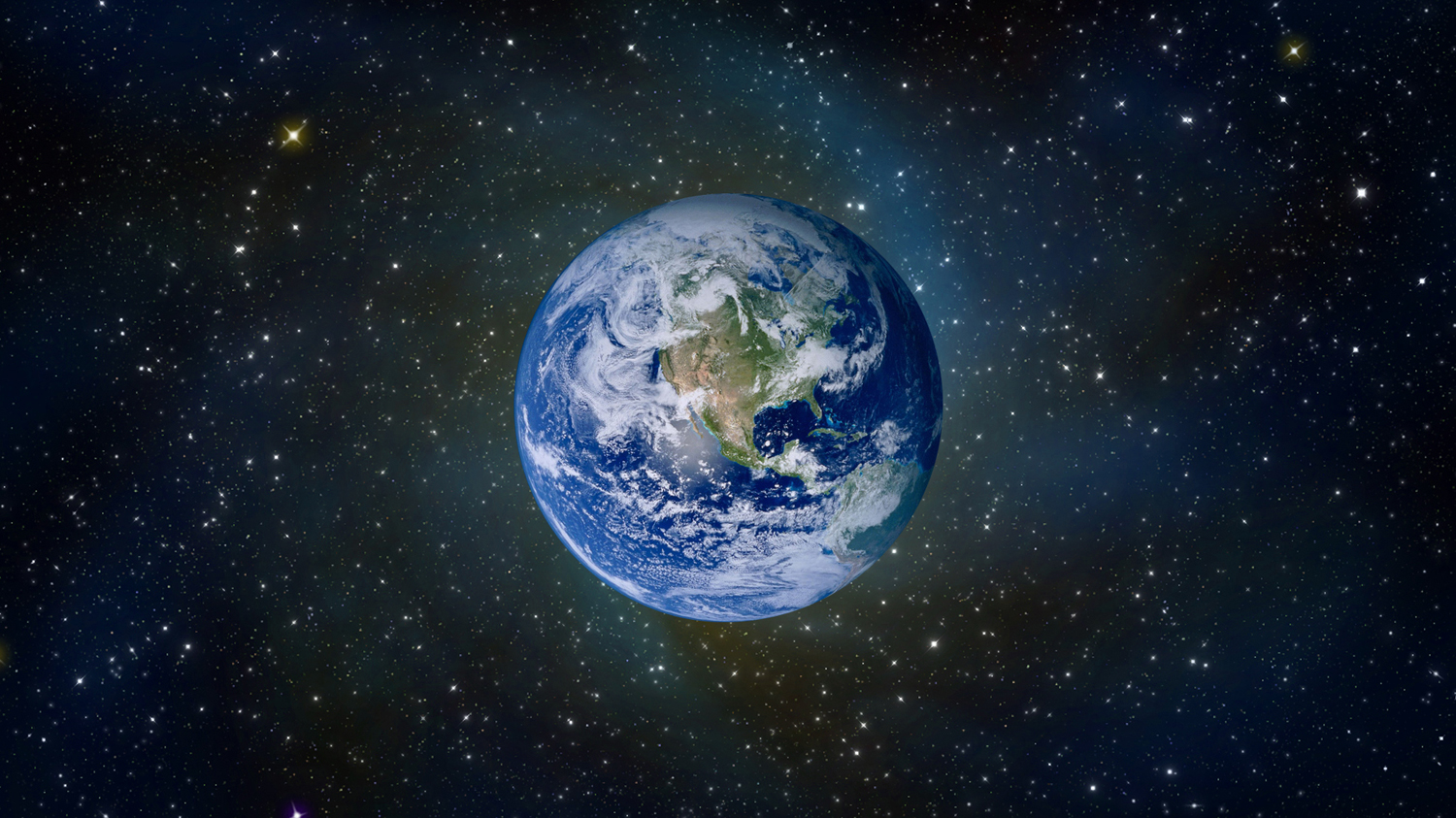
Earth suspended in spaceWhat’s your opinion on this?

Let it snow!

There are just 15 days to go before Christmas now, and I am a little behind on the old Christmas shopping – this one seems to have crept up rather quickly!

Trees in Lapland covered in snowTo get in the festive spirit, Technology Bloggers is now experiencing snow showers! Its winter (in the northern hemisphere at least) and in winter, it snows, therefore I thought it appropriate to let it snow on Technology Bloggers.

To create the snow, I am using a very clever little plugin called: Let it snow!


Let is snow! is a really easy to use and customise plugin. Just install the plugin via WordPress (or download it and then upload it to your site) and then click ‘Activate’. You then get snow on your blog, and it is that easy!

The plugin also creates a useful and really easy to use settings tab. Just look down the left hand side of your WordPress menu and find Let It Snow! There you can customise things like whether the snow follows the mouse, sticks to the bottom of the screen, how much snow their is, etc.

Why not give it a go on your own blog, its easy to do, and doesn’t actually appear to affect the performance of your site very much at all!

If anyone is experiencing lag (I am not) please don’t hesitate to contact me 🙂

Merry Christmas everyone, stick with us for a fantastic future 🙂

Understanding iCloud

The latest release in the cloud computing world, and the replacement for Apple’s old MobileMe service is Apple iCloud. The new software is designed to work seamlessly between various apple hardware such as iPods, Apple laptops and desktops, and the iPad. There are several applications available with the iCloud software, ranging from ‘Find my Device’, which allows an internet connected device such as the iPhone to be remotely tracked, to Photo Stream, which makes ‘streamed’ photos available on any connected device.

The first, Find My Device, was initially a MobileMe application, which has been migrated to the iCloud software package. Using the service, a user can view the rough location of their device over-layed on a scalable map of the area, as well as a circle indicating the margin of error on the tracking. Along with remote tracking, the program also allows the user to change the password, display a message on the device, or play a sound (even if it is set to silent). A final feature of the program makes use of the cloud storage technology and allows the user to temporarily delete the contents of the device, storing them to the cloud server until told to return to their original location.

Computing from the cloud

Not quite cloud computing!

Photo Stream directly utilizes the cloud storage technology to share pictures between devices. When a picture is taken from an iphone with Photo Stream enabled, the picture will automatically be uploaded to the cloud server, where it will be available to any of the user’s other Photo Stream enabled machines. According to Apple, the service will soon be integrated with their Apple TV box, which would allow users to view any pictures in icloud on TVs connected to Apple TV.

While only currently available in the US, iTunes Match is one of the most popular uses for the virtual computing abilities of the iCloud software. iTunes Match allows users to ‘scan’ their music in any compatible device (even if the music is not purchased from iTunes), and upload it to the iCloud virtual servers, ready to be downloaded to any of the user’s other Apple products in a DRM free format.

‘Back To My Mac’ and iOS Backup are two more erstwhile MobileMe program migrated to the iCloud package. The first is essentially a remote access program, allowing the user to remotely log into any device with the same Apple ID and the program active. The second is a backup program, which allows the user to back up the data and settings on their device to the virtual servers, and restore the device or access the data remotely as needed.

While the iCloud software is very slim as far as system resources, it requires a fairly current OS to run properly. Creating an account requires iOS 5 or later, or for desktops, OSX Lion. For PCs, Windows Vista or later is required to properly sync. iCloud can also sync to Outlook 7 or later for calendars and contact info.

The cost of the iCloud software varies with the amount of services the user chooses to sign up for. Data storage starts at 5 gigabytes free, and added storage can be purchased in increments of ten gigabytes, for $20 per ten gigabytes per year. At the moment, the maximum storage amount available is 50 gigabytes, however Apple has said it is possible for that to go up in the future. Apart from storage costs, the iTunes Match service is a yearly fee of $25.

With the iCloud software, Apple has taken full advantage of the evolving cloud storage technology to bring a wide variety of programs to Apple users, and an increased connectivity between Apple hardware.