Nanotechnology, risks and benefits

Last year Hayley posted a really good article on this site entitled ‘What do we need to know about Nanotechnology?‘ She raised some important issues about the governance of such high technology including the facts that little research has been conducted into health implications, legal regulation is minimal and nobody really knows how much of this type of material is produced. It is however already everywhere, in cosmetics, car wax and sunscreen to name but a few.

She followed the post earlier this year with another, ‘Nanobots, the future in Nanotechnology‘. This is also an informative piece in which she describes how nanotech engineering is moving away from top down construction to a bottom up approach, and goes on to talk about the possibility of building autonomous and even self replicating robots on the nano-scale.

Last week I posted an article about synthetic biology, another branch of science that deals in the nano-scale. With synthetic biology one of the issues raised by Hayley, that of power source, is resolved, as the machines are in fact alive and get their power from the organism that they are implanted into. The two are very much related and entwined forms of science.

And all this leads me on to looking at regulation regarding these types of research and a recent publication entitled ‘A Research Strategy for Environmental, Health and Safety Aspects of Engineered Nanotechnologies’.

The document was prepared by the National Research Council and a pre publication copy is available from the National Academic Press for downloaded here.

This is a long and detailed document written with the help of a host of academics, and it raises some very important points about an industry that Barak Obama has placed at the forefront of his innovation policy. In this year’s budget Obama is asking for 123.5 million dollars to invest in nano-tech research, which if seen next to the relatively small investment of 34.8 million in 2005 signals the importance attached to this form of innovation.

Nanobama

But all of this investment is made in a technology that is as yet practically unregulated and severely lacking in health and safety legislation, with the problem being that exposure limits and contamination issues have yet to be formalized. All of this is despite the ever growing use of such particles in our everyday life.

The National Research Council document aims to develop such a research strategy starting from a conceptual framework for considering environmental, health and safety risks, through critical questions to understanding the problem, tools and approaches for identifying properties that may cause risk, resources needed and how to implement the strategy once it has been described.

The document is extremely thought provoking. The fact that safe (or dangerous) exposure levels to such particles have never been determined nor possible environmental release dangers quantified or analyzed seems to paint a picture of an entire industry that operates without a clear understanding of how to manage the risks involved in their work.

This week a rather alarming report was published on the Science News website in which scientists have discovered that exposure to nano-particles changes the way blood vessels in animals behave. They were not using a poisonous substance I might add, but a common compound of nano-particle size.

Now I am not a biologist but I imagine that if it affects mice in this way then it will probably do the same to me.

I would summarize the problem as this; regulation and law making always has a problem when dealing with high technology, lawmaking is a slow process, but technological advancement is not. Laws chase while science runs ahead. But here we are dealing with a serious situation, something is in mass production and use, generating large sums of money but practically unregulated and untested.

The possible up-sides of nanotechnology are enormous, but I would say that the down-sides need to be taken into account too.

For a more in depth debate see my and other’s posts on the Bassetti Foundation website.

A Bad Memory Erasing Pill

The February issue of Wired magazine contained an article about an interesting medical breakthrough related to memory. Scientists working on the development of a pill that can erase bad memories have achieved success in laboratory rats.

memory erasing pill

Bad memories, a thing of the past?

It is a long and detailed article, but I will try to summarize it in a few sentences. Memories are stored in different parts of the brian, emotions in one part, visuals in another etc. In order to remember something a sort of chain must be formed that link the separate parts of the memory, a chain formed by protein. If you can block the protein you can block access to the memory.

Scientists have been experimenting for decades to try and find a compound that can do this, and recently seem to have found one that works on rats. The experiment is relatively simple, the rats are exposed to series that they learn to recognize, an example might be a series of musical notes followed by a painful electric shock. As soon as the rats hear the first note in the series they get scared and agitated. Administer the compound and the association is lost, you can play the series and the rats no longer remember the consequences until BANG, the shock arrives.

Cruel but bearing important consequences, if the links in the chain can be broken then the memory is not cancelled but the individual no longer has access to it.

As I said above different parts of the memory are stored in different places, so the hope is that different compounds will be able to delete different aspects of painful memories. One might close access to the memory of the scent of an ex girlfriend who left you for your best mate, or the pain experienced in an accident, or the vision of your dog jumping out of your third floor bedroom window while chasing a ball that you accidentally threw too hard for him to catch, or other such traumas.

Talk is of selected memory loss by pill, but of course this is far in the future if ever at all, but the very prospect raises some interesting ethical dilemmas. We are who we are by experience. I don’t play with knives; I have a scar with 7 stitches in my hand to remind me why, but even without it the memory of a Christmas Eve trip to Wythenshawe Hospital lingers on.

And having seen various governments conduct more than questionable research on their own populations (and others) and I am not just talking about despot regimes but the very birth states of democracy themselves as this apology given by President Obama demonstrates, I sincerely question the ethics behind such a development.

So the question is this, are we seeing a great medical and technological breakthrough, a leap in human advancement, or the creation of another dangerous tool once it gets into the wrong hands?

Google Fiber start laying optical fibre cable

On the 6th of February, Google announced that the company was “ready to lay fiber” in Kansas City (Kansas and Missouri), and restated the goal of getting customers up and running in the first quarter of 2012. The project is nothing short of revolutionary, both for Google and the broadband industry as a whole.

For Google, this is a major first foray into the consumer ISP and infrastructure side of the tech industry. It’s also an opportunity to offer and refine the company’s core online products – without the restrictions of scaling down to suit users’ limited bandwidth access.

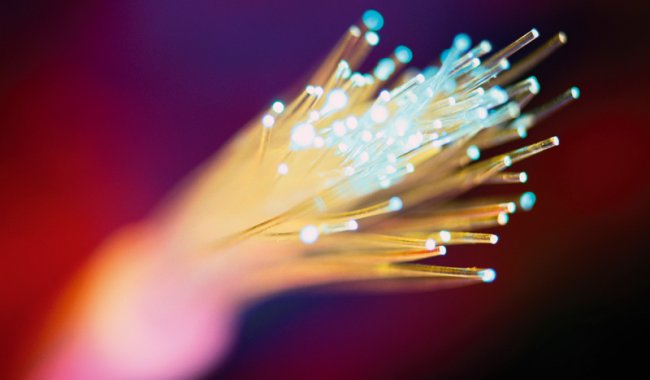
An optical fibre broadband cable

Data can be transported at the speed of light through optical fibre cables

For the ISP industry as a whole, it’s potentially alarming. By the end of the year, many internet service providers may have a much higher standard to live up to, and many restless customers on their hands, due to the new competition. Everything depends on two basic questions: how much more bandwidth will Google be able to offer customers, and how much will they be charged for it?

How much speed can you get from optical fiber cables?

Google promises 1gb/s fiber connections. 1 gigabit per second is the same as 1,000 megabits per second – “more than 100 times faster than what most Americans have access to today.”

That’s so impressive that one can’t help being a little suspicious. After all, nearly all of the broadband companies claim a much higher speed than their service actually delivers; due to network overhead, distance from the node, ‘peak time’ traffic, and various other details, your average speed is probably only a fraction of what your ISP promises.

Google Fiber has one active trial in progress, a small community near Stanford University. A user posted a speed test not long ago showing a 151.68 mb/s download speed, giving a good real-world example of what day-to-day users can expect from Google Fiber.

Other fiber companies aren’t even claiming speeds like Google’s (let alone delivering them). The provide in current “fastest internet in the US”, Verizon’s FiOS, tops out at 150 mb/s (if your math skills are sleepy, that makes Google Fiber potentially over 660% faster). The runner-up is AT&T’s U-verse, which has a “Max Turbo” plan of 24 mb/s. In both cases, real-world data shows users getting a wide variety of results, from far worse to sometimes even better than quoted (especially when using the companies’ own speed tests. Hmm…).

How much will Google’s fiber optic speeds cost?

Google’s answer:

“It’s too early to say how much we plan to charge for service, but we do plan to set prices that are competitive to what people are currently paying for broadband access.”

Critically speaking, this could mean anything from around $40 to $200 per month.

The 150 mb/s FiOS plan mentioned above will currently set you back about $200 each month, while AT&T’s 24 mb/s is listed on the web site at $63. To be fair, the closest FiOS plan, at 25 mb/s, would cost about $70/month.

However, the most recent figures for US consumers put the average monthly cost for broadband at around $40. Admittedly, there’s a lack of up-to-date statistics in this area, but if there is a difference, our average cost is most likely a little higher now than in 2010-2011.

The Bottom Line

While Google Fiber looks incredible promising, it’s is still an unknown factor; the actual results and pricing plans are months away.

However, we know for a fact that higher speeds and lower costs go hand-in-hand else where in the world. We know that Google’s effect on the Kansas City tech industry and economy in general has been and will be very positive; and we know that – for whatever reason – many companies and media organizations have suddenly been much more interested than ever in pointing out Google’s flaws and changing public perception of the company.