Taxing the Smartphone

On Monday a report was released in France that contained the suggestion that a tax should be levied on Internet devices in order to raise money to promote and protect French cultural production.
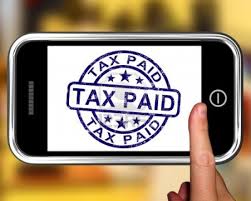
A Tax Paid Phone

A Tax Paid Phone

For several years France has had a policy of taxing broadcasters and spending the money on supporting its own film and entertainment industries, but revenues are falling. The problem seems to be that many more people are accessing their entertainment via the Internet and therefore not contributing to its production cost.

The Lescure report as it is known suggests a tax of between 1 and 4% on any Internet capable devices (smartphones, eBook readers and games consoles included), but as we might imagine many of the producers of these devices are not happy about the proposal.

Money has to be raised to maintain the entertainment industries, but many of the companies that provide access to this entertainment are not based in France and do not contribute. They probably don’t want to either, and so we come across the same problem that I wrote about last week, collecting national taxes from international corporations based in another state is never easy, and borders are porous.

The proposed tax would replace one already in existence upon storage devices. Currently tax is levied on blank CD’s and memory sticks as well as computers with hard discs.

The manufacturers complain that the price of the devices would rise leading to fewer sales, although the author of the report argues that such a small percentage increase would make little difference, and would not even effect the home job market because most of these devices are assembled overseas. A 1% tax would raise something of the order of 90 million Euro a year.

The problem remains though. As our sources of entertainment move away from pay TV, publicity funded channels and national subscription systems such as the BBC, money is taken away from the producers and associations that represent and fund these industries. Some see the fact that Google and Apple amongst others are operating outside the tax system and are not contributing to the industries that they make their money from as unfair, and hope that this change in tax law will go some way to evening out the field.

The Wall Street Journal goes into a little more depth on the matter in its free online edition.

I wonder if France takes this step if others in the EU will follow. There are many different ways of making money through so called free downloads as we all know, but the money ends up in the pockets of the provider and not the producer and the industries involved are feeling the pinch. Maybe this needs to change.

Taxes on Internet shopping

Here in the US the Senate just passed the Marketplace Fairness Act, and it is causing a great deal of debate on all sides.

I want you to pay taxes

Pay more taxes on your online goods

In the USA each state can levy its own sales tax. The rate is not equal across the states, for example here in Massachusetts I pay 6.25% sales tax on my new fridge, but if I drive to New Hampshire I do not pay anything. You can check out the differences on this interactive tax map.

The legislation described above aims to make Internet sellers collect the taxes due to the buyer’s state, something they are not currently required to do. At the moment I order my fridge from a New Hampshire based Internet retailer and I don’t pay any tax. In theory I should go and pay the state myself, but with online sales worth billions there is no enforcement and no queues (lines) outside the tax office.

Retail outlets argue that this gives online sellers an unfair advantage, but they in turn argue that the collecting and payment of state taxes under the new proposed regime would be expensive and extremely complicated. If they sell me the fridge here it costs a certain amount, they have to collect the tax and pay it to Massachusetts, but my friend in Florida pays a different amount and the tax is paid to the state there. Now this might not be too complicated a system for Amazon to manage, but a small Internet based retailer might not have the technical expertise or personnel to carry it out.

The proposed bill does exclude traders who sell under a million dollars of goods, but in today’s world that could still be a very small organization.

The technical difficulties of collecting the taxes through any other means seem insurmountable though, and the problem is very much related to the idea that borders can be controlled. States have different laws about selling many things, but if these things can be bought on the Internet and shipped to an individual house I cannot see how these rules can be adequately enforced. Is it a form of smuggling to buy something that you cannot get in your own state?

The result of the bill (if it passes although it does have bi-partisan support) will be that local sales tax will be levied at source and so the fridge will cost more. Maybe this is just and fair, maybe it will choke some smaller businesses, who knows?

What do you think?

Boston Bombs and the Billboard Problem

As I am sure many of you will already know, last week was a difficult one to say the least for my fellow citizens of Boston and Cambridge.

The events have caused a debate here though about the use of advertising technology. In the US many places host digital billboards. They are enormous, bright, attract attention and the content can be changed at will, using a computer and not a pole with wallpaper paste on it. Many change every 10 or 20 seconds, allowing great generation of revenue for both the publicity companies and the cities and states that license their use.

Digital Billboards In Use

Digital Billboards In Use

I first saw something like these while watching the Premier League, boards that changed by the side of the pitch through a disk system, but the modern equivalent are just like watching giant TV’s, in HD quality no less.

So why the debate? Well it turns out that the FBI have contracts with the largest billboard operators, and they can take over any number of the appliances and show what they want. In the case of Boston the contract is with Clear Channel Communications, and this allowed the FBI to show the photos of the two presumed bombers. Direct to the public marketing, for those of us still living without TV and smartphone (yes I am).

But many groups argue that the billboards themselves are dangerous and present a distraction to drivers, and many are placed in residential areas causing numerous complaints. Light pollution as much as skyline destruction are both problems when they are placed in residential or historic areas. The City of Los Angeles has in fact recently taken many of them offline on these grounds as this article explains, and pressure groups exist that campaign for their removal.

A Distraction?

A Distraction or an eyesore?

In all fairness they are not all trying to ban them, but to place them only in commercial districts where they do not cause distraction, but as you might imagine this does not go down too well. Distraction (or attention anyway) is after all one of their main goals.

But there is a lot of money involved. The city of Chicago hopes to raise $155 million by placing billboards throughout the city. The City recently approved a deal as this article explains.

The State of New Jersey has just struck down a ban on their use, again hoping to raise much needed funds.

The FBI argue that they are useful tools in crime prevention, stating that they have already apprehended 51 fugitives after posting their faces on billboards, and insist on their position as a public good. The debate rages and I am sure will continue on for some time.

The Scenic America website offers links to several safety studies regarding digital billboards for the interested reader.

On a lighter note and thinking about my post last week I wonder if they are on Shodan and easily hacked? That might be interesting.