Google Plus – a breath of fresh air?

For years websites like MSN and Facebook have been growing in numbers. Many rivals, less efficient and less popular social networking website, have died out as they are crushed by the giants. But Facebook seems immune from the possibility of extinction, with a growing number of users currently at over 640 million users!

MSN had a golden period and enjoyed strong competition with Facebook. But the Microsoft owned site has 120 million users and falling. It looks like MSN will be joining the likes of Bebo, Digg and Myspace.  I myself deleted my Myspace account when I decided to hop onto the Facebook bandwagon.

But for years it seemed that Facebook would never be challenged, and that was the case, until, now! A company which has 15 times the amount of revenue is stepping up to the plate. Google. The internet giant is taking over world computing. With 85% of the world using Google as their search engine, 15% of internet browsers in the world are Google Chrome – but this is fast growing – and now the $30 billion company is preparing to take on Facebook with its own social network – Google+.

In its two month infancy it is showing similar trends to Chrome and is rapidly growing in usage with 20 million worldwide users at the moment. Although this may seem puny, bear in mind it isn’t open to the world public entirely just yet.  At the moment, Google+ is an invitation only site until it opens fully in a couple of months.

I have put my name down to use it on its somewhat large waiting list. But what is all the hype?

Key Feature:

  • Circles – This allows me to group my friends, so for example:
    • Music pals – Joe, Tom, Abby…
    • School pals – Michael, Adam…
    • Work Colleagues – Jane, Adam, Monica…
  • Hangouts – A 10 people group video chat
  • Sparks – Using Google’s search engine you can search for interests
  • The Stream – Users can see their Circles’ updates – similar to Facebook’s wall
  • +1 – Allowing people to recommend items and websites

These are just some of the functions available to use on +.  But is it what we are looking for?
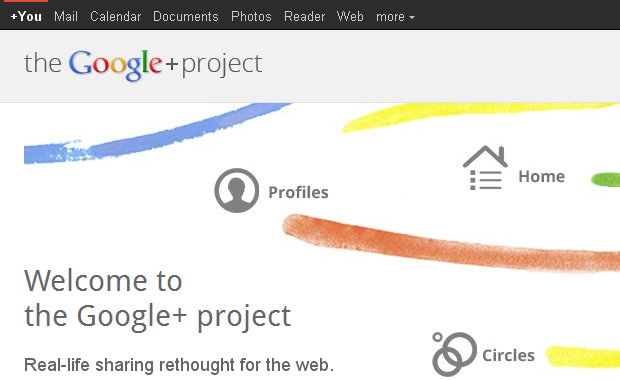
The Google+ ProjectIn my opinion yes, just like Google Chrome did with Internet Explorer it will provide a breath of fresh air to the social networking industry and I think will be a very realistic competitor to Facebook.

It seems like it is made with much more quality and with far more enhanced features than Facebook, which has many problems, technically and pragmatically.

So I for one am really looking forward to joining it and setting up my profile when it becomes open to the public.


Google gives users malware warnings

Yes you read right, Google is now giving users alerts if it believes that their system is infected with malware.

Over the last week, millions of users will have logged on to Google, only to find a warning telling them that Google believes that their computer ‘appears to be infected’.

Here is an image of that very message:


A Google warning telling users that their computer appears to be infected

Okay my PC isn't infected so I couldn't show you an actual message, but a clever bit of Photoshopping can help me to show you 😉

Google says that it is trying to improve the web for users, and in doing so, it believes that it can enhance users experience, and keep them safer online.

Malware can send users to ‘virus’ pages when they search Google, one of the main reasons why Google wants to help users fight it. The other is that often malware can send tonnes of spammy traffic towards Google. This is not very good for their servers, and could potentially become very costly.

Sometimes Google needs to turn some of its servers off for maintenance, meaning they need to redirect the traffic. However certain malware can keep ‘spamming’ these servers with unwanted traffic, causing the guys at Google a bit of a problem!

Google says that the main cause of malware infection is users downloading face anti-viruses when instructed to by bogus warnings on false websites.

The search giant does currently offer warnings to users on some websites that it knows could potentially infect their computer. Here is an example of the text it may put below a potentially dangerous search result:

This site may harm your computer

An example of the "This site may harm your computer." text that features below some search results in Google

Keeping safe online is a challenge, so it’s good to know that along with our anti-virus software, Google is also watching our back.

To find out more you can read the official blog post on Google’s blog 🙂

How to be a successful blogger

This is the conclusion to a series of articles in which I shared with you my knowledge of how and why Technology Bloggers has been so successful, so fast. Learn more about this series by reading our Technology Bloggers success article.

So there we have it, the first Technology Bloggers series has been brought to a close.

For the last six weeks, every Monday I have released an article as part of a series, explaining how and why Technology Bloggers has become such a successful blog in such a short space of time. This is the last article in that series.

So what have we learned over the series?Learning is a crucual part of bloggingFirst off we learned the importance of a reputation in blogging. If you have a positive one already, great, if you don’t have one, you need to start to build one to become known on the blogosphere, and to run a successful blog. A reputation can give you authority and respect in your niche.

Second we learned how promotion is a key factor in blogging, and how you need good promotion from the start to have sustainable success. Utilise social media and your online connections. Also, make sure you comment on friends blogs and if you have a blog or website already, plug your new site there too!

Then we learned about how respect is a key part of blogging. To conclude an entire article in just one sentence: basically, if you respect your readers, they will respect you, hence why we are a dofollow technology blog 🙂

The fourth in the series taught us why competition in blogging is important. Competition in blogging helps you to gain readers, especially commenting readers. Competitions contests themselves can also attract many people to your blog, from others on the net.

In the penultimate article in the series (excluding this article), we were shown why it is very important to give your readers lots of ways to subscribe to your blog. Email Subscriptions, Facebook and Twitter are what we use, although no-doubt that list will change in the future 🙂

The final article in the series taught us to follow the experts in blogging to succeed. You can either learn what works and what doesn’t work for yourself, – the hard way – or you can look at the experts, and see what works for them. Learning form your own experience is good, learning from others is more productive and wise.


The end of this series has got me buzzing to write another, but what about? Is there anything technology, blogging or science or related that you would like me to either teach you or research for you?

Any suggestions? Throw them at me below 🙂

Thanks for following the series and all also thanks for all the comments along the way. I hope you have learned something useful, which you can hopefully apply to yourself and your site 🙂