Is there really that much diversity on the internet?

The internet is big right? Okay it is massive. With that massiveness one naturally associates extreme diversity. Don’t get me wrong, across the entire internet, there is amazing variation, with billions of people adding their spin to the net.

What I am going to investigate in this post though is how diverse the ‘main’ internet is. What I mean by that is the internet that we use every day. How diverse is the most regularly used/visited content? Is there really as much choice as we think, or is the majority of the internet dominated by a few firms?


In order to go about this research I am going to use Alexa, who gather statistics on websites traffic. For most sites, the data isn’t that accurate, however for really busy sites, the numbers are so great, the reliability of the data is much higher, hence why I can use it.
Alexa's Logo

Google

According to Alexa, Google.com is the most visited site on the web. How could it not be? Alexa estimates that 50% of all internet users visited Google.com in the last three months. Second on the list for most visited sites is Facebook, which is trailing with just 45% of internet users visiting the site.

Remember however that is just Google.com, Google has a massive monopoly over the internet. In the 100 most visited sites on the web, 18 of the sites are owned by Google – 16 localised sites, Google.com and GoogleUserContent.com (the site you see when there is an error finding/displaying a page).

Google undoubtedly has reduced diversity on the internet, having such a monopoly on the sites we all visit. The thing is, it isn’t just 18 sites. Google also owns YouTube and (the third most visited site on the net) Blogspot which is ranked 10th, Blogger at 47 (Blogger and Blogspot are now one) and Blogspot.in (India) ranked 73. That means 21 of the most visited sites on the net belong to Google, meaning it owns more than one fifth of the ‘main’ internet.

Googlite Logo

Google’s dominance on the web suggests that a lot of us are Googlites!

Can you call the internet diverse, when in the top one hundred sites, one firm owns more than a fifth of all sites? Maybe, what does the rest of the field look like?

Microsoft

Unsurprisingly, the company that is arguable Google’s main rival is in second place. Yahoo and Microsoft are currently in a ‘Search Alliance’ therefore restricting competition, so I am going to count them in the list of sites that Microsoft owns/influences. Here is the list of sites that Microsoft owns/influences which are top 100 websites:

  • Yahoo.com – Ranked 3rd
  • Live.com – Ranked 7th
  • Yahoo.co.jp – Ranked 16th
  • MSN.com – Ranked 17th
  • Bing.com – Ranked 29th
  • Microsoft.com – Ranked 30th – ironic how it is lower many of the other sites it owns!
  • Flickr.com – Ranked 53rd and Yahoo owned

Therefore Microsoft own/influence 7 of the top 100 sites. Add that to Google’s 21, and 28 of the top sites on the net are owned by two firms. More than a quarter.

I am starting to think the ‘main’ internet is not as diverse as one may first assume.

Amazon

Next on the list of internet giants comes Amazon. Amazon.com is ranked 10th, whilst Amazon Germany (Amazon.de) is ranked 91st and Amazon Japan (Amazon.co.jp) is 95th. Amazon also owns the Internet Movie Database (IMDB.com) which is the 50th most visited site. Amazon owns 4 of the top 100 sites.

Amazon's Logo32 sites gone.

Alibaba Group

The Alibaba Group is a privately owned Chinese business, which owns Alibaba.com, Tmall (tmall.com), Taobao (Taobao.com) and Sogou.com. The group therefore account for four of the sites that make up what I am calling the ‘main internet’.

36 sites taken by just 4 companies. How diverse is our internet?

eBay

Next we come to eBay.com which sits 23rd on the list of top 100 sites. eBay International AG (ebay.de) is in 80th place, followed by eBay UK (ebay.co.uk) in 86th. eBay also owns PayPal (paypal.com) which is ranked 46th.

eBay steals another 4 sites, leaving just 60 of our hundred left, and so far only 5 firms are involved.

Time Warner

CNN (cnn.com) AOL (aol.co.uk) and The Huffington Post (huffingtonpost.com) are all sites owned by Time Warner. Time Warner is the sixth business involved now, leaving just 57 sites.

WordPress

The blogging platform WordPress (wordpress.com) is ranked 19th, and its brother, which allows users to host the content management system on their own site (wordpress.org) is ranked 83rd.

The Official WordPress LogoThere goes another two sites, meaning just 55 left, and only seven players so far.

Twitter

Ranked number 8 on the list is Twitter, however its URL shortener (t.co) is ranked 31st, meaning Twitter is also one of the big players in the top 100 sites, arguably with some form of domination over the internet.

Twitter's Logo47 sites of the top 100 accounted for and a mere eight organisations involved.

The Rest

Of the final 53 sites, 5 are adult only sites leaving 48 sites – although many of these either are a part of, or are a much bigger group.

Some familiar faces appear in the other 48 sites, Facebook (2nd), Wikipedia (6th), LinkedIn (11th), Apple (34th), Tumblr (37th),  Pinterest (47th), BBC Online (48th), Ask (54th), AVG (62nd),  Adobe Systems Incorporated (67th), About.com (81st), ESPN (82nd),  Go Daddy (85th), Netflix (89th),  The Pirate Bay (92nd) and CNET (97th).

Remove these very well known, well established, and massive brands, and we are left with 32 sites – less than a third. Of the remaining sites, around half are Chinese, showing the growing influence and usage of the internet in China.

My Verdict

In this post I have established that of the sites we visit most regularly, 47 are owned by just eight organisations. Does that really represent the freedom that we all believe the internet offers?

I was surprised by the type of content, and the limited number of different sites that there are in the global top 100. It would seem that the most visited sites consist of search engines, social media sites and news websites. Interesting statistics.

So, what is your verdict on how diverse the internet we use everyday is? I personally am not quite as convinced as I was before writing this article that the internet is quite as free and diverse as we all believe.

Please note these rankings are changing all the time, and all content was correct according to Alexa.com at the time of writing – the 6th of July 2012.
How the USB revolutionised computing

This is a sponsored post. To find out more about sponsored content on Technology Bloggers, please visit our Privacy Policy.

The Universal Serial Bus, or as it is now commonly referred to as the USB, is a port designed to provide power supply or share data between electronic devices.

Ask someone to think about a USB, most people will naturally assume you are talking about a memory stick, which in essence is a super small, lightweight portable hard disk. However don’t confuse a USB port (the holding device) with a USB flash drive (a memory stick).

The USB (both port and flash drive) is something most of us take for granted in modern times, so I thought in this post it would be interesting to look at some of the uses for USBs, and how the USB has evolved over time.

USB 1.0

Design prototyping for the USB began when computing was still in its infancy, way back 18 years ago in 1994. At the time the port was being developed by the big players in the computing industry – Microsoft, Compaq, Intel, IBM, etc. These companies realised that there was (at the time) no easy medium which allowed communication through computers. For the computer to evolve, the companies realised that this would be an integral part of the system, as if you cannot share data, options are limited. Do remember this was happening in times before the internet was the global phenomenon it is today.

The first USB was produced in 1995 by Intel. Computers of the time started to come fitted with one or two USB 1.0 ports – although looking back, relatively few PCs were ever released with USB 1.0 ports. Nowadays, USB ports are in most cases a necessity for keyboard and mouse input devices.

The USB 1.0 was a revolutionary product, however looking back, its functionality was limited. Its maximum data transfer speed was 12 megabits per second. Relatively slow. That said, back when it was first introduced, a computers internal hard drive was typically only sized around 256/1024 mb (1/4 of a gigabyte to one gigabyte).

USB 2.0

In late 2000, the USB flash drive was released, enabling users to store more data than ever before, by storing things external to their computer. It would be an understatement to say that the USB flash drive was a step up from the floppy disk – it was more of a leap up! Initially, most USBs were typically 8 megabytes in size, meaning that they could hold more than five times what a floppy disk could.

Earlier in the year, the USB 2.0 was released, meaning that data transfer could happen 40 times faster, at 480 megabits per second. Initially some flash drives were designed for 1.0, however soon they were all being designed for the new 2.0 port, due to the increased possibilities.

USB 3.0

In 2008, the currently less well known USB 3.0 was released, which is more than ten times faster than its 2.0 brother.

USB flash drives have also improved over the years, and it is now possible to get a USB flash drive that is 256 gigabytes – one quarter of a terabyte. These disks are bigger than most computer hard drives were just a few years ago, showing the extent of the upgrades this technology has undergone.

A 256 gigabyte memory stick would though be useless with a USB 1.0 port as filling it would take almost 2 days (1.98 days) due to the speed of the data transfer. Even with a USB 2.0 port, the data transfer would take almost 72 minutes – more than an hour. Modern USB 3.0 ports could have the job done in less than 7 minutes. That really shows the true scale or achievement and advancement made in the USB industry.

Modern Uses

The USB is a crucial component of the modern PC, and is also very important for other devices. It is now possible to power many smartphones and multimedia devices via USB, either through a plug or your computer.

Some people use USB sticks to carry around a portable operating system with them, as it is perfectly possible to load Windows 7 onto a 16 gb memory stick and carry it around with you.

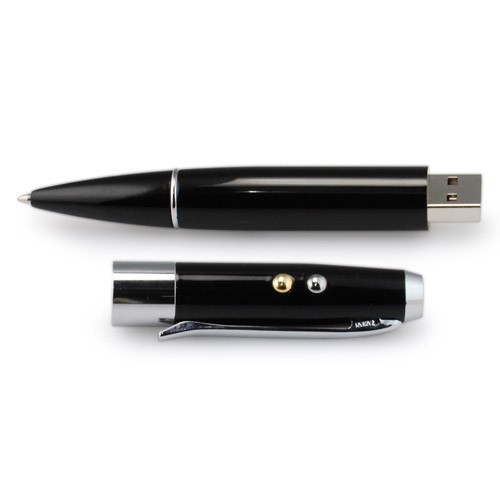
A USB penThe USB itself is a very flexible (not literally, the board would probably snap were you to bend it) device, with a lot of room for aesthetic variation. You can now get a range of Promotional USB Sticks, which many organisations often utilise, choosing to offer branded USBs as promotional gifts. This is all thanks to the readily available technology and cheap price of the components involved.

USBs now come shaped as credit cards, keys, pens, robots, people and even wine bottles!

A USB shaped into a bottelDo you have any funky USB flash drives at home? How about USB ports, have you counted how many your PC has? Comments and feedback below as always 🙂

Letting you know about recent updates

As the loyal readers among you may have noticed, there has been a lack of posting in the last week or so, but don’t worry, this trend shall soon be halted, as there are many new and exciting posts written, planned and on the way very soon.

This article is just to keep you in the loop and let you know what is going on.

Usually, I will endeavour to keep people up to date with updates to the blog via our social channels, specifically Facebook and Twitter. I feel the blog is a place for content, whilst notifying you about updating the ‘frills’ that are the design and functionality updates should be the place of social media.

Social Media Updates

Let me start by letting you know how our social side is currently evolving. A few months ago, Facebook stopped feed compatibility, meaning that if you liked us on Facebook, you no longer got updates regarding new posts. Now however I have linked Twitter to Facebook, so every tweet @tecbloggers tweets is also posted on our Facebook page.

UPDATE: We now tweet under the username @TechBloggers.

This means that you can now receive updates of new posts via your Facebook feed.

Some tweeters like to spam you with content every five minutes, likewise, update Facebook statuses practically all the time. I don’t believe in this, and only post/tweet an update should it be something you may want to know. Updates like small site improvements/issues and interesting content are the sort of thing we use our social media channels for.

Occasionally if I find, or someone brings to my attention something interesting that I think is worth sharing to the community, but doesn’t warrant a post, then it may get shared via social media. Don’t worry about getting spammed if you subscribe, we will only be posting stuff you probably want to know about.

I have also recently added a cover photo to our Facebook page, as it was looking a little bland. I didn’t have any great ideas, but I think it works for now 🙂 If you have any suggestions, by all means leave them in the comments below.

Facebook cover photo

Technology Bloggers Facebook cover photo.

In future, I don’t plan on writing as many of these sort of posts, as I feel it is better to keep you informed via social media, of updates as and when they occur.

If you don’t want to miss out on future update news, subscribe now!

Twitter Icon

Facebook Icon

In other news…

Top Writers

For a long time now we have had a top commenters widget at the bottom of every page, however the observant among you may have noticed the appearance of a new widget: a top writers list.

I came across the plugin whilst searching for something else, and thought it was a good idea. This is a community blog, so if we highlight the top commenters, why should writers not be recognised too? Well now they are 🙂

A screenshot of the top commenters and top writers list

The top commenters list excludes administrators and resets every month, the top writers list doesn’t.

Design Updates

Technology Bloggers design is constantly being updated and tweaked. I believe that continuous improvement is important. Most of my time is spent writing and replying to comments, however I do dedicate some time to improving other areas of the site.

One recent update is the removal of the social icons from the sidebar, and the addition of a new set of social buttons to the header. I felt that this area needed a bit more colour, and the buttons bring just that!

More Speed!

A few weeks ago I posted on our social channels:

“Just moved servers in order to speed up the blog 🙂
Do you notice a difference?”

We encountered a few problems, however they were soon sorted out, leading me to later post:

“A few hiccups later, Technology Bloggers is fully functioning and faster than ever!”

The blogs response time was sometimes really quite slow (usually higher than 2000 miliseconds!). I moved the blog to a different server and the response time is now around a quarter of what it was, currently around the 550 ms mark.

That is one reason you may have noticed the blog loading faster, another is because of the relentless efforts that I have been putting into slimming things down and reducing load times.

Google’s Page Speed tools have been very useful, enabling me to see where the site lags, and what can be done to improve it. I think there may be an article on the way soon with more detail on Page Speed, and how I have and am still using the tools to speed up the blog. Watch this space.

Jonny

For a while now, Thursday here on the blog seems to have been Jonny’s day, with him posting a regular feature on a Thursday for more than ten weeks now.

The day is not a dedicated day to the writings of Mr Hankins, however at the moment, I feel it is good that the regular feature is on a fixed day, as it gives consistency. His articles are very popular, and it is a delight every Thursday looking to see what new and innovative topic he has chosen to cover.

Jonny has been busy travelling of late, meaning that last week he was unable to post. Don’t worry though, he already has an article written and lined up for us for tomorrow 🙂

Competition

Just a quick note about a competition I plan on launching next Monday. Technology Bloggers has teamed up with two other blogs, and hopefully will soon be launching a competition in which anyone bar the three prize donors can enter for a chance to win one of three $50 USD prizes in a $150 competition!

UPDATE: This will now launch on Tuesday.

Until Next Time

That’s about it from me now, so remember, if you want to keep up to date, be sure to subscribe to our social profiles, and stay tuned to the blog to see our exciting future unfold…