Calling While Driving

One of the problems with humanity is that we all believe that we can do things safely even if others tell us that they are not safe. People who drive fast do so because they are good drivers (so they tell us), people claim that they can drive while under the influence of alcohol or drugs when the statistics prove otherwise, and even making a call or texting does not distract some super-drivers.

Governments take some action in some form or other to try and stop people doing these things, but it is selective in nature. Let us take texting while driving as an example. In some countries it is illegal to drive and text at the same time. In the USA it is allowed in some states and prohibited in others. In some states you can talk on the phone, in others not you need a hands-free system.

The law though seems to be selective. Last week research published in the Science journal demonstrates that it is not holding the phone to text or speak that is the problem, it is the conversation itself that causes the distraction.


A typical sight today

A typical sight today?

The research showed little or no difference between the rate of accidents when people are using a hands-free system and when they are physically holding the phone. The type of conversation does make a difference though, the more the driver has to concentrate on the subject matter or think before replying, the more chance there is of having a crash.

They also found that any type of interaction, even listening to the radio, effects reaction times and attention paid to the road. The radio is the least invasive because it does not require a response, but I wonder if listening to a news show or a discussion that you have to concentrate to follow causes more distraction, a logical line of thought would seem to imply so. Interestingly enough voice to text is the most dangerous type of technological interaction addressed.

So there are laws against texting, and not holding a phone (I must add not everywhere) but why not make speaking hands-free illegal too? And we should bear in mind that cars are ever more designed for connectivity, and that means distraction, maybe this should also be regulated.

Well that would require a change in business practices and take away personal freedom some might say, but we should remember that driving is not a right, it is a privilege that is governed by rules.

This is a serious piece of research that uses eye monitoring technology to measure distraction and driver awareness. The findings are clear and there is plenty of supporting data from other sources, but how would you feel about not being able to make a call at all though while driving?

At least your boss couldn’t call you while you were on your way home.
3D Printing and Health

3D printing technology undoubtedly presents opportunities for a completely new type of production that will revolutionize the workplace, as the many posts on this blog demonstrate. But as with all new forms of technology its development also raises many questions.

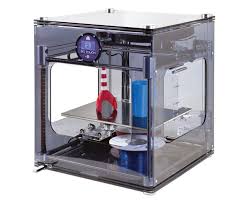
A cheap, commerical 3D printer

A cheap, commerical 3D printer

A recent report appears to find evidence that the use of 3D printers creates a bi product of nano particles that may be harmful to humans.

A research team measured ultra fine particle emissions (UFP) from the types of 3D printer typically in domestic or office use. Their findings are published in this rather technical report, and mathematics is certainly not my forte’, but it can be easily summarized: the results show that mean concentration of UFP’s is almost three times higher during 3D printer operation, meaning that these types of printers must be classed as UFP “high emitters”.

Now we need to see the results in context however, the levels reported are similar to those produced when we cook on a barbeque, but I personally use my barbeque in the garden, not in a small sealed room in the office.

The printers in question are often grouped together or found in air conditioned spaces with little ventilation, they are not sold with ventilation and there is no venting legislation, so the levels of UFP tends to increase over time in the spaces where they are used.

Particles of this type have been found to be damaging to mammals because they can easily pass into the respiratory system and cause inflammation. Some are so small that they can pass directly into the blood stream and into the organism itself.

The authors conclude that “caution should be used when operating some commercially available 3D printers in unvented or inadequately filtered indoor environments. Additionally, more controlled experiments should be conducted to more fundamentally evaluate aerosol emissions from a wider range of desktop 3D printers and feedstocks”.

A little common sense and some awareness raising and a health risk can be avoided. Industrial users have a culture of health and safety related to emissions, something that office culture might lack, but it could certainly be learned and implemented.

Anyway, the sun is out, where are those frozen veggie burgers?

Enter the Smartpen

I was an English teacher for many years in Italy, and every year I played a game with the students. In groups we had an hour to invent an incredible product, prepare publicity for it and act it out to the class.

I had a can of Happiness and the logo “Happiness, now available in cans”. Many of the inventions revolved around making your school life easier though, including the intelligent pen that could for example write the correct answers in the test or translate from one language to another.

Well girls from Liceo Secco Suardo your dreams have come true. You in fact saw the future. Roll out the Smartpen.


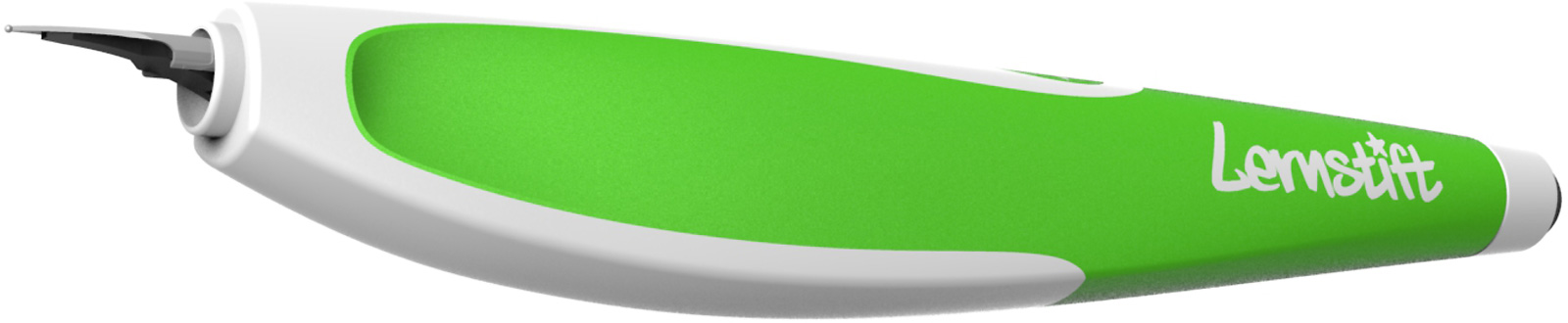
Learnstift's Smartpen

Learnstift’s Smartpen

The Learnstift Smartpen checks your spelling as you write. Incredible but true. Learnstift is a German Start up, and they are about to release their incredible product in English and German. It has 2 functions, one to help you write better that recognizes the form and shape of individual letters, and one that checks the spelling.

The pen has a tiny Linux computer inside that runs off a battery. It is fitted with a non optical motion sensor and a vibrating mechanism, so it can recognize the word you have written and if it is spelt wrong it will vibrate so you can try again.

It has wi-fi so you can connect to your phone or other hardware, and with a launch price of between $150 to $200 it is cheaper that paying me to come round to correct your homework.

Joking apart the producers hope the pen will become a valuable learning tool and of particular interest to dyslexic children. Although initially only in German and English as the project takes off more languages will be introduced.

Any of you who have learned a new language will understand how such a tool could be used in language learning and business communication, and as the pen can be made in ball point, fountain and even pencil versions I think there might be a fuchsia for it.

What do you think?