Year End Update

As the year ends I would like to look at some of my post over the last year or so to give an update about what has unfolded since I wrote them.

2012 Ending

The End is Near

I will start with Citizen Science. In 2011 I wrote an article about online gamers as scientists, and this year a couple of posts touched upon the issue of citizen science.

Recently the UK press has carried a story about a WW2 carrier pigeon whose remains were found in a chimney. The bird had a capsule on its leg that contained a message in code. Experts were unable to understand the message so they released the data into the public domain in the hope that somebody would be able to decode it. A perfect example of citizen science, the use of the Internet to access millions of brains.

A gentleman in Ontario responded with what he believes is the meaning of the note, although debate is rife around the issue of verification. He claims that the code is from WW1 and nothing more than a series of acronyms. Read this BBC article for more.

Still way back in 2011 I wrote a post about prosthetic limb technology and the fact that someone had opted to amputate a hand in order to have a robotic replacement fitted. Recently doctors have reported great improvements in prosthetic control, including controlling the artificial limbs through thought.

This experimental science has been going on for some time now, with implants in the brain interpreting neuron activity in order to make the limb move. As sensors get better movement improves and so control is greater. This week researchers in the US have released video of a woman operating a robot hand through thought. Watch it here on the Independent newspaper site.

One thing that isn’t addressed in the press coverage that I feel is important is that the person does not have to be attached to the arm, they can operate it remotely. This must have implications for how research and the handling of dangerous materials may be treated in the future.

If you want to see where this technology might take us just have a look at this video reportedly of someone controlling a remote control quadcopter using only thought waves. Incredible stuff!

More recently I wrote a piece about the compulsory tagging of students in a Texas school district. The project has run into problems as one of the students was withdrawn and moved to another school for refusing to wear the tag on religious grounds. Read the report here.

Andrea Hernandez refused to wear the tag saying that the bar code it contained could be the mark of the beast, an interpretation she takes from the book of Revelation. When they removed the mark from the tag she continued to refuse to wear it however so was effectively expelled. She is taking the school to court over the matter presenting problems to all those involved in the project.

I also wrote about the MOSE project to protect Venice from the rising seawater that floods the city ever more frequently. Recent news (in Italian) states that the project will no longer be ready in 2014 (2012 was the original date set for completion) but will possibly be finished in 2016.

The major problem seems to be lack of money. The project budget has increased massively, and the economic crisis has meant that money is found piecemeal so that the work can continue.

I do not want to be too critical of the land that bore my wife and children, but unfinished engineering projects are not uncommon in Italy, let’s hope this one does not end like many others.

Next week I will be taking a self enforced holiday, so no post on Thursday. Happy winter solstice to all, enjoy the festivities, thanks to everyone who has read and/or commented over the last year and I will be back in the new year (presuming that the Mayans were mistaken).
An analysis of the iPhone 5

Is is nearly 3 months since the 6th incarnation of Apple’s iconic iPhone, the iPhone 5, was released. Often I think it is more interesting to discuss a technology a few months after its release, rather than just straight away, as faults have been exposed, and there are opinions about long-term use.

In this article I am going to explore what the critics think of the iPhone 5, the good, the bad and the faulty!

So what makes the iPhone unique from any other phone? Samsung would argue very little, because as soon as Apple’s latest smartphone was released, Samsung announced that it was filing a lawsuit against Apple, because it had infringed many of its patents.

Size and Weight

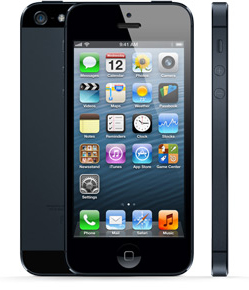
The iPhone 5
The iPhone 5 is bigger than its predecessor (the iPhone 4S). It is taller, the same width, and slightly thinner. When smartphones first hit the market, there seemed to be a race to make them smaller. Now however, the trend seems to be towards developing a bigger screen. Tablets are getting smaller and smartphones are getting bigger – will the two ever merge? I think they might, so watch this space!

Despite being bigger, the latest model is 28g lighter than the previous model, weighing an amazing 112g. Considering the technology inside the device, that is an impressive weight!

Camera

The pace of development of inbuilt cameras in mobile phones is staggering. The iPhone 5 has an 8 megapixel camera, which is very competitive considering that just a few years ago, 8MP was pretty good for a digital camera – which isn’t also a phone.

Reception

One of the main criticisms of the iPhone 5 is that it has stopped being a phone. Logically the primary purpose of a smartphone should be to call and text people, browsing the internet, using apps, taking pictures and other features are optional extras, and shouldn’t be the main function of the device. That said, there have been many reports about people finding that the iPhone 5 has really bad signal problems. I know of two people who are on the same network, one with a Samsung Galaxy S III and one with an iPhone 5. The person who owns the Galaxy can almost always get signal, whilst the person who owns the iPhone can’t. When the phones are in the exact same place, the Samsung device can get signal, but the Apple device can’t.

Speed

Because of all the new features of the phone, it needs to have a good processor, and it does. There was hope that it might have a quad-core processor, which it didn’t, however it does have a pretty good A6 processor, which is very speedy, and is what makes the iPhone 5 feels quick and slick. Match that performance with the 4-inch Retina display, and you have a very fast and flashy phone!

Siri

Siri has seen a few updates, but nothing major. The initial introduction of Siri in the iPhone 3GS was revolutionary, and there is still relatively little viable competition out there for Siri, however one expects an iPhone to come with Siri these days.

Maps

The iPhone 5 was the first phone released by Apple with iOS 6 – which had Apple Maps installed. Apple Maps is Apple’s own version of Google Maps, which has replaced Google Maps on the operating system.

Some of the navigation features have been praised, as having better clarity and being more useful than the Google alternative; especially due to the inbuilt Siri compatibility.

That said, there are major issues with Apple Maps, in that it can be really inaccurate. Australian police have actually advised people against using the software, after they had to rescue motorists stranded in the wilderness of a national park who were trying to find a city, which Apple Maps thought was in the middle of the the wilderness, not where it should have been!

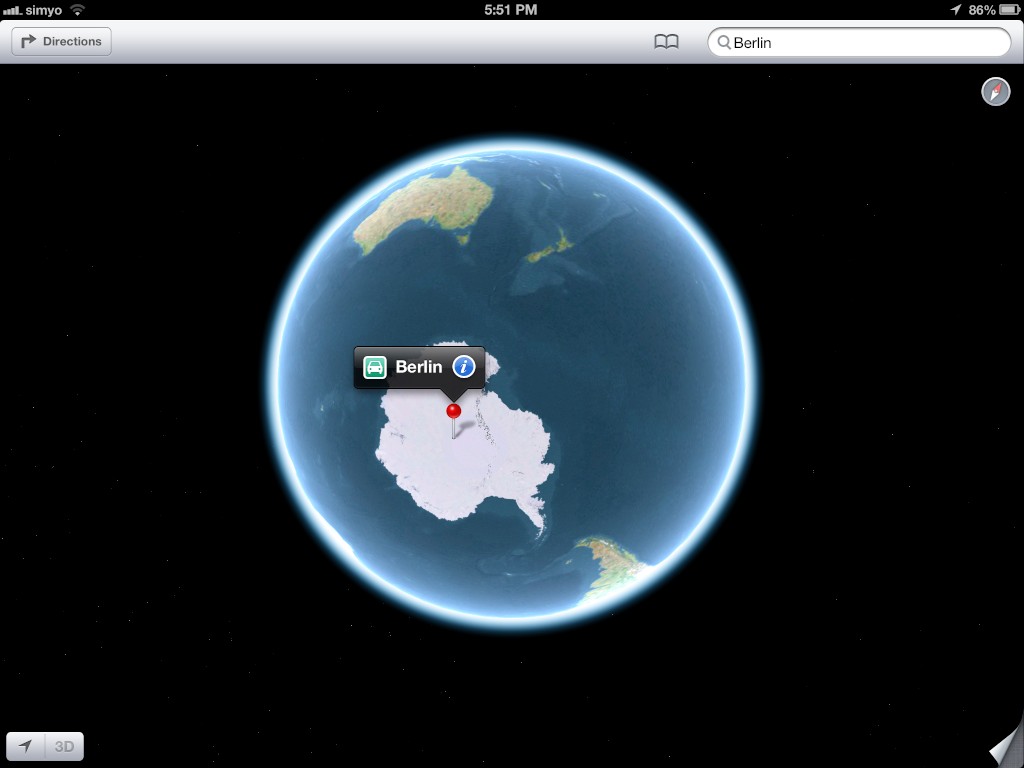
Many places are not where they are meant to be, some just a few miles out, others quite a lot further! One example is Berlin. You know, that city in Germany. The capital city of Germany. Well according to Apple Maps, Berlin is on the continent of Antarctica, which isn’t only the wrong continent, but also the wrong hemisphere! Have a search for Apple Maps fails, and you get some pretty funny results!

Berlin, Antarctica - Apple Maps

Apple Maps really does think that Berlin is in the Antarctic!

Awards

The iPhone 5 isn’t short of awards. The phone is top of Time Magazine’s top 10 gadgets list 2012, which is a big achievement!

Sales of the phone are something else for Apple to celebrate. In the first three days of the phone being on sale, there were 5 million sales! That is 1 million more than the iPhone 4S got in its first three days.

Your Thoughts

Do you own an iPhone 5? If so, what do you think of it? Do you like the phone and iOS 6, it it revolutionary, or was it a waste of money?

Instagram (AKA Facebook) in the News

Instagram hit the news with a bang today, and for all the wrong reasons.

They changed their privacy policy so that they have permission to sell any photos that users have posted to third parties. This means that maybe one day you might see that photo of your dog driving a toy car on TV advertising the said toy.

Dog Driving

A Dog driving a Toy Car

Great, you get famous. Not so great, you don’t get paid for it.

Yes our friends at Instagram have the right to sell the photo and keep the money. They may also “share your information as well as information from tools like cookies, log files, and device identifiers and location data with organisations that help us provide the service to you… (and) third-party advertising partners.”

They are not doing it for the money of course, but to “help us deliver interesting paid or sponsored content or promotions, you agree that a business may pay us to display your username, likeness, photos, in connection with paid or sponsored content or promotions, without any compensation to you.”

They just want to make your user experience more fun. “This means we can do things like fight spam more effectively, detect system and reliability problems more quickly, and build better features for everyone by understanding how Instagram is used,” it said in a statement.

If you don’t want to give them the right to do this you have a choice of course. You can withdraw all your pictures and delete your account by 16th January and never use them again.

I have written various articles about Facebook and their fluid privacy policies, you can find one here.

One of the most incredible things to me is reading the comments that these articles have provoked. Some people do not care about privacy, it seems to be a thing that only we oldies ever think about. This is a massive change in culture and opens a myriad of possibilities for exploitation in many forms.

Many of my friends use Facebook, probably all of them, but I am the odd one out. I do not use Facebook. A choice that has consequences, I could not register for Spotify the other week, they want your information. But I don’t want to share mine! And recently I applied for a job as a journalist but they wanted a breakdown of my social networking, so if you don’t do social networking you must not be a very good writer.

So make sure that your Instagram friends know what is happening so they can make an informed decision, think about what you post and where you post it, and remember, nothing comes for free, not even social networking.