How Much Freedom Does the Internet Bring You?

On the surface Internet living seems to bring a great deal of freedom to many different parties. Last month for example I posted from the USA, Italy and the UK, we can work from home, buy direct and have access to all kinds of information.

This might make us feel that the web itself creates freedom, or that it is free to operate as we wish. I am not so sure that this is the whole story however, and others agree.
How much freedom of speech really exists?

How much freedom of speech really exists?

Last week Security technologist Bruce Schneier gave a talk as part of the TEDx Cambridge series. Schneider is very interested in security and perceptions of security as this previous TED video shows, but last week’s talk was different.

He took the problem of Internet freedom as his topic, and raised some very interesting arguments. The following quotes are taken from his speech as reported on our local Boston.com website:

“Which type of power dominates the coming decades? Right now it looks like traditional power. It’s much easier for the NSA to spy on everyone than it is for anyone to maintain privacy. China has an easier time blocking content than its citizens have getting around those blocks.”

We can see that there is some evidence to support this case, if we look at this article that appeared in the Huffington Post a couple of years ago. It recounts the tale of Google pulling out of China because they no longer wanted to censor their searches. Google chose to redirect users to their non censored search engine based in Hong Kong. The Chinese government managed to block the results anyway, so users were left in the same position as before, no access to the information.

If we take a broader look though we find that it is not just China but other countries that are making repeated requests for Google to censor their content. CNN report the revelations of the recent Google Transparency report, where Canada, France, the UK and the USA feature strongly in the league of requested censorship. The report is here, easy to follow and a 5 minute thumb through might change your ideas regarding freedom and regulation on the web.

Just yesterday Linkedin announced that they challenging the US government over data requests. US organizations are allowed to publish the total number of data requests, but cannot break the figure down to reveal the number made by security services. Linkedin say this legal situation makes no sense, and many other companies agree. Read about it here.

“Cyber criminals can rob more people more quickly than real-world criminals, digital pirates can make more copies of more movies more quickly than their analog ancestors. And we’ll see it in the future. 3D printers mean control debates are soon going to involve guns and not movies.”

Just this week The Independent ran a story about Europe’s criminal intelligence agency that is fighting unprecedented levels of crime across several fronts as gangs capitalise on new technology. We are not talking about a few individuals hacking into the odd bank account here and there, we are looking at the new form of organized crime. A multi billion dollar industry in Europe alone.

The gun reference is of course to the distribution of plans for a 3D printer manufactured gun. Read about it here.
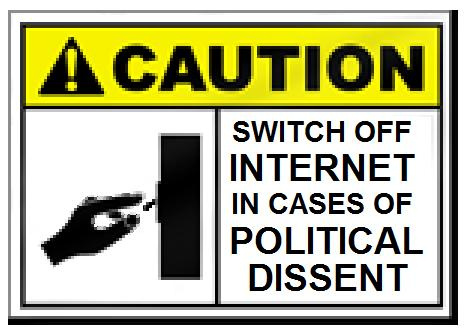
Caution in cases of political dissent

Caution in cases of political dissent

Much has been written about how Facebook and other interfaces have the power to democratize society, and their potential to promote revolution. The so-called Arab Spring is often given as an example, but as well as dissidents using Facebook to organize protests, the Syrian and other governments also used Facebook to identify and arrest dissidents.

There are plenty of examples. Here is an article about 3 Moroccan activists who were arrested for their comments criticizing governments at that time. One used a Wikileaks type platform, another Facebook and the third Youtube. They were all arrested and charged with various and sometimes unrelated crimes.

I wonder where they are now?

Bodybook – Because Facebook owns your face

Facebook owns the word Face. No, it really does. In the United States, Facebook owns the trademarks to the words ‘Face’, ‘Book’, ‘Wall’ and ‘Facepile’ as well as the aberration ‘FB’. It also has the rights to be the only company to use a single letter ‘F’ as their logo. Check out section 5.6 of their terms and conditions for the proof.

Cheers Facebook, there goes my plan of publishing my book ‘A book about my face on the wall’ in the US. Guess I will have to rename it ‘Pages of text about the front of my head on the structural divider.’ Only joking, I don’t plan on re-publishing it in the US.

Facebook Owns Your Content

As Jonny mentioned a while back, Instagram has the right to sell your pictures, and no doubt Facebook will soon too. Any picture you post on Facebook the social network already owns anyway. Check out section 2.1 of the terms I link to above:

“For content that is covered by intellectual property rights, like photos and videos, you specifically give us the following permission… …you grant us a non-exclusive, transferable, sub-licensable, royalty-free, worldwide license to use any IP content that you post on or in connection with Facebook…”

So Facebook owns your pictures, your videos and your statuses. Don’t worry, if you delete them, usually most of the rights will transfer back to you, however so long as they remain live on Facebook, it can use them how it wants, as well as share them with its ‘partners’. This means that you could very easily become a victim of mistaken identity.

Terms of Service; Didn’t Read note how “Facebook automatically shares your information with Bing, Pandora, TripAdvisor, Yelp, Rotten Tomatoes, Clicker, Scribd, and Docs, unless you manually opt-out.” how lovely of them to share your stuff for you!

Terms of Service; Didn't Read logoRemember my 7th ever post on Technology Bloggers? Of course you do! 😉 I questioned whether or not Facebook was exploiting users by using status information to provide tailored advertising – without asking.

Facebook Own Your Face

Facebook has taken targeted advertising a step further since then. It has been using the names and pictures of around 150 million people in ‘Sponsored Stories’ without their permission and as a result sent out an email checking that this was okay. Those who responded to Facebook’s message will receive a $15 USD payment as compensation. Is that really all it costs to buy your identity? Did you get an email? Did you ignore it?

Facebooks email to users about updating its privacy policy

The email Facebook sent to me letting me know it was updating its privacy policy.

Anyhow, Facebook don’t like having to pay for your permission, so they have recently changed their terms and conditions. If you have a Facebook account, you will have been sent an email on the 30th of August about this change. If you deleted it, you can find an image of my email to the right.

The new terms state that Facebook can now use your face to claim you endorse its advertisers products. You know that face you are wearing, you no longer own the exclusive rights to it. Facebook legally part-owns your face.

Will everyone remove pictures of their faces and just have shots of their body? Or maybe people will use pictures of their pets. Then again, who wants Facebook to own their pets face…

Bodybook

I doubt many people will pay any attention to Facebook’s latest changes.

Will this spark the rise of a new Facebook, a Bodybook? Probably not, as most people seem to trust Facebook with their privacy… oh, and Facebook also owns the word book, so it would need to be Bodyjournal, which sounds like a totally different thing.

Christopher Roberts with no head

Which do you think should be my new profile picture, the one on the left or the one on the right?

Oh and don’t forget, there is a strong correlation with Facebook addiction and depression

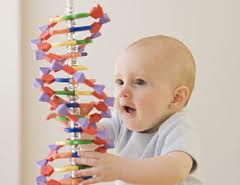
Sequencing Baby DNA, a Project in Boston

Last week the Science in Mind blog on my local Boston.com website ran an interesting story that is definitely worthy of reflection. It involves 2 local hospitals that are carrying out a project funded by the National Institute of Health (USA). The projects involve sequencing the DNA of newly born babies over the next 5 years. Read all about it here.

Babies to have their DNA sequenced

Babies to have their DNA sequenced

Now sequencing the DNA of babies carries with it several risks and ethical concerns, as well as well argued benefits. If we take the benefits first, doctors may gain information about a baby, such as high risk for a certain disease, genetic mutations that may require changes of lifestyle etc. They might also find explanations for problems that might otherwise go undetected.

There are though as I say risks and concerns. How will parents react if they discover that their baby has a high risk of an incurable disease? How will the knowledge gained through the test effect the way the parents view and behave towards their children? Are we giving families information that will change their understanding of parenting to such a degree that it might destroy the very fabric of their social relationships?

This is not to mention the social implications of giving out such information regarding extended family. If for example I am told that my baby has a genetic mutation carried by the parents that might have a serious effect on its life, should I tell my brothers and cousins so that they can screen their prospective wives, make decisions about having children or even worse a pregnancy already in course? And not to mention the obvious problem of discovering that the father is not the man stood in the room with the mother.

These problems are in fact the issues that the researchers running the project are hoping to look into. The question is if the clinical benefits outweigh the risks of such an approach.

I have written a lot about this subject in recent years if you would like more to read:

In June of last year I wrote a post here on Technology Bloggers called Sequencing the Genome of Unborn Babies. I also raised a lot of similar ethical concerns in May of the same year in Home Genetic Testing, Pros and Cons.

On the Bassetti Foundation we find DNA Privacy Issues from January of this year, a series called Architectures for Life from 2012 and a review of a book called Go Ask Your Father, just for starters.

My own personal view is that much of the promise peddled to us surrounding medicine and the sequencing of the human genome has yet to be delivered. One problem is money. Personalized medicine sounds like a great idea. I get my genome sequenced, we can see which drugs might work the best, the type of treatment I need etc. But drug companies cannot make, test and market a drug especially for me even with all of this information, it is just not cost effective. They want big sellers, generic medicines that work to some extent on everybody, not something that is fantastic for me with my particular gene pool.

There are clinical benefits, I am not arguing otherwise, but we must wait to see how great.