A Drinkable Book

drinkable book


Water Filters in a Book

Dr Teri Dankovich, a researcher at Carnegie Mellon University in Pittsburgh USA has developed and tested a book whose pages can be torn out and used to filter drinking water. Trails are impressive, with the process bringing the water up to US drinking water standards.

The book’s pages contain nanoparticles of silver or copper, which kill bacteria in the water as it passes through. Some of the particles do remain in the water however, but they remain within the legal limits.

Nanomaterials

Now here I have to add my own input to the debate. As readers might know I have written several posts about nanomaterials and it is one of the fields that I work in, and I would question how legal limits are defined.

Nanoparticles are treated like any other particles, and their scale is not taken in account, but this seems to raise some questions. The fact that they are so small means that they can pass easily into the blood stream, so their effects may not be the same as larger particles of the same materials.

So I have to leave an open question mark over the legal issue, but the fact that the water is drinkable is a great advantage. And this leads me to ponder the fact that innovation, and its level of responsibility and ethical justification, must be local. An invention or innovation that brings drinkable water to millions, is portable and cheap and could save many lives, must be seen within its context. Nanoparticles in the water in this situation, may not be same an nano particles found in water because of factory pollution or deliberate addition when other processes might be readily available.

An article on the BBC explains that “All you need to do is tear out a paper, put it in a simple filter holder and pour water into it from rivers, streams, wells etc and out comes clean water – and dead bacteria as well”. And one page can clean up to 100 litres of water. A book could filter one person’s water supply for four years.

The project is looking for funding, so if you are interested and have some money to spare click on the link at the start of the post and pass them over your pocket money.

As a final thought, nanotechnology has come in for criticism from the academic community for its lack of regulation, and rightly so. But it also brings a world of possibilities, many of which like the story above that could transform people’s lives. This is the fine line that interests me in my work, how to make the most of scientific developments at the least environmental and social costs, and for the highest number of people.

Responsible innovation, a call for your opinions

RI

Responsible Innovation

Some of my reader(s) might know that I work in the field of Responsible Innovation. This is a growing area within Science and Technology studies, but also plays a part in EU legislation and funding as well as working practices in general.

To be perfectly honest, one of the problems we have in the field is defining and explaining what we work on. I would say in general terms that we are interested in making innovation processes more democratic and transparent, while aiming scientific and technological development towards improvements for society. So possibly make the development of things that might be advantageous for society a priority, even if they might not be so profitable.

If you would like more information before I give you your homework for this week, check out this article in the Spectrum Engineering blog (I wrote it). Take a look at the MATTER website, or the Bassetti Foundation who I collaborate with in my work, or you could even download my $1.17 book from Amazon.

Or none of the above, just use a general sense of what it might look like in your own imagination.

So here we come to the homework part.

Your opinions and Ideas

As part of the European Commission’s Digital Agenda for Europe, Hilary Sutcliffe of the UK based think-tank MATTER (linked above) has launched the New Principles for Responsible Innovation document. Hilary is the plainest speaker of the community, and she wants to know what the general public think about developments. So her document is an open call for comments, with particular interest and questions about the following aspects of RI:

1. Purpose – is it realistic to think that such a voluntary initiative will have a useful role as we have envisaged it?  If yes or no, it would be helpful to know why. (My interpretation of this question, can we improve society through voluntary action within innovation?)

2. Content – Are there gaps or duplications or structures which you think are unhelpful?  Do you have suggestions on how that could be improved? (If so, how could we do it, which structures might be useful, and where are the obstacles?)

3.Effectiveness – How do you think this would be best implemented?  Do you agree with our concept of Radical Transparency being the tool for all stakeholders to access the information of their choice in place of armies of verifiers, or is this just unrealistic? (Could it all be done through transparency, and without rules from above?)

The main aims of the project are to generate positive momentum for transformative innovation for social good and create shared expectations to help build trustworthiness & confidence, and there are several ways in which any interested parties can contribute, with comments from yourselves at number 1.

The document is available here, and I would urge everyone to have their say by replying to Hilary in person through the email link contained within it.

Tell her Jonny sent you.

The Online GM Foods Debate

gm-picGM Experiences

A few weeks ago I was invited to Vienna to participate in a 2 day workshop on Responsible Research and Innovation in the Context of GMO. Obviously, these two topics being my main interests in life, I accepted, and off I went with my extremely stylish new laptop/overnight bag to an equally stylish country hotel.

It was a really interesting weekend. The other participants were scientists, members of regulatory bodies and governmental institutions, professors and other professionals from across Europe. I should say that this weekend was part of a much larger project called RES-AGORA, which is funded by the European Commission. You can read all about it here.

If that tickles your fancy here is the 60 page long Stakeholders Report.

But anyway back to the experience of a Luddite blogger in a posh hotel. I learned a lot about genetic modification, legislation, the problems of getting seeds to test, companies not making life easy for those testing or reporting, property rights and their effects over publication possibilities, loopholes in laws in different countries that allow people to legally buy seeds without a contract with the manufacturers (oh don’t get me started), and it got me thinking about writing an article.

So I did, and got it published here, in an Italian online academic journal.

Writing Skills

Now why is this of interest to you I hear you ask. Well I wrote this article basing much of it on the food series that I wrote here  on Technology Bloggers last year. In writing the series I unearthed a real underbelly of food production, and a little organization and rewriting, updating, selecting and expanding, and I had an academic article. You can download it for free here if you like.

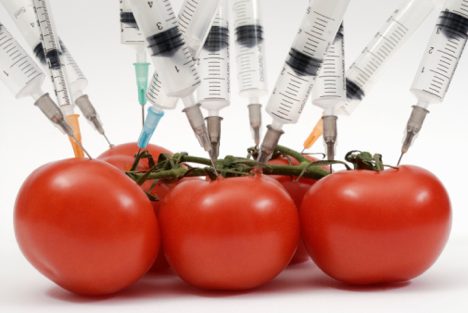
The article raises the issue of how the GM debate is played out online. The problem it seems (to me) is that there is no forum for constructive debate about GM, and this leads to a polarization of positions. So we can imagine a scenario in which website “A” points out as many problems as the author can think of, ethical issues, exploitation, altering nature, global takeover of seed production, and other nasties. In the same scenario website “B” is glossy and tells us that only GM will be able to produce enough food to feed an ever growing population, that it is all safe, that they are spending money on research just to help us out….

The problem is that in all scenarios website C is the same as website A, and D is the same as B and so on. There is little room for debate about GM in organic fuel production, or any other possible uses. It is the goodies against the baddies, and the baddies have more money, friends and power. The goodies however don’t seem to have a broad enough base to attack from.

Now the article looks nothing like the blog series I grant you, nor does this 2 paragraph description above, and I have to say that a lot of work went into the article. But having done all of the research for the series gave me a really good grounding. Now I am sure that many readers have written blogs that follow long and intricate lines of argument, but I wonder how many have thought about writing an article for a journal, newspaper or magazine and submitting it? It certainly broadens your writing capabilities, and if you feel you have something important to say it gives access to different readerships.

And it looks good in the portfolio and on the CV!