Fair Energy Transition for All: FETA Project

Image from the FETA website

In this post I would like to take a quick look at the project FETA, Fair Energy Transition for All.

Energy Transition

Energy transition refers to the move towards carbon neutral energy production, and the concept under discussion is how this transition process can be made as fair as possible for the largest number of people.

How could it not be fair? We might ask this question, but we might come up with some simple suggestions: the transition is going to cost money, tax money and consumer money, and this added expense is not going to be felt equally across the population (we are talking about Europe here). If a government adds a cost (to use a current example) to the price of electricity in order to fund wind generation, this extra cost represents a different percentage of disposable income for different groups. If you spend 2% of your income on electricity it might not be noticeable, but if you spend 20% then it certainly will.

The current crisis with energy costs has already demonstrated the fragility of a population that relies on power for heat and electricity in any form, and any transition tax applied a year ago will today both raise more money and put more strain on poorer households. And subsidies for insulating houses, buying new white goods or towards the cost of an electric car require outlay on the part of the consumer, which means that it excludes those without access to such funds. And that says nothing about the skills needed to navigate the bureaucracy

Adding charges to bills and subsidising energy efficient purchases is a top down approach though, decisions taken by governments and energy company bosses (my rather cynical interpretation coming out here), but this is a a problem that FETA aims to address.

Some thoughts from the website:

For the energy transition to take place, policy measures need to be put in place that will have an impact on housing, energy, transport and other aspects of our everyday lives. However, the impacts of climate policies, such as rising fuel taxes or the closure of coal mines, affect socially and economically disadvantaged groups the most. This leads to economic and social conflicts: many people feel alienated by climate change policies, which they perceive as elitist issues, and they feel that the elites are out of touch with their lives and are not aware of their interests.

For climate action to be successful, widespread public acceptance is needed. European and national policy-makers need to develop climate change policies that everyone can relate to and benefit from! Policy-makers should listen to those whose voices are being left out of the current debate and include them in the policy and communication process. That is the only way in which a fair energy transition can be achieved – for all!

All of which boils down into three main questions:

  • How can the EU and its member states prevent climate policies from hitting the pockets of poorer households the hardest?
  • How can policies be designed so that everyone has an equal opportunity to enjoy the benefits of the energy transition?
  • How can the energy transition be combined with social justice?

To find answers, the project is conducting public participation events that involve 1000 participants in 90 focus groups spread across Europe, while the Bassetti Foundation (our funding partner) is working on policy proposals by running some expert workshops in Italy. The aim is to better understand the emotions, fears, views and needs of vulnerable people with regards to the energy transition and its current and potential impact on their living conditions, in order to provide input to national and European policy-makers, researchers and stakeholders to help them develop fair energy transition policies and enhance the communication with the target group.

The website offers more information and is well designed and really easy to follow.

Just down our street at Technology Bloggers we might say.
Responsibility-by-design

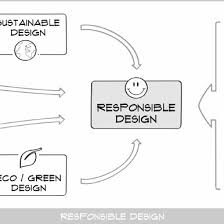
Throughout last year I worked on a European Standard called CWA 17796 Responsibility-by-design – Guidelines to develop long-term strategies (roadmaps) to innovate responsibly, for the CEN. It is now available to download and use.

CEN is an association that brings together the National Standardization Bodies of 34 European countries, providing a platform for the development of European Standards and other technical documents in relation to various kinds of products, materials, services and processes.

This is what they say about themselves: The CEN works together with national standards bodies to create documents established by consensus and approved by a recognized body that provide, for common and repeated use, rules, guidelines or characteristics for activities or their results, aimed at the achievement of the optimum degree of order in a given context.

This document is a workshop agreement that provides guidelines to develop long-term strategies (roadmaps) for innovating responsibly, thereby helping organizations to achieve socially desirable outcomes from their innovation processes. The roadmaps encourage a “responsibility-by-design” approach that integrates considerations of technical, ethical, social, environmental, and economic aspects all along the research, development, and design process leading to an innovation.

After an introduction, the agreement offers an overview of principles for Responsible Research and Innovation, (reflection, anticipation, inclusion and responsiveness), before moving on to a section detailing the framework proposed.

The agreement closes with a series on annexes in which easy-to-interpret tables offer examples of RRI actions, tools, guideline applications, SWOT analysis for implementation in industry, tools for stakeholder analysis, methods for stakeholder engagement, criteria for impact analysis and key performance indicators before concluding with resources from other initiatives and a bibliography.

The idea is that it is a guide, offering suggestions on possible approaches that might help to make innovation strategies more responsive and responsible, following on from years of research and policy suggestions promoted by the European Commission.

Practical and not abstract, for ten Euros it can be downloaded here.

Problems Counting People?

Implementing COVID Regulations

Here in the Netherlands the University system just reopened after a short lockdown (again). There are still restrictions on how many people are allowed into rooms however, a maximum of 75 in any single space. This ruling was introduced last year, and led to some developments that might be of interest to technology fans (and privacy fans I should add).

Counting people manually as they enter and leave a room is a time consuming and expensive approach, so two universities had the idea of using cameras and artificial intelligence to check how many people are in buidings and individual spaces.

Utrecht University ran a trial, while Leiden placed 371 cameras on the walls above the doors to each space.

The Leiden approach however caused a bit of a stink. The cameras were all placed and set up while the students were locked out of the building, the ideal time we might say, to be having people up ladders in front of doors. But such an approach can also be seen as trying to do something without too many people noticing.

And that is how some of the students saw the arrival, and a couple started to investigate for an article in the weekly University student magazine.

Counting entries and exits, well nobody could be against that! The University has to do it by law. So discussion grew around the methods and the cameras and the data.

The university had bought 371 cameras from the Swiss manufacturer Xovis, 600 euro a piece. So the question is what can (and do) they register?

According to company spec, the system is capable of:

Counting students

Following their individual routes

Calculating an individual’s height

Estimating age

Suggesting mood (is an individual happy or angry)

Determining who is a staff member

Counting numbers in groups

Detecting incorrect facemask use.

Now these types of cameras are already in use in airports and shopping centres, to minimize waits (among other things) and to try and calibrate advertising and work out the actual moment that someone choses to buy something. So such data does offer broad analysis possibility.

The slogan used by the manufactures maybe lets the cat out of the bag a bit: ‘Way more than people counting.’

The cameras can of course be set to different levels of data collection and privacy, from level 3 fully anonymous (just numbers of people), to 0, which is a livefeed of the images.

Some Questions

Now I am no expert, but one problem seems to me to be that the system records lots of data, that at some point someone filters before providing their dataset to the customer. Who, when, under which circumstances, who manages security of access, there are a lot of issues here. But they are not all negative. Such a system may be of use in a terrorist incident for example, or other sorts of emergency. You could see why something more expansive might be chosen over a system that just counts movement. But there is a moral as well as practical dilemma in choosing such an overkill solution to a simple problem.

The report the student investigators published in the weekly university magazine showed lots of security issues, and there were protests from the students who wanted the system taken down. Both Utrecht and Leiden have now stopped using the cameras.

But that is not a good result from a responsible innovation perspective. Lots of money was wasted, many people got upset, two sides of an argument were constructed that are at loggerheads with each other.

A change in public participation techniques might have avoided all of this. A lesson to be learned I feel. Informing without debate doesn’t work.

You can read the student report here and a local newspaper report here. All in Dutch though, so you might have to use some translation software.