Designing a Better World

Last year I wrote a post about a baby incubator made from car parts, built here in Boston by not-for-profit organization Design that Matters. The incubator uses car parts because they are easy to find practically anywhere in the world.

One of the problems with baby incubators and other pieces of technology used in hospitals is that they are often abandoned once they break down because access to the parts is difficult. In many cases it just needs a fuse to go that cannot be locally sourced and a hugely expensive machine becomes unuseable.

The car parts incubator hopes to avoid this problem. Read more in the post here.

Readers will be glad to hear that the Design That Matters organization have been named as finalists in Fast Company magazine’s Innovation by Design Awards. They appear in the category of Social Good, and that really represents the philosophy of the organization.

Project Firefly

Project Firefly

This year they have received numerous awards and special mentions for their Project Firefly, a safe, robust and inexpensive tool to provide infant phototherapy and warming for otherwise healthy newborns at risk of developing hyperbilirubinemia (leading to jaundice) and hypothermia.

Design that Matters (DtM), the East Meets West Foundation (EMW) and Vietnamese manufacturer MTTS have launched a collaboration to develop the device. It is hoped that the product could save hundreds of thousands of babies from disability or death through jaundice related complications.

I believe that design really could improve the world. We might think about some relatively inexpensive technological idea that can improve life for many people. In an article I also wrote last year on the Bassetti Foundation website I mentioned the Microsoft Imagine Cup, a competition organized to promote and support such ideas.

Many great ideas come through design schools. One example is the liter of light project started at MIT. Plastic bottles are used to reflect light into dark rooms by being placed in the roof. They run on water, bleach and sunlight, and have brought light into thousands of homes. Check out the video on the post linked above.
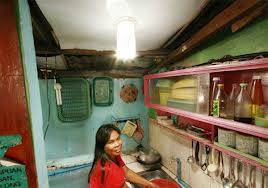
A Liter of Light in use

A Liter of Light in use

One fantastic source of “design to save the world” is the website Inhabitat. This site contains posts submitted by its editorial staff and readers that bring such projects to the public eye. They have a newsletter, and there is something for everyone, from technology, to architecture and an entire section for kids.

Really educational, interesting and fun, and maybe you will get a world improving idea yourself.

NASA is Closed (Temporarily)

Strangely enough I was in the USA last time there was a government shutdown. I was staying in New Orleans and listening to music all day every day.

At some point during the 6 week excursion I decided to go to Houston, to see the Space Station. That very room, seen by millions on TV as Niel Armstrong spoke from the Moon, those rows of presumably computerized desks, where history was made.

It is a long trip from New Orleans, I traveled by Greyhound bus. The land is swampy as you pass through Louisiana, and on to Texas. The road is raised above the water by just a few feet, on bridges that are miles long. It was a long ride, about 350 miles, on a bus, at 50 miles per hour, but it would be worth it, I was sure.

I got off the bus and made my way to the space center. There was a rocket lying on the grass outside, absolutely enormous, a real rocket! My pace quickened as did my heartbeat, I ran to the gate.

Closed.

The Space Center Houston, doorway to NASA’s Johnson Space Center, was closed until further notice due to the partial governmental closure.

Glory Days!

Glory Days!

17 years on it is once more closed. But closing a tourist attraction is one thing, what I hadn’t realized all those years ago was that NASA itself had shut down, and it’s closed today too.

18000 NASA employees, about 97% of the entire workforce, are sitting at home today, unpaid, and without any idea of when their work will resume. All communication from NASA to the public has stopped, Tweet accounts are closed, and they can no longer reply to emails.

Reassuringly though the few people left at work are continuing to monitor the skies for objects that may crash into the International Space Station killing all aboard, and larger objects that may pass close to Earth, Phew!

The astronauts working on the Space Station will continue their work, and mission control will be open to support them. They have plenty of food and water so they should be OK for some time.

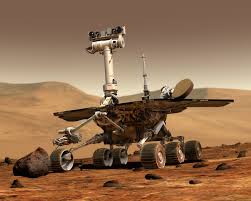
Other NASA spacecraft, like the Curiosity Rover on Mars and the New Horizons craft hurtling toward Pluto, will be largely left to their own devices (literally) during the shutdown. I believe parking is cheap on Mars anyway, although maintenance is high.

Mars Rover on Holiday

Mars Rover on Holiday

All of this comes just a month after NASA announced that the Voyager space craft, launched in 1977, has left the solar system. It continues to send back data, (although I am not sure if it will now be piling up like emails after a holiday), and 6 days after the now dormant Mars rover vehicle discovered large amounts of water, meaning that pioneers could extract water from the ground to use for fuel and to drink.

This government shutdown is having a huge but largely unseen effect upon science and technology development, as the organizations that are effected are some of the largest and most advanced in the world, not to mention creating a few disappointed tourists.

Self Healing Plastic

One of the problems with plastic is that it is very difficult to repair once damaged. When there is a hole in your plastic bucket you cannot generally mend it. But researchers in Spain have developed the world’s first self healing plastic.

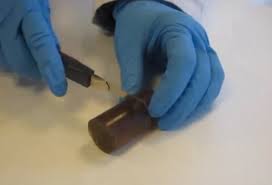
Cutting the self healing plastic

Cutting the self healing plastic

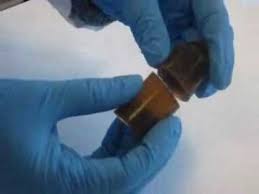
Researchers at the CIDETEC Centre for Electrochemical Technologies in San Sebastian, Spain have developed a plastic that once broken can heal itself. All the user has to do is put the pieces together and leave it at room temperature for a couple of hours, and the material kind of re-molds itself. The repair is said to be 97% perfect within a couple of hours, and perfect 2 days later, and a Youtube video demonstrating the strength of the repair is really quite incredible.

Plastics are made up of polymers, a long chain of molecules that are connected through chemical bonds. Natural polymers are everywhere. In nature, many polymers heal themselves when broken or sliced. Think of your skin when you have a small cut — as the two sides of the cut bind back together, you’re witnessing a self-healing polymer in action.

Synthetic polymers are just as common. Scientists started creating nylon and synthetic rubber to make up for the shortage of silk and rubber during World War II. PVC, polyester and many forms of plastic soon followed.

Putting the pieces together

Putting the pieces together

The Spanish have developed the first human-made self-healing polymer to function without a catalyst, they report in the Sept. 13 issue of the journal Materials Horizon. There are in fact other self healing plastics, but they require a catalyst to start the process (ultra violet light for example). Readers might know about self scratch repair paint, as advertised on TV. This paint is made from prawn shells, a fine example of a natural self healing material that uses the sun as catalyst.

The article states that “The idea behind this is to reconnect the chemical crosslinks which are broken when a material fractures, restoring the integrity of the material. This is expected to provide polymers with enhanced lifetime and resistance to fatigue”.

Testing the repair

Testing the repair

The researchers say this breakthrough will allow them to create stronger sealants, paints, adhesives and more. This could eventually lead to self-repairing pipes, bicycle tires and toys, among a million other possibilities.

Sounds great to me, and the less plastic we throw away the better.